
 Heating and Cooling
Home comfort guide
Heating and Cooling
Home comfort guide
How Proper Insulation Helps Your HVAC System Work Better
Better insulation and air sealing help your home hold onto the heating and cooling you already paid for, so your HVAC system can maintain comfort with less wasted effort.
- Attic and wall insulation
- Air sealing and comfort
- HVAC efficiency checks
Reviewed by Matthew Arbab, Managing Director, Aire One Heating & Cooling
Proper insulation does not make an HVAC system more powerful. It helps the home keep the conditioned air and temperature that the system has already worked to create. When insulation is thin, uneven, compressed, or missing around key areas, heat can move through the building envelope and air can escape through gaps. The result may be longer run times, uneven room temperatures, drafts, and comfort that is difficult to maintain. Natural Resources Canada identifies insulation and air leakage control as core parts of how a home performs as a system. Read NRCan's home-efficiency guidance.
How Proper Insulation Supports HVAC Performance
Your furnace, air conditioner, or heat pump responds to the heat moving into or out of the home. Insulation slows that transfer through ceilings, walls, floors, and other parts of the building envelope. Air sealing addresses a different problem: the uncontrolled movement of air through cracks, penetrations, and gaps. These measures work together, but they are not identical. Insulation resists heat flow, while air sealing limits drafts and air leakage.
When the building envelope performs better, the indoor temperature is less affected by outdoor conditions. That can help the HVAC system reach the thermostat setting and maintain it without running as long or as frequently. Actual results depend on the home's construction, existing insulation, air leakage, equipment condition, ductwork, thermostat settings, weather, and household use. No insulation upgrade can guarantee a specific bill reduction for every home.
Where insulation can make the biggest comfort difference
A home assessment should look at the whole envelope instead of assuming that one material or one room is the answer. The priority depends on the home's age, construction, moisture conditions, and previous renovations.
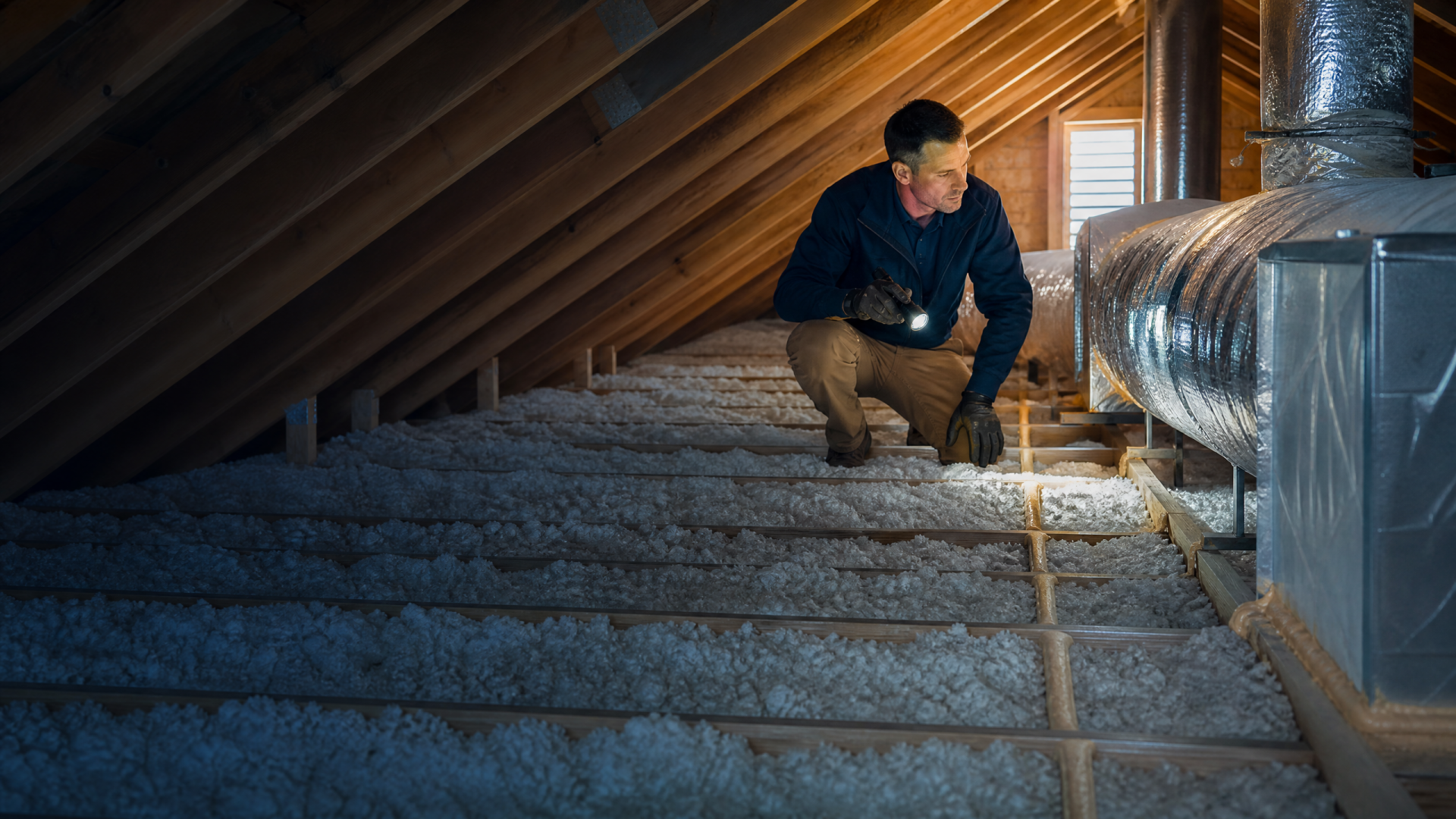
- Attic and ceiling areas. Heat can move through the upper boundary of the home when insulation is missing, thin, shifted, or compressed. Attic work also needs careful attention to ventilation, moisture, recessed fixtures, and safe clearances.
- Exterior walls. Gaps or inconsistent insulation can contribute to cold surfaces and room-to-room temperature differences. The right repair method depends on how the wall assembly was built and whether moisture is present.
- Basements, crawl spaces, and exposed floors. These areas can affect floor comfort and drafts. Any insulation project should account for moisture, pests, combustion safety, and local building requirements.
- Ductwork outside conditioned space. Duct insulation and air sealing may help reduce unwanted heat gain or heat loss before air reaches a room. Duct problems should be assessed together with airflow and system balance.

Insulation and air sealing around ductwork can help conditioned air stay where it is intended to go. The correct approach depends on the duct location, materials, moisture conditions, and local requirements.
Insulation versus air sealing: what is the difference?
| Home-performance issue | What it means | What should be checked |
|---|---|---|
| Insufficient or uneven insulation | Heat can move more easily through the ceiling, wall, or floor assembly. | Depth, coverage, compression, gaps, moisture, and material condition. |
| Air leakage | Outdoor air can enter and conditioned air can escape through openings. | Penetrations, attic hatches, rim joists, doors, windows, and service openings. |
| Uninsulated or leaky ducts | Supply air may gain or lose heat before it reaches the occupied room. | Duct location, insulation condition, joints, connections, airflow, and balancing. |
| HVAC equipment problem | A clean envelope cannot correct every equipment, airflow, refrigerant, or control issue. | Filter, coil, blower, thermostat, airflow, maintenance history, and system sizing. |
ENERGY STAR describes air sealing and insulation as complementary measures that can improve comfort and energy efficiency, but its savings estimates are not a guarantee for an individual Ontario home. Use the guidance as a reason to investigate the building envelope, not as a promise of a fixed percentage reduction. See the ENERGY STAR explanation.
Signs that your insulation or air sealing deserves attention
- Some rooms stay noticeably warmer or colder than others even when the HVAC system is operating.
- The system runs for long periods during ordinary weather, or the thermostat struggles to reach its setting.
- You notice drafts near attic hatches, exterior walls, basement edges, windows, doors, or service penetrations.
- Heating or cooling performance changes significantly between rooms on different floors.
- There are visible gaps, compressed sections, staining, moisture damage, or disturbed insulation in accessible areas.
- Ducts run through an attic, garage, crawl space, or other unconditioned area and have damaged insulation or loose connections.
These signs do not identify a single cause. A dirty filter, blocked return, poor duct design, incorrect system size, thermostat issue, or equipment fault can produce similar symptoms. Diagnose the home and HVAC system together before replacing equipment or adding insulation.
How to approach an insulation and HVAC improvement project
- Start with the comfort problem. Record which rooms are uncomfortable, when the issue occurs, and whether it happens during heating, cooling, or both.
- Inspect before upgrading. Review accessible insulation, air leakage points, duct routes, filters, airflow, thermostat operation, and signs of moisture or damage.
- Fix moisture and safety concerns first. Wet insulation, combustion hazards, damaged wiring, mold-like growth, or unsafe attic access should be handled by the appropriate qualified professional before insulation is covered.
- Coordinate envelope and HVAC work. Changes to air leakage and insulation can change how the home behaves. Recheck airflow, temperature distribution, controls, and equipment operation after major work.
- Measure the result. Compare room comfort, run-time patterns, humidity, and energy use over a meaningful period. Avoid judging success from one unusually hot or cold day.
Do not overlook ductwork and system sizing
Insulation is one part of HVAC performance. Duct design, duct leakage, airflow, filter condition, thermostat location, equipment maintenance, and system sizing also matter. If a system is oversized, undersized, poorly balanced, or operating with restricted airflow, adding insulation alone may not solve the comfort complaint.
For related reading, see Aire One's guides on ductwork design and optimization, HVAC system sizing, and high-efficiency HVAC solutions. These pages should remain the owners of their equipment, duct-design, and broad utility-bill intents. This article owns the building-envelope and insulation-to-HVAC relationship.
The ratings homeowners check before calling
When a comfort problem involves equipment, airflow, or system performance, homeowners often want a team that can inspect the HVAC side of the issue and explain the next step clearly. The ratings below are for the Aire One Markham head office and should be reverified before future updates.
Ratings shown for the Aire One Markham head office, verified July 27, 2026. Ratings and review counts can change.
Frequently Asked Questions
Can better insulation reduce HVAC run time?
It may help reduce the heat entering or leaving the home, which can reduce the demand placed on the HVAC system. The result depends on the home's existing insulation, air leakage, equipment, ductwork, thermostat settings, weather, and use.
Is insulation the same as air sealing?
No. Insulation slows heat transfer, while air sealing limits uncontrolled air movement through gaps and penetrations. Many homes benefit from evaluating both, but the correct work depends on the building assembly and its condition.
Where should a homeowner look first?
Common areas to review include the attic, attic hatch, exterior walls, basement or crawl space, rim joists, exposed floors, windows and doors, and ducts in unconditioned areas. A qualified assessment can help identify the highest-priority locations.
Can insulation fix uneven temperatures between rooms?
It can help when heat transfer or drafts are part of the problem, but uneven temperatures can also come from duct design, airflow, system sizing, thermostat location, or equipment condition. Check the full system before choosing one fix.
Does Aire One install insulation?
Aire One can help assess HVAC, airflow, ductwork, equipment, and comfort concerns. For insulation or air-sealing work, ask which qualified building-envelope professional and inspection process are appropriate for your home and local requirements.

About the author
Matthew Arbab
Managing Director, Aire One Heating & Cooling
Aire One has served Ontario homeowners since 1990. This article is reviewed for practical HVAC context and does not replace a home energy assessment, building inspection, or equipment diagnosis.
Make Your HVAC Comfort More Consistent
If your system runs constantly, some rooms feel uncomfortable, or your home has drafts, start with an assessment of the building envelope and HVAC system together. Aire One can help you understand the equipment and comfort side of the next step.
Book a comfort assessment