
Water Heater Leaking? Find the Source Safely
What to do in the first few minutes, how to tell where the water is coming from, and which leaks can be repaired.
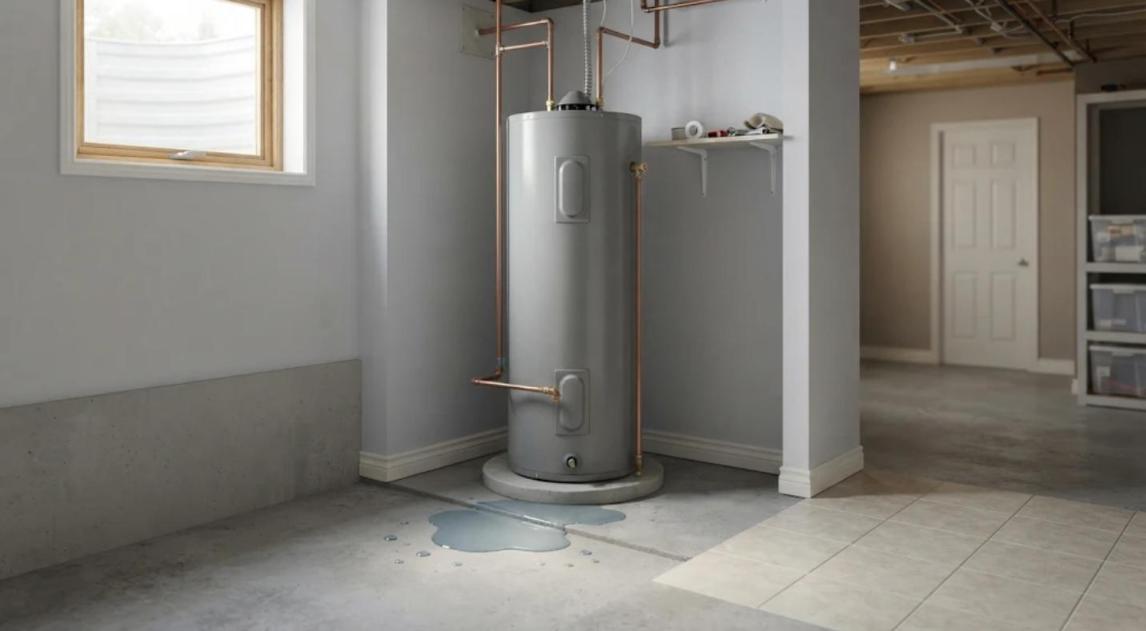

The short answer: Close the cold water supply valve above the tank, stay away from hot water and anything electrical that is wet, and never cap or plug the relief valve. Water at the top usually comes from a fitting or valve that can be repaired. Water from the discharge pipe means the relief valve has opened. Water from under the tank usually means the tank has failed and needs to be replaced.
A puddle beside the tank is never a welcome sight, especially in January. The good news is that a water heater leaking onto the basement floor can be sized up in minutes without touching anything risky, because where the water shows up tells you most of the story.
Below are the first five things to do, a map of where leaks start, and how to tell a repair from a replacement. Prefer a technician right away? You can book a service visit online or call 310-HEAT any time.
Water Heater Leaking Right Now? Do These 5 Things First
Work through these in order.
Step 1. Check that the area is safe
The Electrical Safety Authority says not to enter a basement if the water is above the level of electrical outlets, baseboard heaters or the furnace, or is near the electrical panel. In that case, stay out and call your local electric utility to disconnect the power.
Step 2. Close the cold water supply valve
Find the valve on the cold pipe that enters the top of the tank. Turn a lever handle a quarter turn so it sits across the pipe, or turn a round handle clockwise until it stops. This stops new water from entering the tank and slows most leaks. If the valve will not move, close the main water shut-off for the house instead.
Step 3. Cut the heat only where it is safe
For an electric tank, switch off the water heater breaker, but only if you can reach the panel while standing on a dry floor. For a gas tank, follow only the shutdown instructions printed on the manufacturer's label. Do not remove covers, adjust the gas control beyond what the label describes, or relight anything.
Step 4. Contain the water and take photos
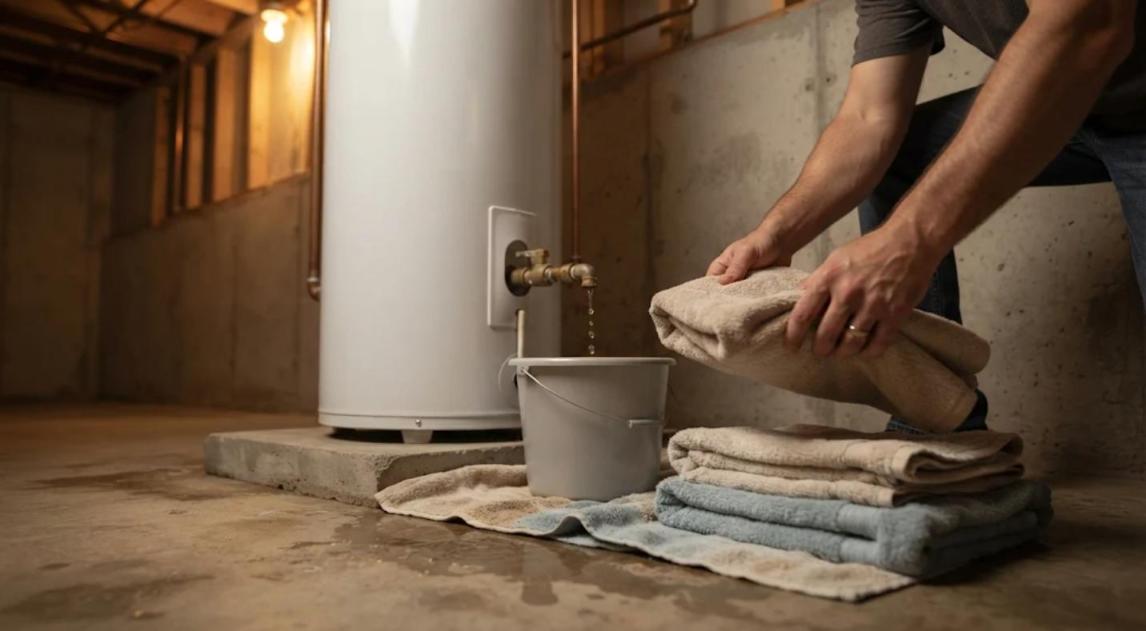
Set a bucket under any drip and lay towels to steer water toward the floor drain. Photograph where the water appears, and note the model and installation date from the label.
Step 5. Call the right people
With a rental water heater leaking, call the rental provider, whose service number is usually on a sticker on the tank. If you own it, call a licensed technician. Aire One's HVAC servicing and repairs team answers 24/7.
Smell rotten eggs or hear a CO alarm? Get everyone out without using switches or phones inside. Once outside, call Enbridge Gas at 1-866-763-5427 or 911 about a gas smell, or 911 for a CO alarm. See the carbon monoxide alarm rules in Ontario.
Where Is the Water Coming From? A Top-to-Bottom Leak Map
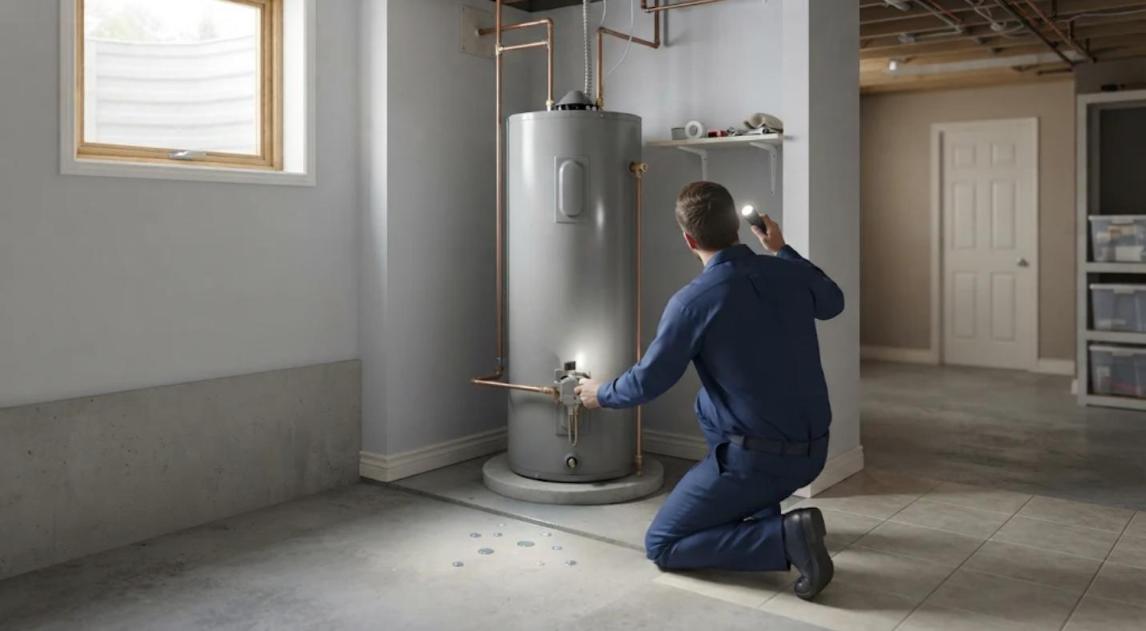
Water runs downhill, so a puddle on the floor does not prove the leak is at the bottom. With a water heater leaking, start at the top and work down through these five zones. Use a flashlight and keep your hands off hot pipes.
A simple way to confirm the source: wipe the tank, pipes and floor dry, then tuck paper towel under each zone. The first towel to get wet marks the starting point.
Water Heater Leaking From the Relief Valve? Never Cap or Plug It
The relief valve is the tank's last line of defence. If the controls fail and the water overheats, the valve opens and releases pressure through the discharge pipe.
The National Board of Boiler and Pressure Vessel Inspectors puts it bluntly: never cap the discharge pipe to stop leakage. Its guidance adds that the valve should be replaced only by a qualified plumber.
Scalds are the other risk. The Public Health Agency of Canada recommends setting the water heater to 60°C to prevent the growth of bacteria such as Legionella, and warns that hot tap water can burn a young child in seconds. Keep children and pets out of the room.
Gas, Electric, Tankless or Rental: What Changes
The leak map applies to every storage tank, but the response to a water heater leaking depends partly on your equipment.
| Gas tank | Water dripping onto the burner can sizzle and may put the flame out. Do not relight it. Our no hot water guide explains what happens next. |
| Electric tank | Live wiring sits behind the side covers, and a leaking element gasket can wet it. Leave the covers on. See common problems with electric water heaters. |
| Tankless unit | There is no tank to rust through, so the causes are different. We cover them in why a tankless water heater leaks. |
| Rental tank | The equipment belongs to the rental provider, so call them first. |
Is a Water Heater Leaking a Repair or a Replacement?
Parts attached to the tank can be changed. The tank itself cannot be repaired.
Usually a repair
- Loose or corroded inlet and outlet connections
- A worn supply valve above the tank
- A relief valve that no longer seals
- A dripping drain valve
Usually a replacement
- Water seeping from under the jacket
- Rust at the seams or base of the tank
- An older tank with a second or third leak
Age matters too. With an older water heater leaking, even a repairable part may not be worth fixing.
If replacement is the answer, our overview of water heater types is a good starting point. A heat pump water heater is worth comparing, since the Home Renovation Savings Program lists it as an eligible upgrade. Amounts change, so check saveonenergy.ca.
How to Lower the Odds of the Next Leak
Nobody wants to find a water heater leaking twice. These habits catch trouble early, and none requires tools.
- Look once a month. Glance at the top fittings, the discharge pipe and the floor.
- Know your shut-off. Tag the cold supply valve and the main water valve.
- Add a leak alarm. A battery-powered water sensor beside the tank sounds as soon as it gets wet.
- Have it checked yearly. Ask about Aire One's maintenance and protection plans.
Water Heater Help in Markham, Richmond Hill and the GTA
Aire One has served Ontario homeowners since 1990, with 24/7 technicians, a $79 service call and a 4.8-star Google rating from 541 reviews. When you call about a water heater leaking, our HVAC company in Markham and HVAC company in Richmond Hill teams trace the source, repair what can be repaired and explain your options plainly. Financing is available for replacements.
Water heater leaking and not sure where it started?
Our technicians answer 24/7 across Markham, Richmond Hill and York Region. TSSA-registered and trusted since 1990.
310-HEAT (310-4328) · 24/7 service · $79 service call*
See our repair services page or meet the Aire One Markham team.
Frequently Asked Questions
Is a water heater leaking an emergency?
It depends on the source. A slow drip from a top fitting can wait for a booked visit once the cold supply valve is closed. Water from under the tank, a relief valve that keeps discharging, or water near anything electrical needs a call right away.
Can I still use hot water with my water heater leaking?
It is better not to. Leaving the cold supply open keeps feeding the leak, and once the valve is closed the hot taps soon run dry anyway.
Why is my water heater leaking from the bottom?
Water may be running down from a fitting at the top, the drain valve near the base may be dripping, or the inner tank may have rusted through. The first two can usually be repaired. A rusted tank has to be replaced.
Is it normal for the relief valve pipe to drip?
No. A drip means the valve has opened or is no longer sealing, and both need a technician. Put a bucket under the pipe and never cap or plug it.
Who do I call if my rental water heater is leaking?
Call the rental provider first. The service number is usually on a sticker on the tank. Close the cold water supply valve while you wait.
Sources and Helpful Resources
This article is general information. Always follow your equipment manufacturer's instructions.
- Electrical Safety Authority: Flood Safety
- National Board of Boiler and Pressure Vessel Inspectors: Residential Water Heater Safety
- Public Health Agency of Canada: Water Temperature and Burns or Scalds
- Enbridge Gas: What to Do If You Smell Gas
Matthew leads the Aire One Markham and Metro Toronto team, helping homeowners stay warm and safe through every Ontario winter. Aire One has been a TSSA-registered, Carrier Factory Authorized Dealer since 1990.