
Heat Pump Water Heaters in Ontario
How they work, where they fit in a GTA home, what they save compared with a standard electric tank, and whether one makes sense for your family.
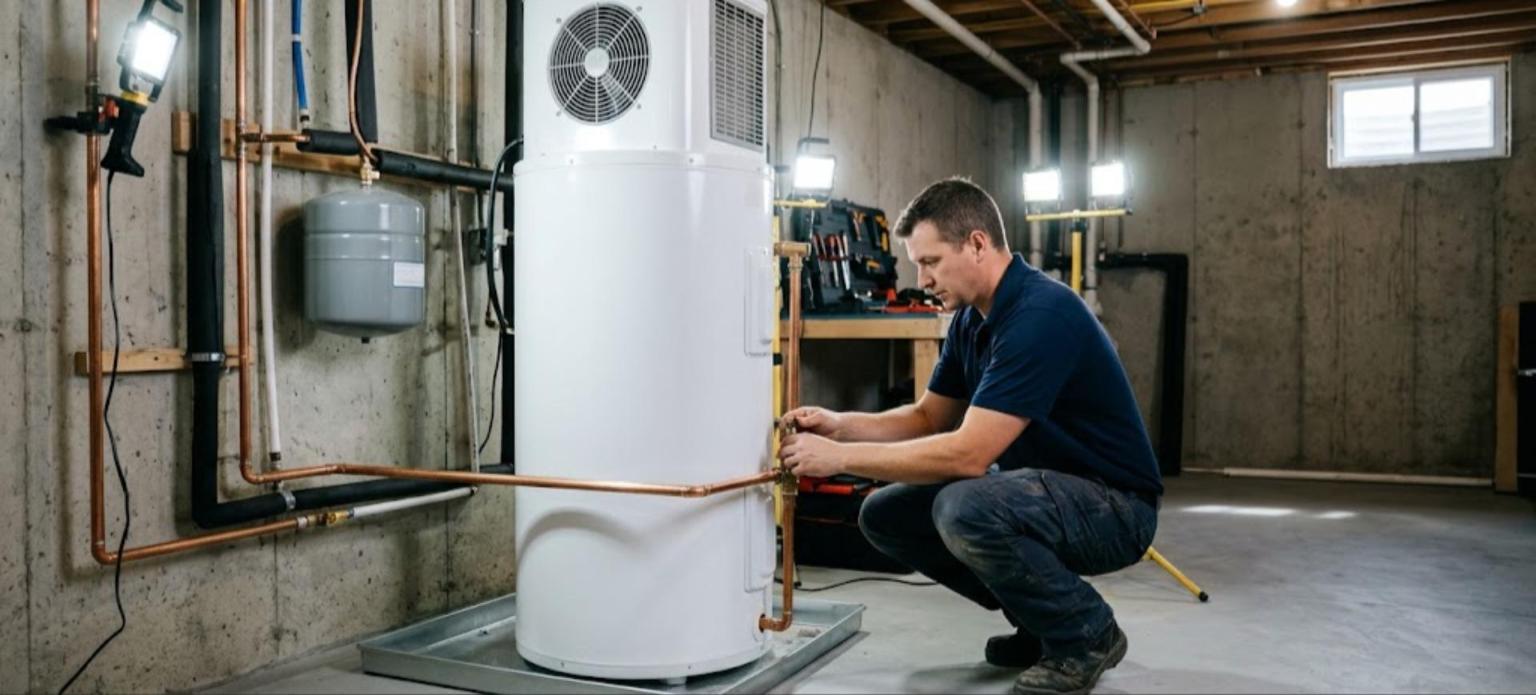

The short answer: A heat pump water heater pulls warmth from the surrounding air and moves it into a water tank instead of heating the water with an electric element. Natural Resources Canada says ENERGY STAR certified models use up to 70% less energy, on average, than a standard electric water heater. They work best in a roomy basement or utility room, they cool and dry the space around them, and in Ontario they are one of the upgrades included in the Home Renovation Savings Program's bundled path.
Water heating is easy to forget until the hot water runs out, yet Natural Resources Canada estimates that water heaters account for 17.2% of the energy used in the average Canadian home. That makes the heat pump water heater one of the most talked-about upgrades of 2026, especially for homes that already use electric tanks or are planning a full energy retrofit.
This guide explains how the technology works, how it compares with tank, tankless and gas options, where it fits in a typical GTA home, and what to check before you buy. If you are weighing several upgrades at once, you can book a visit and ask our team whether one fits your home.
Key takeaways
- This type of tank moves heat from room air into the water, which uses far less electricity than a standard element.
- The biggest savings come when it replaces a standard electric water heater.
- It needs space, airflow and a drain for condensate, so location matters.
- It cools and dehumidifies the room it sits in, which is a bonus in summer.
- In Ontario it is a bundled-path upgrade, so a home energy assessment comes first for the rebate.
How a Heat Pump Water Heater Works
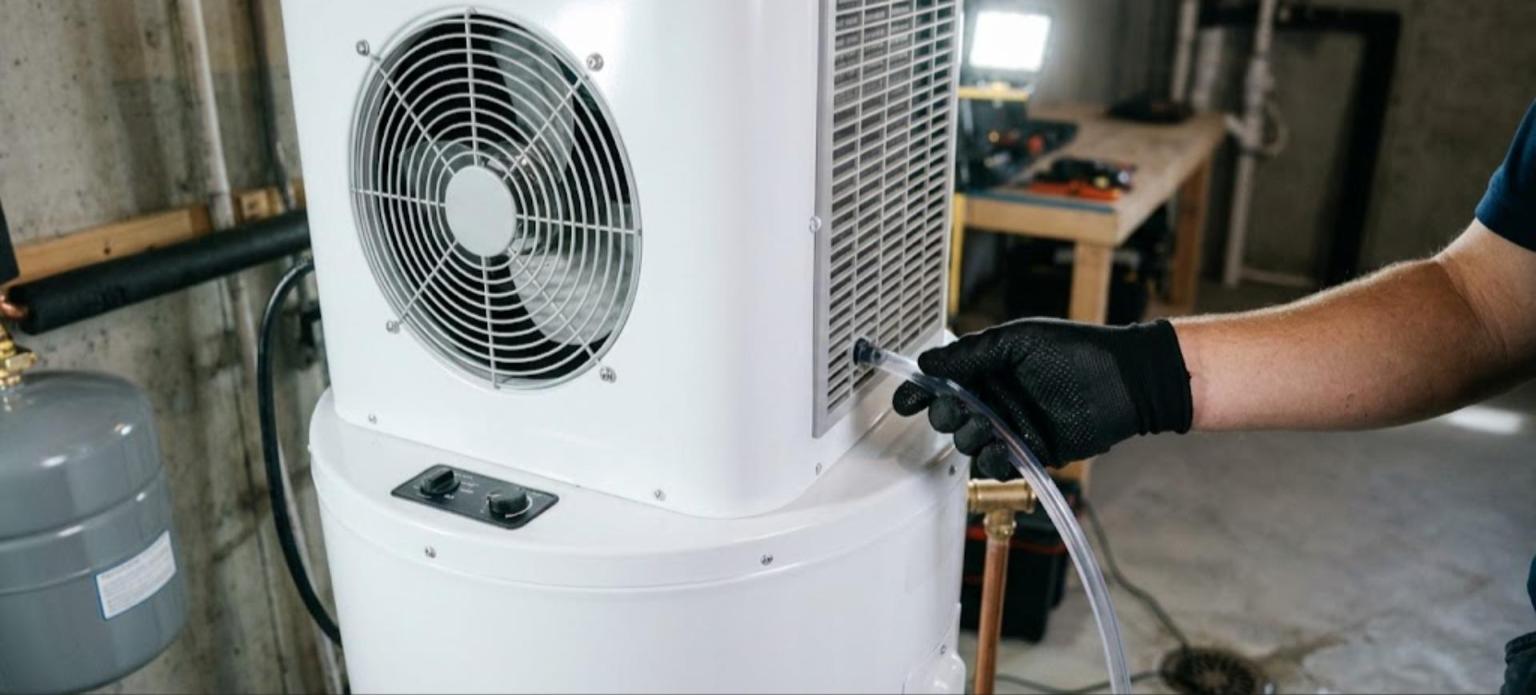
The idea is the same as the heat pump that heats a house or the refrigerator in your kitchen, just pointed at a tank of water. A small fan draws room air over a cold coil. Refrigerant in the coil absorbs heat from that air, a compressor concentrates it, and the heat is passed into the water in the tank. The cooled, drier air leaves through the fan.
Because it moves heat instead of making it, a heat pump water heater delivers much more hot water for each unit of electricity. Most models also have a backup electric element that kicks in during very high demand, such as several showers back to back, and a choice of operating modes:
- Heat pump only: the lowest operating cost, with slower recovery.
- Hybrid: the heat pump does most of the work and the element helps during heavy use.
- Electric only: works like a standard tank, useful while servicing or in a very cold room.
- Vacation: holds the water at a low temperature while you are away.
How It Compares With Other Water Heaters
Every home is different, so here is a plain comparison of the four types we see most in GTA basements:
| Type | How it heats | Strengths | Watch for |
|---|---|---|---|
| Heat pump model | Moves heat from room air | Very efficient on electricity, dehumidifies the room | Needs space, airflow and a condensate drain |
| Standard electric tank | Electric elements | Simple and compact | Highest electricity use |
| Gas tank | Gas burner | Fast recovery | Venting and yearly safety checks |
| Tankless | Heats water on demand | Endless hot water, small footprint | Gas line and venting sizing, descaling |
If your home already has a gas tank or a tankless unit, the savings case is different and depends on your gas and electricity prices. Our guides on tankless water heaters, common electric water heater problems and the water heater basics help you compare.
Will One Fit Your Home?
Location is the make-or-break factor. Before you buy one, check these points, and always follow the manufacturer's installation requirements for the model you choose:
- Room size and airflow. The unit needs a good volume of air around it. A cramped closet usually needs louvred doors or ducting.
- Height. The fan module sits on top, so these tanks are often taller than a standard tank. Measure the ceiling height and any ductwork overhead.
- Condensate drain. The unit removes moisture from the air, so it needs a floor drain or a condensate pump.
- Electrical supply. Many models use the same type of circuit as a standard electric tank, but confirm the requirement. Any electrical changes must be done by a licensed electrician with an ESA permit.
- Noise. The fan and compressor make a low hum, so a unit right next to a bedroom may not be ideal.
- Hot water needs. Tank size should match your household's peak use, not just the average.
Ontario Winters and a Cooler Basement
This is the trade-off homeowners ask about most. Natural Resources Canada notes that this type of water heater means you need less air conditioning in summer, but the benefit is smaller in winter when the house needs space heating. In practice:
- Summer: the cool, dry exhaust air is a welcome bonus in a damp basement, and can reduce how often a dehumidifier runs. See the signs your home needs a dehumidifier.
- Winter: the heat it pulls from the basement is partly replaced by your furnace or heat pump, so part of the savings shifts to your heating system.
- Unheated spaces: in a cold garage or crawl space, performance drops and the backup element runs more often.
For most finished or semi-finished GTA basements, the yearly result is still a strong saving over a standard electric tank. If your basement is already cool or hard to heat, our guide on why one room is colder than the rest can help before you decide.
Heat Pump Water Heater Rebates and How to Qualify
In Ontario, ENERGY STAR certified heat pump water heaters are part of the Home Renovation Savings Program's bundled path, delivered by Save on Energy and Enbridge Gas. That path starts with a home energy assessment and requires two or more upgrades. Amounts and rules change, so confirm the current details before you buy. Our guide to a home energy audit in Ontario explains the assessment step.
If you are on time-of-use pricing, ask whether your model can schedule heating cycles for off-peak hours. Our guide to the ultra-low overnight rate explains when electricity is cheapest in Ontario.
Care and Maintenance
This kind of tank needs a little more attention than a basic tank, but nothing complicated:
- Clean or replace the air filter on the fan module as the manufacturer recommends.
- Keep the condensate drain clear so water does not back up.
- Keep boxes and storage away from the air intake and exhaust.
- Have the tank flushed and the anode rod checked on the schedule in your manual.
- Book professional service if hot water runs short, the unit gets louder, or error codes appear.
One more tip: when you compare models, look at the first-hour rating as well as the tank size. The first-hour rating tells you how much hot water the tank can deliver in a busy hour, such as a morning with several showers and a load of laundry. Matching that number to your family's routine matters more than choosing the biggest tank on the shelf.
Getting Advice From Aire One
Aire One has helped GTA homeowners with heating, cooling and water heating since 1990, with more than 120,000 installations and a 4.8-star Google rating from 541 reviews. Because every basement is different, ask our team whether a heat pump water heater fits your home, and we will look at space, drainage, hot water use and your other planned upgrades, such as a cold-climate heat pump for the house itself. You can see everything we offer on our services page, or reach our Markham HVAC team any time.
Thinking about a heat pump water heater?
Get honest advice on whether it fits your basement, your hot water needs and the rebate rules. Serving Markham, Richmond Hill and the GTA since 1990.
310-HEAT (310-4328) · 24/7 service · $79 service call*
Frequently Asked Questions
How much energy does a heat pump water heater save?
Natural Resources Canada says ENERGY STAR certified models use up to 70% less energy, on average, than a standard electric water heater. Your actual savings depend on your hot water use, where the unit is installed and what it replaces.
Do these water heaters work in Canadian basements?
Yes, a finished or semi-finished basement with enough space and airflow is often a good location. The unit cools and dries the air around it, which helps in summer. In winter, your heating system replaces some of that heat, and very cold unheated spaces reduce performance.
Is there a rebate for heat pump water heaters in Ontario?
ENERGY STAR certified models are included in the bundled path of Ontario's Home Renovation Savings Program. That path starts with a home energy assessment and requires two or more upgrades. Check saveonenergy.ca for current amounts and rules.
Are heat pump water heaters noisy?
They make a low hum from the fan and compressor while heating, similar to a dehumidifier. In a basement utility room it is rarely noticeable, but it is best not to install one right beside a bedroom.
Does a heat pump water heater need a drain?
Yes. Because it removes moisture from the air, it produces condensate that must go to a floor drain or a condensate pump. Plan the drain location before choosing where to install the tank.
Sources and Helpful Resources
- Natural Resources Canada: ENERGY STAR Heat Pump Water Heaters
- Natural Resources Canada: Guide to Residential Water Heaters
- Natural Resources Canada: ENERGY STAR Water Heaters
- Save on Energy: Home Renovation Savings Program
Matthew leads the Aire One Markham and Metro Toronto team, helping homeowners choose heating, cooling and water heating upgrades that suit their homes and Ontario's rebate programs. Aire One has been a TSSA-registered, Carrier Factory Authorized Dealer since 1990.