

Replacing Electric Baseboard Heaters With a Heat Pump
Lower electric heating bills, add summer cooling and keep every room comfortable. How the switch works in an Ontario home.
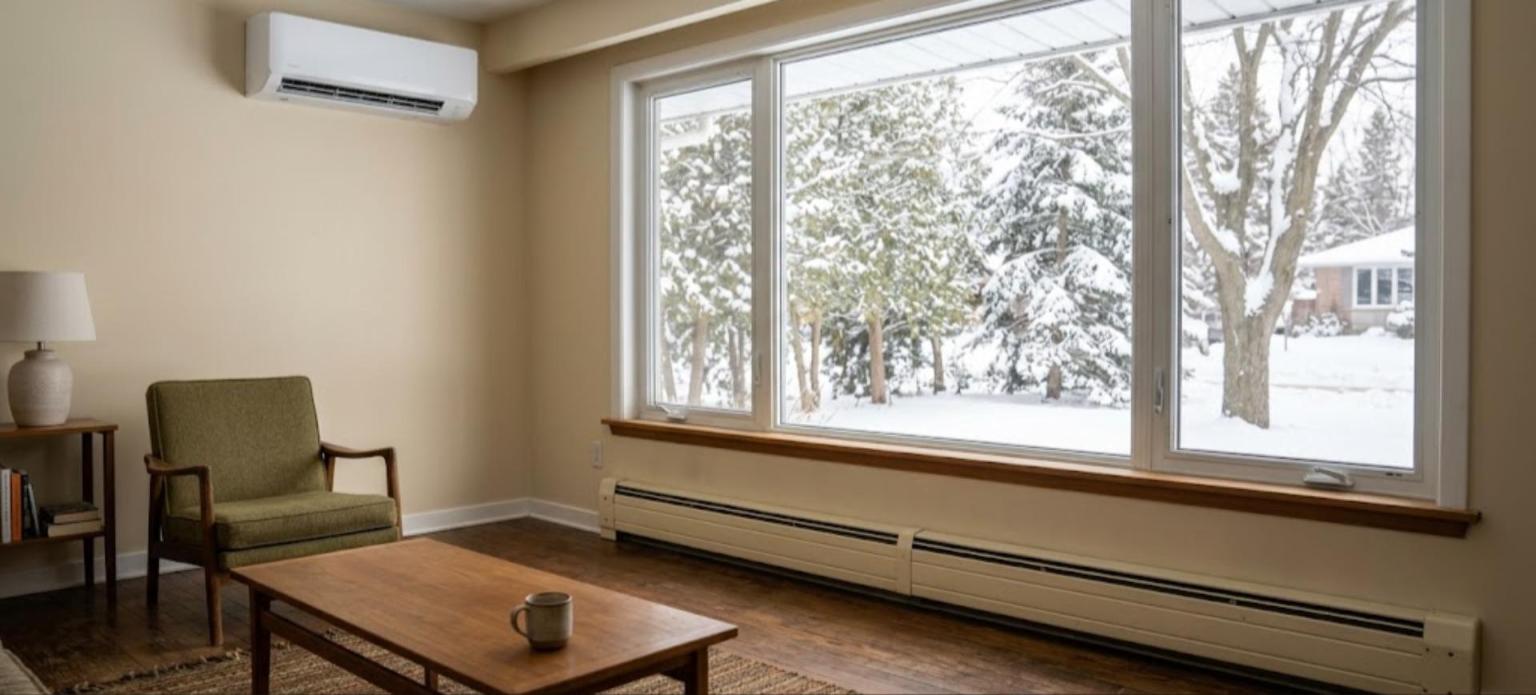

The short answer: Yes, you can replace baseboard heaters with heat pump systems, and for most Ontario homes it is one of the best ways to cut electric heating costs. Baseboard heaters turn one unit of electricity into one unit of heat, while a cold-climate heat pump moves heat from outdoor air and delivers more heat for the same electricity on most winter days. Homes without ducts usually switch to ductless heads, homes with ducts can use a central heat pump, and qualifying models may be eligible for provincial rebates.
Electric baseboard heaters are simple and quiet, but they are also one of the most expensive ways to heat a home in Ontario. That is why so many owners of bungalows, older semis, condos and additions now ask how to replace baseboard heaters with heat pump systems that heat in winter and cool in summer. The switch is well proven, needs no major demolition, and can be planned room by room.
This guide explains why the change saves money, how the options compare, what happens to the old wiring, which rebates may apply, and the seven steps we follow. If you would like a professional opinion on your home, you can book a free assessment online or call 310-HEAT any time.
Key takeaways
- Baseboards turn electricity into heat one to one; when you replace baseboard heaters with heat pump systems, you get more heat for the same power on most winter days.
- Homes without ductwork usually move to ductless mini-split heads; homes with ducts can use a central heat pump.
- Many homeowners keep one or two baseboards as backup for the coldest nights.
- Any electrical changes must be done by a Licensed Electrical Contractor with an ESA notification.
- Qualifying cold-climate heat pumps may be eligible for rebates through the Home Renovation Savings Program.
Why Homeowners Replace Baseboard Heaters With Heat Pump Systems
A baseboard heater is an electric resistance heater. Every kilowatt-hour you pay for becomes one kilowatt-hour of heat, and nothing more. A heat pump works differently: it uses a refrigerant cycle to collect heat from the outdoor air, even when it is well below freezing, and pump it indoors. On a typical Ontario winter day, that means more heat delivered for each kilowatt-hour on your bill.
Homeowners who replace baseboard heaters with heat pump equipment usually mention three reasons:
- Lower heating bills. Electric resistance heat is costly to run through a long winter, and a heat pump reduces the electricity needed for the same comfort.
- Summer cooling at no extra equipment cost. The same heat pump runs in reverse as an air conditioner, which replaces window units.
- More even comfort. Baseboards create warm strips along exterior walls; a heat pump circulates air and holds a steadier temperature.
Natural Resources Canada describes heat pumps as an efficient way to both heat and cool a home, and cold-climate models are designed to keep working through Canadian winters. Our guide to how extreme cold affects heat pump performance explains what to expect on the coldest nights.
Baseboard vs Ductless vs Ducted Heat Pump
Before you decide how to replace baseboard heaters with heat pump equipment, it helps to see the three options side by side:
| Feature | Electric baseboard | Ductless heat pump | Ducted heat pump |
|---|---|---|---|
| Heat per kWh | One unit of heat | More than one on most winter days | More than one on most winter days |
| Summer cooling | No | Yes | Yes |
| Needs ductwork | No | No | Yes |
| Room-by-room control | Yes, each heater | Yes, each head or zone | Whole-home, or zoned with dampers |
| Best fit | Small or rarely used spaces | Homes without ducts, additions, condos | Homes that already have ducts |
Most homes that heat with baseboards have no ductwork, so ductless is the usual way to replace baseboard heaters with heat pump units. If you are curious how these systems work, read the basics of ductless split systems.
How to Plan the Layout Room by Room
The goal is not to put a heat pump head in every room that once had a baseboard. Instead, a technician looks at how heat moves through the home and groups rooms into zones. A careful plan helps you replace baseboard heaters with heat pump units without overspending on heads you do not need.
| Area of the home | Common approach | Why |
|---|---|---|
| Open living, dining and kitchen | One larger wall or ceiling head | Air moves freely through open spaces |
| Bedrooms | Small heads in larger bedrooms, or one head serving a hallway | Doors are often closed at night |
| Finished basement | One head or floor console | Basements stay cooler and need their own zone |
| Bathrooms and small rooms | Keep the existing baseboard | Small loads, used briefly |
A heat-loss calculation for each zone decides the size of every head and the outdoor unit. Correct sizing matters as much here as with any system; our article on HVAC system sizing explains why an oversized unit can be just as uncomfortable as an undersized one.
What Happens to the Old Baseboards and Wiring?
You have two choices, and both are common:
- Keep some baseboards as backup. Leaving one or two in place, set a few degrees below the heat pump, gives you extra heat on the coldest nights and redundancy if a head ever needs service.
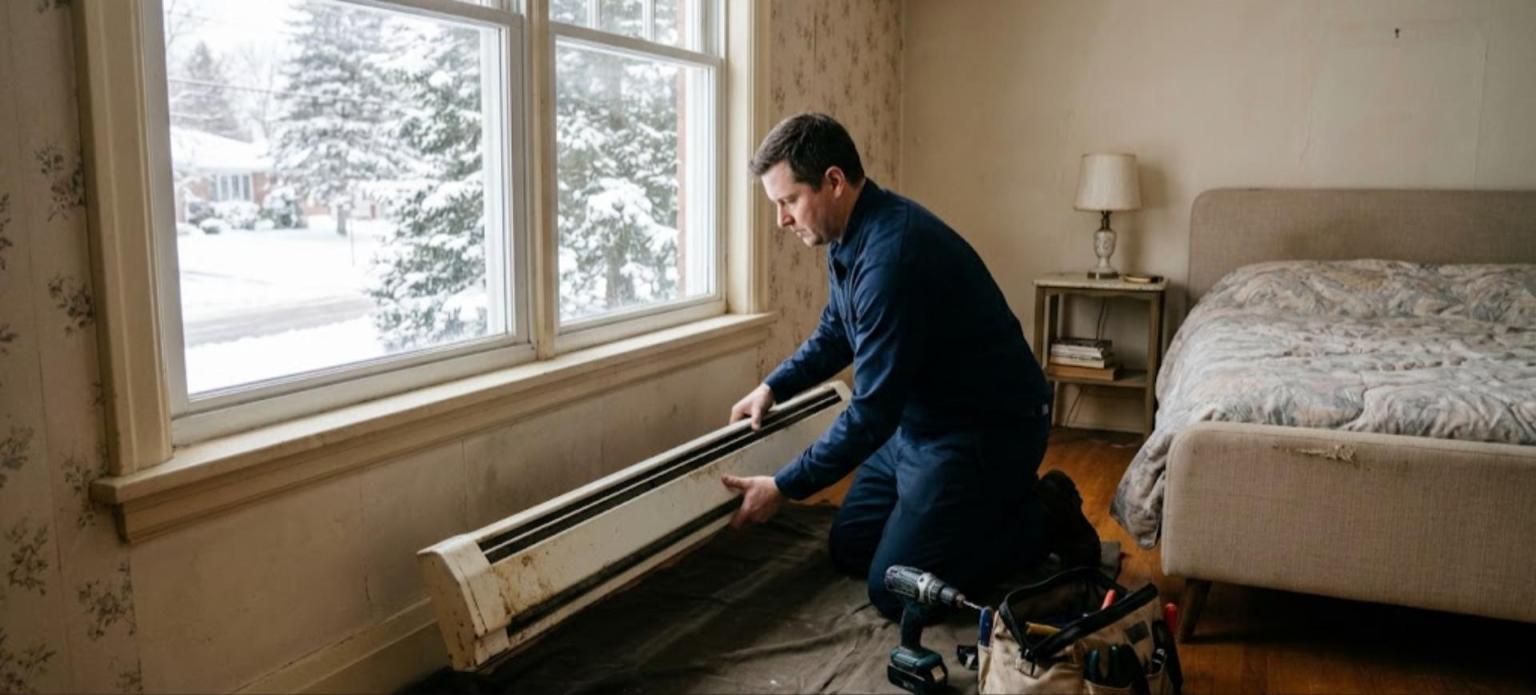
- Remove them and reuse the space. Taking baseboards out frees up wall space for furniture and may free electrical capacity for the heat pump circuit.
Either way, the electrical side matters. In Ontario, the Electrical Safety Authority states that by law only a Licensed Electrical Contractor can be hired to do electrical work on a home, and the contractor files a notification with ESA. Disconnecting baseboard circuits or adding a new circuit for the outdoor unit is not a DIY job. If your home has an older or smaller service, our guide to whether a 100 amp panel can handle a heat pump explains what an electrician will look at.
Rebates and Running Costs
Ontario's Home Renovation Savings Program, delivered by Save on Energy and Enbridge Gas, lists cold-climate air source heat pumps among its single upgrades, and homes that heat with electricity are eligible to participate. Amounts and rules change, so confirm the current details before you buy and keep model numbers and receipts.
Running costs depend on your electricity plan, insulation and how you use the system. Homes that replace baseboard heaters with heat pump units often see the biggest savings when the house is also reasonably well sealed and insulated. For a broader look at prices and savings, read our heat pump cost guide for Ontario, and see our heat pump page for current rebate guidance.
7 Steps to Replace Baseboard Heaters With Heat Pump Systems
Here is the process we follow so the change goes smoothly, especially in an occupied home in the middle of winter:
- Home assessment. We walk through every room, note baseboard locations, windows, insulation and how you use each space.
- Heat-loss calculation. Each zone is sized so the system can carry the home through a typical Ontario winter.
- Layout design. We choose head types and locations, line-set routes and the outdoor unit position above the snow line.
- Electrical review. A Licensed Electrical Contractor confirms panel capacity and plans any new circuit.
- Rebate check. We confirm which models qualify before you commit, so the paperwork matches the equipment.
- Installation. Heads, line sets and the outdoor unit are installed, usually in one to two days for a typical home.
- Commissioning and setup. The system is tested, controls are set, and you decide which baseboards stay as backup.
Is It Right for Every Home?
For most homes, the plan to replace baseboard heaters with heat pump systems works well, but a few situations need extra thought. Very drafty older homes may need air sealing first to get the full benefit. Homes with many small, closed-off rooms may need more heads, which raises the cost. And if your electrical service is small or crowded, a panel upgrade may be part of the project.
If you are new to the technology, our explainer on what a heat pump is and how it works is a good place to start, and our heat pump installation guide walks through a typical install day.
Why Homeowners Choose Aire One for This Upgrade
Aire One has helped homeowners across Markham, Richmond Hill and York Region since 1990, with more than 120,000 installations, NATE-certified and Red Seal technicians, and a 4.8-star Google rating from 541 reviews. When you replace baseboard heaters with heat pump equipment with us, you get a free Total Home Assessment, a written quote, financing options and a 10-year worry-free warranty.
To keep the new system efficient for years, ask about our maintenance and protection plans, and visit our HVAC company in Markham page to see the full range of services.
Ready to retire your baseboard heaters?
Book a free Total Home Assessment and get a plan to replace baseboard heaters with heat pump systems, built around your rooms, wiring and current rebates.
310-HEAT (310-4328) · 24/7 service · $79 service call*
Frequently Asked Questions
Can a heat pump completely replace electric baseboard heat?
In most Ontario homes, yes. A properly sized cold-climate heat pump can carry the heating load through most of the winter. Many homeowners keep one or two baseboards as backup for the coldest nights or for small rooms such as bathrooms.
Do I need ductwork to replace baseboard heaters with heat pump units?
No. Most homes heated by baseboards have no ducts, so ductless mini-split heads are the usual choice. If your home already has ductwork, a central heat pump may be an option.
How many ductless heads will my home need?
It depends on the layout, not the number of baseboards. Open areas can share one head, while closed bedrooms or a finished basement often need their own. A heat-loss calculation for each zone decides the final number and size.
Will I need an electrical upgrade?
Sometimes. The heat pump needs a dedicated circuit, and an older or full panel may need changes. In Ontario, this work must be done by a Licensed Electrical Contractor who files a notification with the Electrical Safety Authority.
Are there rebates for switching from baseboard heat to a heat pump?
Qualifying cold-climate air source heat pumps are listed as an eligible upgrade in Ontario's Home Renovation Savings Program. Amounts and rules change, so if you plan to replace baseboard heaters with heat pump equipment, check the program website and confirm your model qualifies first.
Sources and Helpful Resources
- Natural Resources Canada: Electric Heat Pumps
- Save on Energy: Home Renovation Savings Program
- Electrical Safety Authority: Electrical Permits
- ENERGY STAR Canada (Natural Resources Canada)
Matthew leads the Aire One Markham and Metro Toronto team, helping homeowners replace baseboard heaters with heat pump systems that heat and cool efficiently all year. Aire One has been a TSSA-registered, Carrier Factory Authorized Dealer since 1990.