
Furnace Vent Blocked by Snow?
Why snow on your intake and exhaust pipes shuts the heat off, how to clear it safely, and when it is time to call a technician.
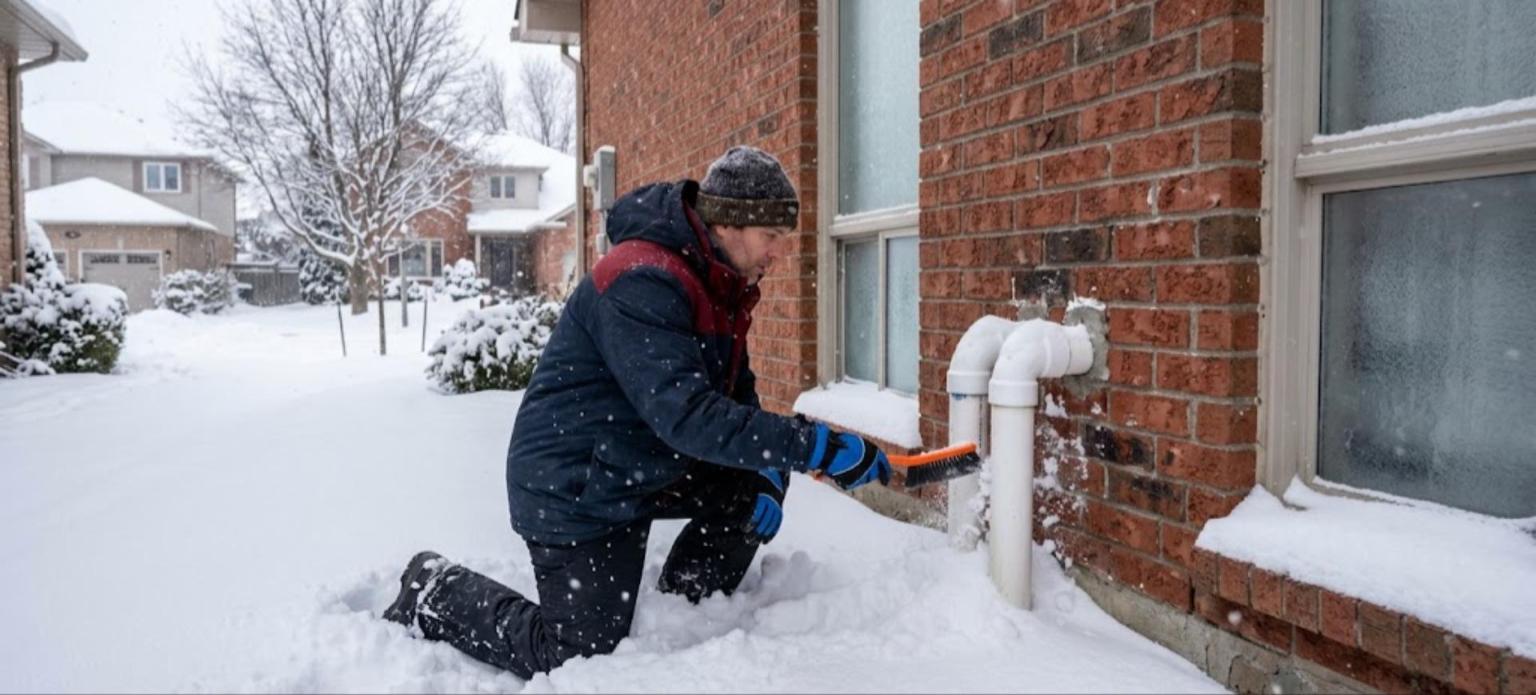

The short answer: A furnace vent blocked by snow stops a high-efficiency furnace from breathing, so its safety switch shuts the burners off and the house starts to cool. Gently brush the snow away from the white intake and exhaust pipes on the side of your home, never use a shovel or sharp tool, then wait a few minutes for the furnace to restart. If a carbon monoxide alarm sounds or the heat does not come back, leave the vents alone and call for help.
Every winter, the first big storm brings the same phone calls: the furnace was working fine last night, and this morning the house is cold. In many of those homes, the cause is sitting right outside. A furnace vent blocked by snow is one of the most common reasons a modern furnace stops heating, and it is also one of the easiest problems to prevent once you know where to look.
This guide explains why snow affects your furnace, the signs to watch for, how to clear the pipes safely, and when a technician should take over. With a snowier than normal winter forecast for the GTA, it is worth reading before the next storm. If your heat is already off, you can book a service visit online or call 310-HEAT any time.
Key takeaways
- High-efficiency furnaces pull in outdoor air and push exhaust out through two plastic pipes that are often close to the ground.
- With a furnace vent blocked by snow or ice, a pressure switch stops the furnace to prevent unsafe operation.
- Clear snow by hand or with a soft brush; never use a shovel, blower or sharp tool on vents or the gas meter.
- A blocked exhaust can push carbon monoxide back toward the home, so working CO alarms are essential.
- Vents that keep getting buried may need to be raised by a licensed technician.
Why a Furnace Vent Blocked by Snow Shuts Down Your Heat
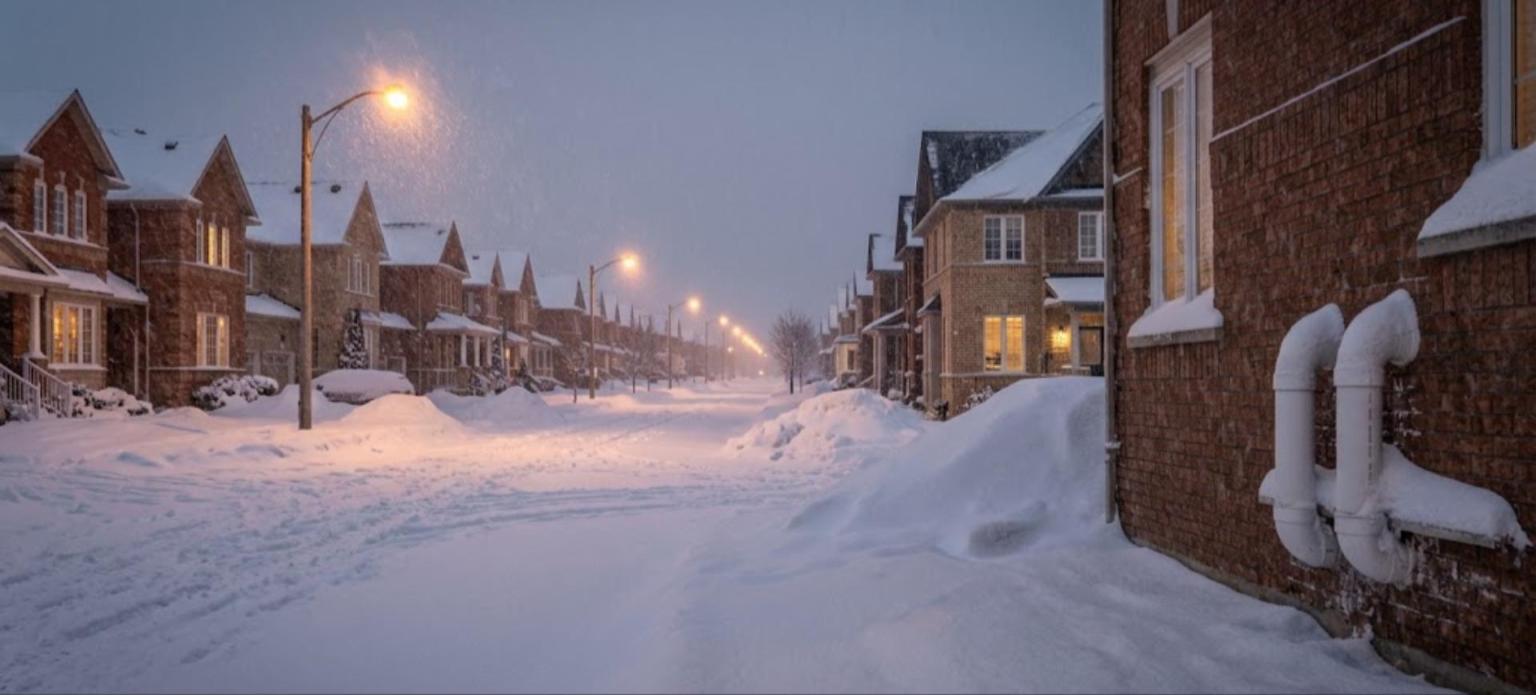
Older furnaces sent hot exhaust up a chimney. Today's high-efficiency furnaces work differently. They pull combustion air in through one white plastic pipe and push cooler exhaust out through another, usually on a side wall of the house. Because the exhaust is cooler, the pipes can sit low, sometimes only a foot or two above the ground.
Before the burners light, a small inducer fan starts and a pressure switch checks that air is moving through both pipes. If the intake or the exhaust is packed with snow, the switch does not see the right pressure and the furnace refuses to light. That is a safety feature, not a breakdown. It stops the furnace from running without enough air or from pushing exhaust gases back into the home.
The result is the same either way: a furnace vent blocked by snow means no heat until the pipe is clear. Many furnaces will try a few times, then go into a lockout that can last an hour or more before the next attempt.
Signs of a Furnace Vent Blocked by Snow
A furnace vent blocked by snow usually shows up within hours of a storm, drifting snow or a freezing rain event. Watch for these clues:
| What you notice | What it usually means |
|---|---|
| The house is cold right after a snowfall | Snow has covered the intake or exhaust pipe |
| The fan hums, then everything stops | The inducer started but the pressure switch did not close |
| A flashing light code on the furnace | Many models flash a pressure switch or lockout code |
| No steam from the exhaust pipe on a cold day | The furnace is not running or exhaust cannot get out |
| Ice ring or icicles around the pipe opening | Melting and refreezing is narrowing the opening |
If a carbon monoxide alarm sounds at any point, treat it as an emergency, not a snow problem. Get everyone outside and call 911.
How to Clear a Furnace Vent Blocked by Snow Safely
Clearing a furnace vent blocked by snow is a safe job for most homeowners. Enbridge Gas and the Technical Standards and Safety Authority (TSSA) both recommend a gentle approach:
- Find both pipes. Look on the side wall closest to the furnace room. Most homes have two white pipes, sometimes joined in a single round cap.
- Turn the thermostat down. This stops the furnace from trying to start while you work.
- Clear snow by hand or with a soft brush. Work from the top down and pull snow away from the openings. Do not use a shovel, scraper or snow blower near the pipes.
- Leave hard ice alone. Do not chip at ice inside the pipe or pour hot water into it. Plastic pipes crack easily in cold weather, and water can refreeze deeper inside.
- Check the gas meter too. Brush snow off the meter and regulator, and knock down icicles hanging above them from a safe distance.
- Turn the thermostat back up. Give the furnace five to ten minutes. If it was in lockout, it may need a full cycle before it tries again.
If you cannot reach the pipes safely, the ice will not come off by hand, or the meter is buried, call for help. Enbridge Gas can be reached at 1-866-763-5427 about a buried or damaged meter.
Where Snow Should Never Pile Up
Your furnace is not the only appliance that vents through the wall. Keep these areas clear all winter:
| Outlet | Why it matters |
|---|---|
| Furnace intake and exhaust | Blockage causes lockouts and can push exhaust back toward the home |
| Water heater and boiler vents | Same carbon monoxide risk as the furnace |
| Gas fireplace vent | A blocked vent can spill exhaust into the room |
| Gas meter and regulator | Ice can affect gas pressure and damage the piping |
| HRV and dryer vents | Blocked hoods reduce fresh air and trap moisture |
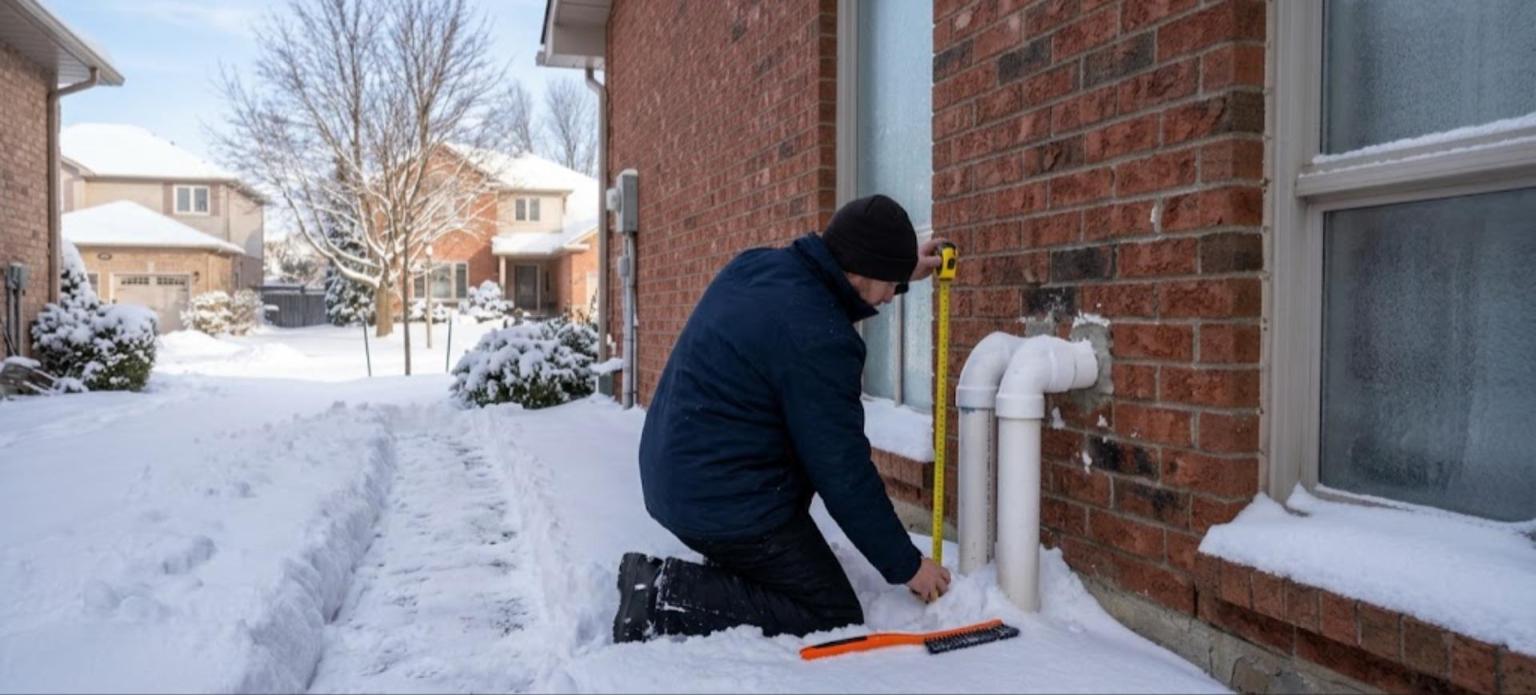
Many furnace manufacturers call for vent openings to sit at least 30 cm (about 12 inches) above the expected snow level. A furnace vent blocked by snow often starts with the shovel, so when you clear the driveway or walk, throw snow away from that side of the house, not against it.
When to Call a Technician
Brushing snow away solves most cases of a furnace vent blocked by snow. Call a licensed technician when:
- The pipes are clear but the furnace still will not light after a full cycle.
- Ice has formed inside the pipe or the pipe looks cracked, sagging or disconnected.
- Water is dripping around the furnace, which can point to a drain or venting problem. Our guide on why a gas furnace leaks water explains the common causes.
- The vents get buried after every storm and need to be raised or relocated.
- The furnace keeps cycling on and off, which can be a combustion issue. See common combustion problems with high-efficiency furnaces.
Changing the height or path of furnace venting is gas appliance work, so it must be done by a TSSA-registered contractor. Our HVAC servicing and repairs team handles venting, pressure switches and lockouts on every make of furnace.
If the heat is out and the cold is setting in, our guide to emergency HVAC in Markham covers what to do while you wait, and Richmond Hill homeowners can use our emergency HVAC in Richmond Hill guide.
Preventing a Furnace Vent Blocked by Snow This Winter
The Old Farmer's Almanac is calling for a cold, snowy winter across the GTA, with the heaviest snow expected in early and late January. A few habits keep a furnace vent blocked by snow from turning into a cold night:
- Check the vents after every storm and after strong wind, since drifts bury pipes too.
- Mark the pipe location with a tall garden stake so you can find it under deep snow.
- Keep the area clear of stored items like bins, firewood or patio furniture that trap drifting snow.
- Clear icicles above the vents from a safe distance so dripping water does not refreeze on the openings.
- Test CO alarms monthly and replace them as the manufacturer recommends.
- Book a yearly tune-up, which includes a check of venting, the pressure switch and the condensate drain. A frozen drain causes similar shutdowns; see our guide to a frozen condensate line.
Members of our maintenance and protection plans get their tune-up and priority booking when storms keep technicians busy.
Winter Help From a Team That Has Seen Every Storm Since 1990
Aire One has kept York Region homes warm since 1990, with more than 120,000 installations, 150 service trucks and technicians on call 24 hours a day. As a Carrier Factory Authorized Dealer with a 4.8-star Google rating from 541 reviews, we can raise low vents, repair damaged venting and get a furnace vent blocked by snow clear and the heat back on. Learn more about our HVAC company in Markham or our HVAC company in Richmond Hill.
Furnace still off after clearing the snow?
Our technicians answer 24/7 across Markham, Richmond Hill and York Region. TSSA-registered and trusted since 1990.
310-HEAT (310-4328) · 24/7 service · $79 service call*
Frequently Asked Questions
Can a furnace vent blocked by snow cause carbon monoxide?
It can. A blocked exhaust can push combustion gases back toward the home, which is why furnaces have a pressure switch that shuts them off. Keep working CO alarms on every storey and next to sleeping areas, and if one sounds, get everyone outside and call 911.
How do I know which pipes are my furnace vents?
On most high-efficiency furnaces, they are two white plastic pipes on the outside wall closest to the furnace room, often 30 to 60 cm above the ground. Some homes have a single round cap where both pipes meet. A technician can point them out during your next tune-up.
Will my furnace restart on its own after I clear the snow?
Usually, yes. Turn the thermostat down, clear the pipes, then turn it back up and wait five to ten minutes. If the furnace went into lockout, it may take longer. If it still does not start, call a technician rather than resetting it over and over.
Can I use a shovel or snow blower near the vents?
No. Enbridge Gas advises against shovels, blowers and sharp tools near gas meters and vents. Use your hands or a soft brush, and never blow or throw snow toward that side of the house.
Can my furnace vents be raised so they stop getting buried?
Yes. A TSSA-registered contractor can often extend or reroute the intake and exhaust following the furnace manufacturer's instructions. It is gas appliance work, so it should never be a do-it-yourself project.
Sources and Helpful Resources
- Enbridge Gas: Keep Your Gas Meter Clear
- TSSA: Keep Gas Meters and Appliance Vents Free From Snow and Ice
- Health Canada: Carbon Monoxide Symptoms of Exposure
- Enbridge Gas: What to Do If You Smell Gas
Matthew leads the Aire One Markham and Metro Toronto team, helping homeowners keep their heating systems safe and running through every Ontario winter storm. Aire One has been a TSSA-registered, Carrier Factory Authorized Dealer since 1990.