

Radiant Floor Heating: Is It Worth It?
Warm floors, quiet heat and no blowing air. How radiant systems work, where they shine, and the trade-offs to know before you build or renovate.


The short answer: Radiant floor heating warms a room from the floor up, either with warm water running through tubing (hydronic) or with electric heating mats or cables. It is quiet, even and very comfortable, especially in basements, kitchens and bathrooms with tile floors. The trade-offs are a higher installation cost than forced air, slower response to thermostat changes, and no built-in cooling, so it is best planned during a build or major renovation.
Few things feel better on a January morning than stepping onto a warm floor. That is the main appeal of radiant floor heating, and it is a question we hear more often as homeowners finish basements, renovate kitchens and plan additions. It is also a system that rewards careful planning, because once the floor is down, changes are difficult.
This guide explains how radiant systems work, the difference between hydronic and electric options, the rooms and floor coverings that suit them best, seven honest pros and cons, and the questions to ask before you commit. If you would like an opinion on your home, you can book a free assessment online or call 310-HEAT.
Key takeaways
- There are two main types of radiant systems: hydronic (warm water in tubing) and electric (mats or cables).
- Hydronic systems suit whole floors and larger areas; electric mats suit smaller rooms such as bathrooms.
- Tile and stone transfer heat well; thick carpet and pads reduce output.
- Radiant heat does not cool, so most homes still need air conditioning or a heat pump for summer.
- Gas-fired boilers must be installed and serviced by a TSSA-registered contractor.
How Radiant Floor Heating Works
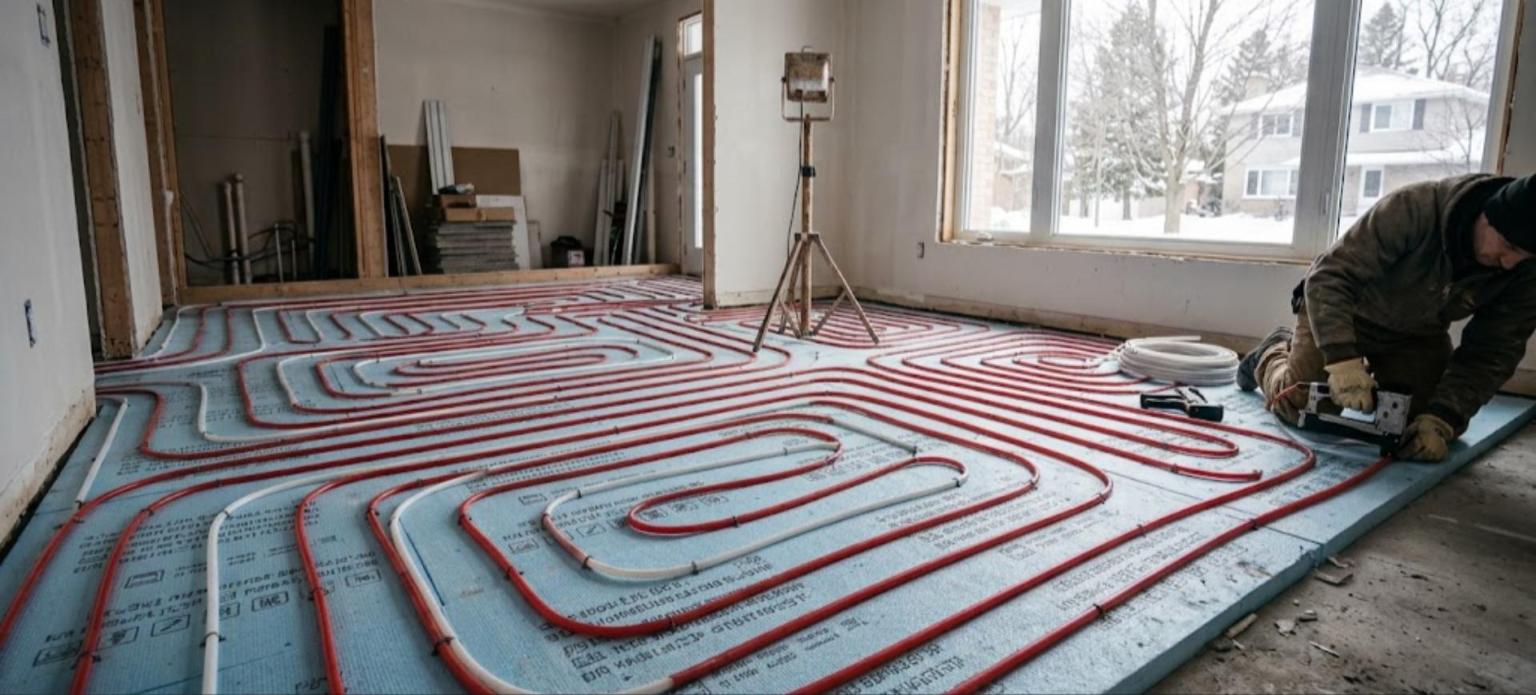
Forced-air systems heat air and blow it through ducts. A radiant system works differently: it warms the floor surface, and the floor then warms people and objects in the room through radiant heat, the same way sunshine warms your skin on a cold day. Because heat starts at floor level, the room feels comfortable at a slightly lower air temperature, and there are no drafts or blowing dust.
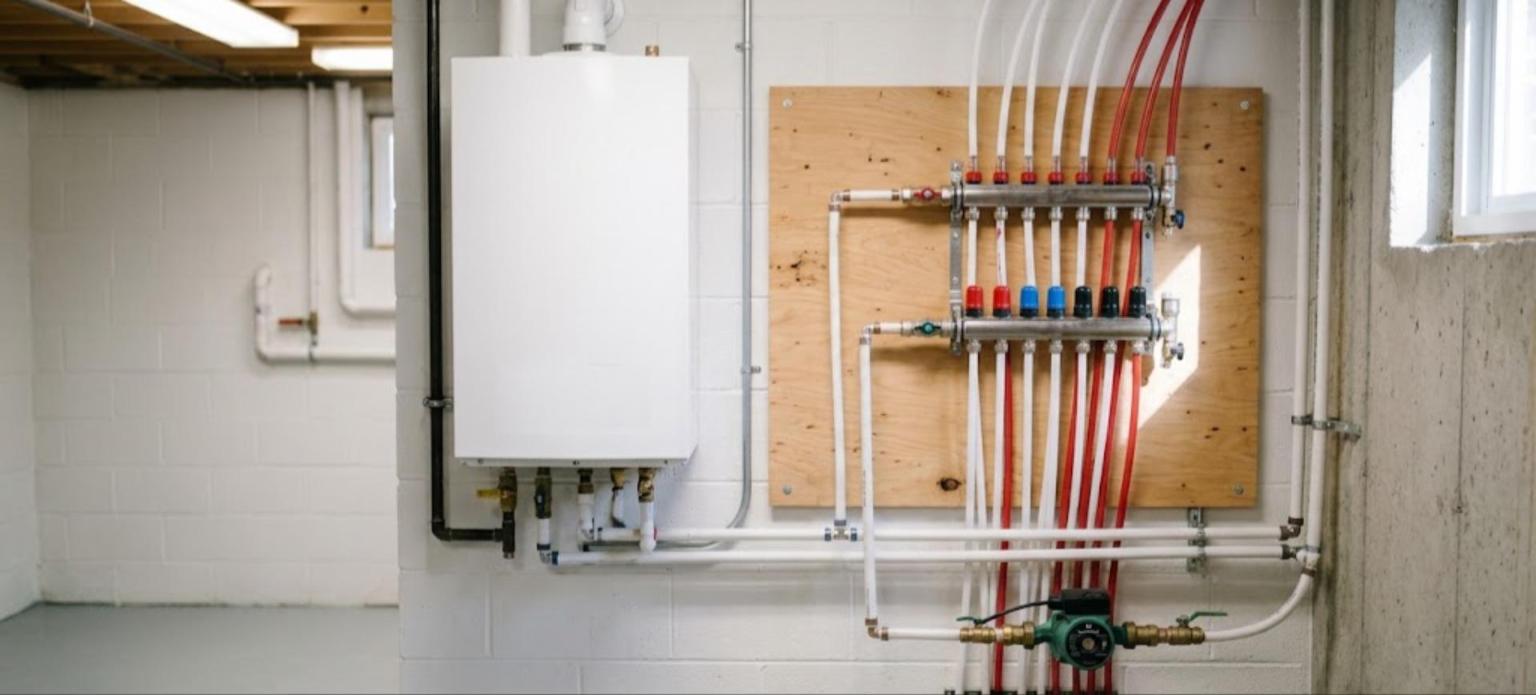
Hydronic systems circulate warm water from a heat source through loops of PEX tubing. A manifold splits the water into separate loops, and thermostats control each zone. Electric systems use thin heating mats or cables under the floor covering, each controlled by its own thermostat.
Hydronic vs Electric Radiant Floor Heating
The two types solve different problems, so it helps to compare them directly:
| Feature | Hydronic | Electric |
|---|---|---|
| Heat source | Boiler, combination unit or air-to-water heat pump | Electricity through mats or cables |
| Best for | Whole floors, basements, additions, new builds | Bathrooms, small kitchens, single rooms |
| Installation | More complex: tubing, manifold, pumps, controls | Simpler: thin mats under tile or flooring |
| Operating cost | Usually lower for large areas | Higher if used to heat large spaces |
| Service needs | Annual check of the heat source and pumps | Very little once installed |
For most homeowners, electric radiant floor heating is a comfort upgrade for one or two rooms, while hydronic systems can heat an entire level. If you already have a boiler, our guides to boiler maintenance and common boiler problems are useful background.
Where Radiant Floor Heating Works Best
Radiant systems perform best in a few specific situations:
- Basements on concrete slabs. Cold concrete floors are one of the most common comfort complaints in Ontario homes, and radiant tubing in or on the slab solves it.
- Kitchens and bathrooms with tile. Tile conducts heat well and feels coldest without it.
- Additions and sunrooms. Spaces that are hard to reach with existing ductwork can be heated without new ducts.
- New builds and major renovations. Installing tubing while floors are open keeps costs and disruption down.
Floor coverings matter. Tile, stone and polished concrete work best. Engineered wood can work with the right product and temperature limits. Thick carpet with heavy underpad reduces how much heat reaches the room, so ask about floor coverings early in the design. If you are planning a lower-level suite, our guide to basement apartment heating covers the code points to consider.
7 Honest Pros and Cons
Here is a balanced look before you decide:
| Pros | Cons | |
|---|---|---|
| 1 | Even, comfortable heat from the floor up | Higher installation cost than forced air |
| 2 | Silent operation, no blowing air or dust | Slow to respond to thermostat changes |
| 3 | Room-by-room zoning is easy | Provides no cooling for summer |
| 4 | No vents or radiators taking up wall space | Hard to add under existing floors without renovation |
| 5 | Works well with lower water temperatures | Thick carpet reduces output |
| 6 | Ideal for cold basements and tile floors | Repairs under a finished floor are difficult |
| 7 | Pairs well with efficient boilers and heat pumps | Needs careful design and balancing |
Because radiant systems do not cool, most homes pair them with central air, a heat pump or ductless split systems for summer comfort.
Choosing a Heat Source for a Hydronic System
The heat source affects comfort, running costs and maintenance:
- High-efficiency condensing boiler. A common choice, and radiant floors suit the lower water temperatures that help condensing boilers run efficiently.
- Combination boiler. Provides both space heating and domestic hot water from one compact unit.
- Air-to-water heat pump. An emerging option that heats water for radiant loops using electricity, often with a backup heat source for the coldest days.
Gas-fired equipment must be installed and serviced by a TSSA-registered contractor with certified gas technicians. Our article comparing boilers and tankless water heaters explains how these appliances differ.
Options for Existing Homes
You do not always need to tear up a finished floor. Depending on the home, a designer may suggest one of these approaches:
- From below. Where the basement ceiling is open, tubing can be fastened under the subfloor with aluminum heat transfer plates that spread heat evenly.
- Low-profile panels. Grooved panels hold tubing and add only a small amount of height, which suits renovations where floor height matters.
- Thin overpour. A thin layer of self-levelling compound covers tubing or electric cables before tile goes down.
- Electric mats in one room. In a bathroom or small kitchen, an electric mat is often the simplest retrofit.
Each option changes floor height, cost and heat output, so the right choice depends on the room and the floor you want on top.
Living With Radiant Heat Day to Day
Radiant floors behave differently from forced air, and a few habits help you get the most from them:
- Set it and leave it. Floors take hours to warm up, so large nightly setbacks save little and can leave you cold in the morning.
- Keep rugs light. Thin area rugs are fine, but thick rugs with heavy pads block heat from reaching the room.
- Plan furniture placement. Large built-ins and furniture without legs trap heat beneath them.
- Use smart controls carefully. Floor-sensing thermostats protect wood floors and keep surface temperatures in a safe range.
With these habits, radiant floor heating delivers steady, quiet warmth through the coldest weeks of the year.
Questions to Ask Before You Install Radiant Floor Heating
Good results with radiant floor heating come from good design. Before you commit, ask:
- Has a room-by-room heat-loss calculation been done?
- What floor coverings are planned for each area, and are they rated for radiant heat?
- How will the slab or subfloor be insulated to keep heat moving up, not down?
- How many zones and thermostats will there be?
- What will heat and cool the home in summer?
- Who will service the boiler, pumps and controls each year?
If some rooms in your home are already uncomfortable, our guide to why one room is colder than the rest may point to simpler fixes, and our article on HVAC zoning explains another way to balance comfort.
Getting Honest Advice From Aire One
Aire One has served homeowners across Markham, Richmond Hill and York Region since 1990, with more than 120,000 installations and a 4.8-star Google rating from 541 reviews. Our team works with boilers, furnaces, heat pumps and air conditioners every day. If you are considering radiant floor heating, ask our team whether it fits your home and how it would work alongside your existing heating and cooling.
See the full range of what we do on our services page and our HVAC company in Markham page, and keep any boiler running reliably with our maintenance and protection plans.
Thinking about warm floors this winter?
Book a free Total Home Assessment and get honest advice on heating options for your basement, kitchen or addition.
310-HEAT (310-4328) · 24/7 service · $79 service call*
Frequently Asked Questions
Is radiant floor heating worth it?
It is worth it when comfort is the priority and the floors are already open, such as during a build, basement finish or major renovation. It costs more to install than forced air and does not provide cooling, so most homes pair it with air conditioning or a heat pump.
What is the difference between hydronic and electric radiant floor heating?
Hydronic systems circulate warm water from a boiler or heat pump through tubing and suit larger areas. Electric systems use thin mats or cables under the floor and suit smaller rooms such as bathrooms.
Can radiant floor heating heat a whole house?
A well-designed hydronic system can heat an entire home, as long as each area has a heat-loss calculation and suitable floor coverings. Electric systems are usually used for single rooms rather than whole houses.
Which floors work best with radiant heat?
Tile, stone and polished concrete work best because they conduct heat well. Some engineered wood products are suitable within temperature limits, while thick carpet and heavy underpad reduce heat output.
Does radiant floor heating need maintenance?
Hydronic systems need yearly service of the boiler or heat source, pumps and controls, and gas-fired equipment must be serviced by a TSSA-registered contractor. Electric mats need very little maintenance once installed.
Sources and Helpful Resources
- CMHC: Radiant Hydronic Floor Heating (About Your House)
- TSSA: Authorized Heating Fuel Contractors
- ENERGY STAR Canada (Natural Resources Canada)
- Natural Resources Canada: Electric Heat Pumps
Matthew leads the Aire One Markham and Metro Toronto team, helping homeowners compare heating options honestly so every room stays comfortable through an Ontario winter. Aire One has been a TSSA-registered, Carrier Factory Authorized Dealer since 1990.