
Your Furnace During a Power Outage
Why a gas furnace stops when the hydro goes out, how to keep your family warm and safe, and what to check when the power comes back.
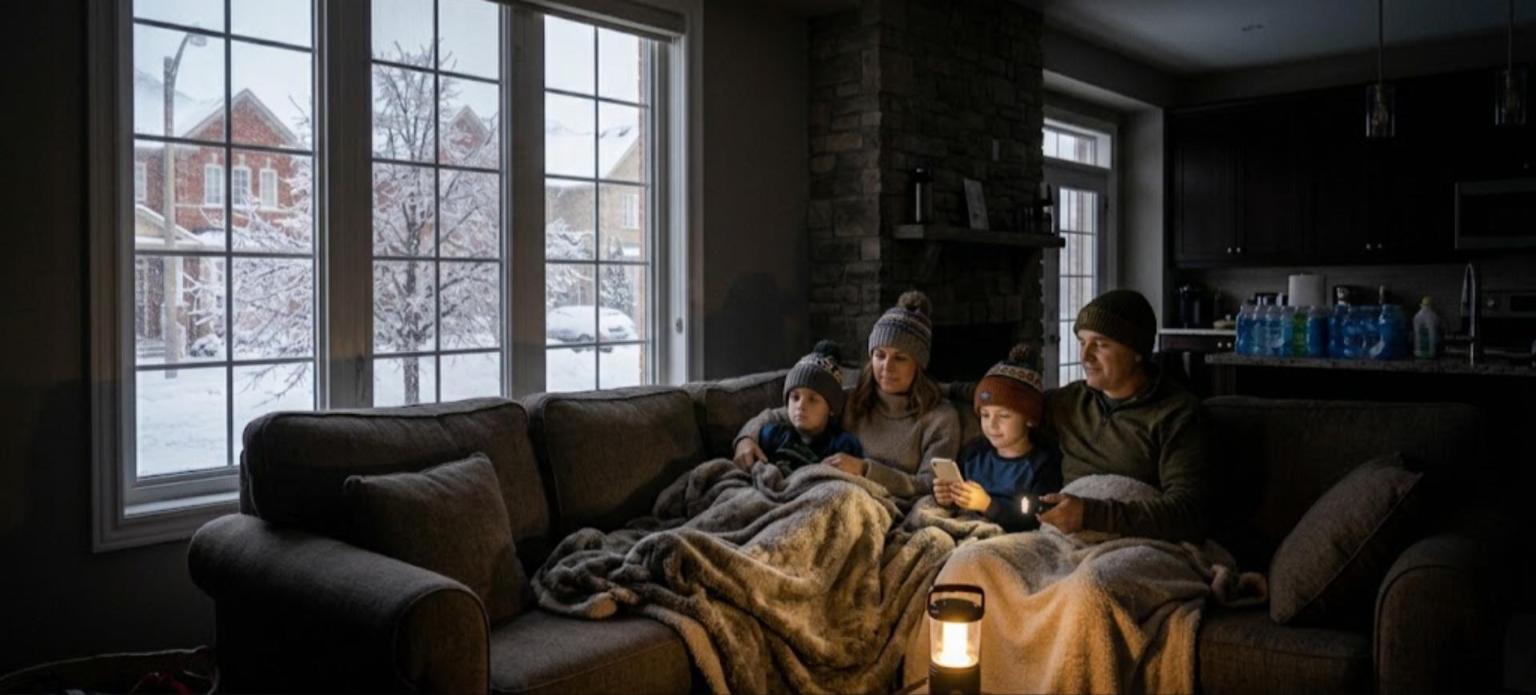

The short answer: A natural gas furnace during a power outage will not run, because its igniter, inducer fan, blower and control board all need electricity. Keep the heat in by closing doors and curtains, gather everyone in one room, and turn the thermostat down so the system does not restart all at once. Never use a generator, barbecue or camp stove indoors or in a garage. When power returns, give the furnace a few minutes, and call a technician if it does not restart.
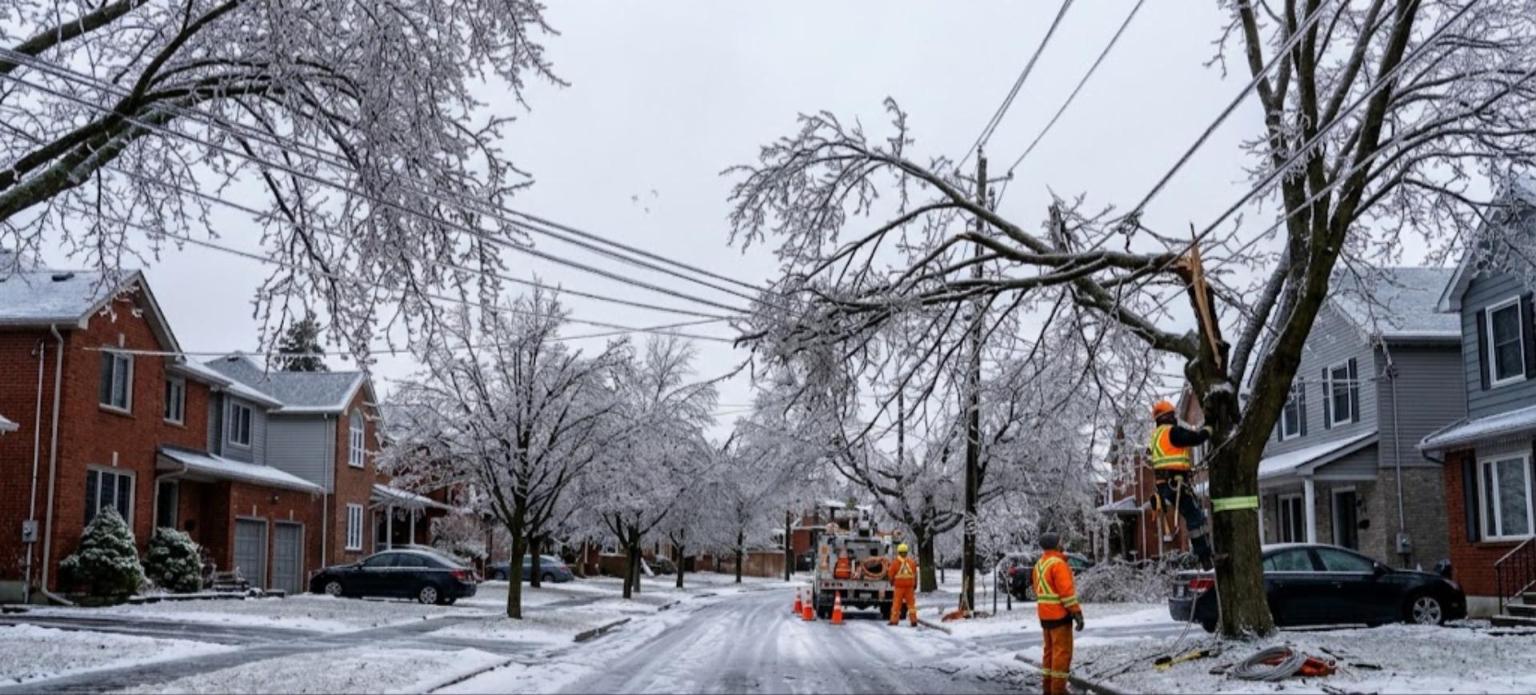
Ice storms, heavy wet snow and high winds knock out power across Ontario almost every winter. When the lights go out, many homeowners are surprised to find the gas furnace has gone quiet too. Knowing how your furnace during a power outage behaves, and what you can safely do about it, keeps a cold night from turning into a dangerous one.
This guide covers why the heat stops, how to keep your home warm for longer, safe and unsafe backup heat, generator basics and what to check when the power comes back. If your furnace will not restart after an outage, you can book a service visit online or call 310-HEAT any time.
Key takeaways
- A gas furnace during a power outage cannot run, and neither can a boiler or heat pump, because all of them need electricity.
- Keeping doors, windows and curtains closed slows heat loss far more than most people expect.
- Generators, barbecues and camp stoves must stay outdoors, well away from windows and doors.
- Connecting a furnace to a generator requires a licensed electrician and a proper transfer switch.
- CO alarms with battery backup are your best protection when backup heat is in use.
Why There Is No Heat From Your Furnace During a Power Outage
Since the gas is still flowing, it seems logical that a furnace during a power outage should keep working. But a modern furnace is an electrical appliance that happens to burn gas. Every heating cycle depends on power:
- The thermostat sends a low-voltage signal to start the furnace.
- The control board runs the safety checks and the lighting sequence.
- The inducer fan moves exhaust out through the vent pipes.
- The hot surface igniter lights the burners; there is no standing pilot on most models.
- The blower motor pushes warm air through the ducts to every room.
Without electricity, none of these steps can happen, so your furnace during a power outage simply stays off. The same is true for boilers, which need power for their pumps and controls, and for heat pumps. A gas fireplace with a battery or millivolt ignition may still light, but only if the manufacturer says it is designed to run without power.
What to Do With Your Furnace During a Power Outage
The first hour sets the tone. These steps keep heat in the house and protect your equipment:
- Check that it is a real outage. Look out the window or check your utility's outage map to confirm the problem is not just a tripped breaker in your home.
- Turn the thermostat down or off. This prevents the furnace, water heater and other appliances from all starting at once when power returns.
- Close interior doors and gather everyone in one room, ideally one with few exterior walls and windows.
- Close curtains and blinds at night. On sunny days, open south-facing curtains to let in free heat.
- Dress in layers and use sleeping bags and blankets. Hats make a real difference.
- Protect your pipes. If the outage drags on in very cold weather, open cabinet doors under sinks on exterior walls. Our guide on what to do if your pipes freeze covers the next steps.
An Outage Timeline: What to Do and When
How fast a house cools with no furnace during a power outage depends on insulation, air leaks and the temperature outside. Use this as a general guide:
| Time without power | What to do |
|---|---|
| First hour | Confirm the outage, turn the thermostat down, close doors and curtains |
| A few hours | Move everyone to one warm room, check on neighbours who live alone |
| Overnight | Protect pipes, keep CO alarms on battery power, plan where to go if it gets too cold |
| A day or more | Consider a warming centre or a friend's home; Canada's emergency guidance is to be ready for at least 72 hours |
Seniors, infants and anyone with health concerns feel the cold first. If the house becomes uncomfortably cold, it is safer to leave than to improvise heat.
Generators and Your Furnace During a Power Outage
A furnace does not need a lot of power to run, which makes it a common reason homeowners buy a generator. Running a furnace during a power outage on backup power can work, but only when it is set up correctly:
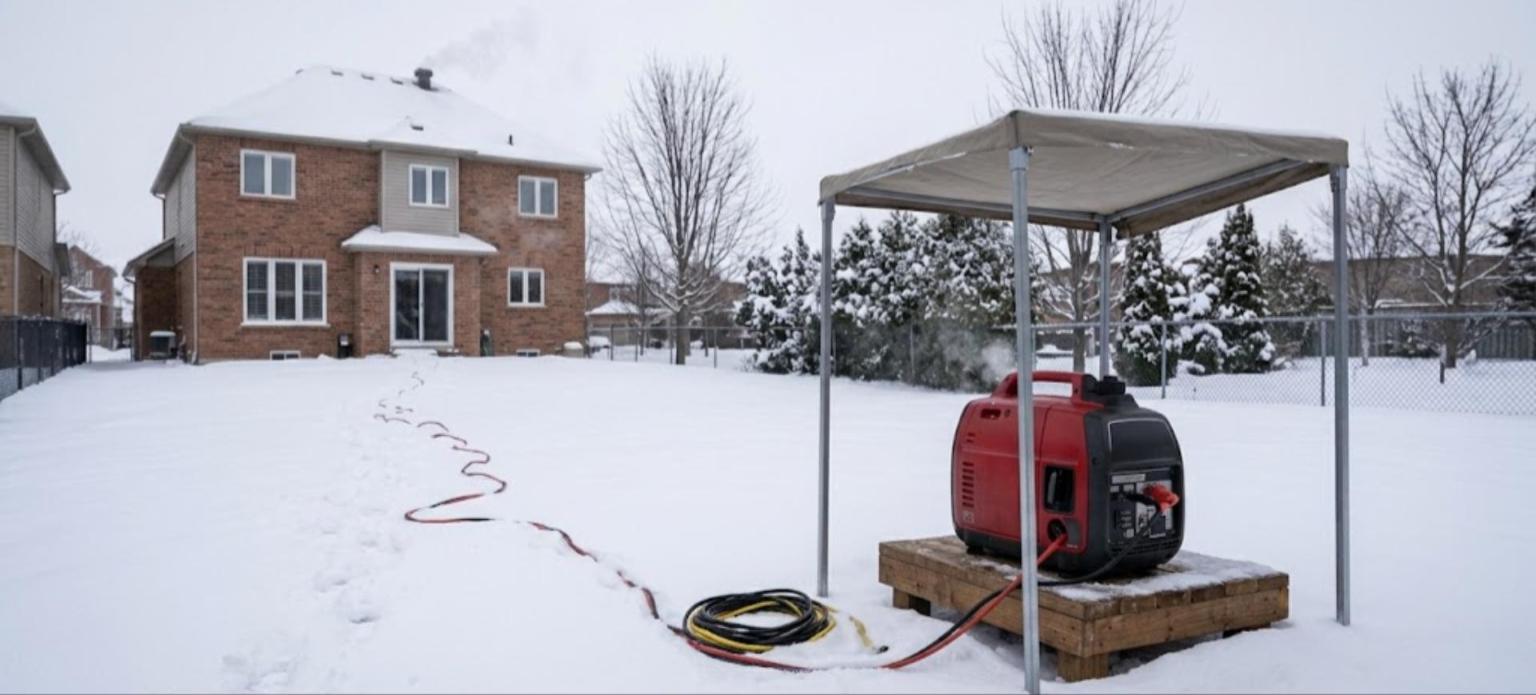
- Portable generators must run outdoors, away from windows, doors and vents. Never run one in a garage, even with the door open, because carbon monoxide builds up quickly.
- Never plug a generator into a wall outlet to back-feed the house. It is dangerous for you and for hydro crews working on the lines.
- A transfer switch or inlet installed by a licensed electrician, with an electrical permit, is the safe way to power a furnace from a generator.
- Standby generators start automatically and can power the furnace, sump pump and fridge. They need professional installation for both the electrical and gas connections.
Our technicians can confirm your furnace's power needs and the safest way to connect it. The electrical work itself belongs to a licensed electrician.
Heat Sources You Should Never Use Indoors
Every winter, carbon monoxide poisonings follow major outages. Carbon monoxide has no smell or colour, and early symptoms such as headache, dizziness and nausea can feel like the flu. Never use any of these to replace your furnace during a power outage:
- Barbecues, propane or charcoal, even near an open door
- Camp stoves and outdoor patio heaters
- A gas oven or stovetop left on for heat
- Generators inside the house, basement or garage
If a CO alarm sounds or several people feel unwell at once, get everyone outside and call 911. If you smell natural gas, leave the home and call Enbridge Gas at 1-866-763-5427 or 911 from outside.
When the Power Comes Back
Once power is restored, bring the house back slowly. A furnace during a power outage sits cold for hours, and a sudden restart under full load is hard on it:
- Wait a few minutes for the power to stabilize before turning the thermostat back up.
- Check that the thermostat screen is on and set to Heat. Battery-powered models may need new batteries after a long outage.
- Raise the set point a few degrees and listen for the inducer fan, then the burners and the blower.
- If snow fell during the outage, check that the outside vents are clear. Our guide to a furnace vent blocked by snow shows what to look for.
- If the furnace does not start after two tries, stop resetting it. Surges can damage control boards and igniters, and repeated resets can lock the system out.
Our HVAC servicing and repairs team fixes control boards, igniters and other parts that fail after an outage. For urgent steps while you wait, see our guides to emergency HVAC in Markham and emergency HVAC in Richmond Hill.
Preparing Your Furnace for a Power Outage Before the Next Ice Storm
A little preparation in the fall makes your furnace during a power outage much less of a worry:
- Build a 72-hour kit with flashlights, batteries, water, food, blankets and a battery or crank radio.
- Install CO alarms with battery backup on every storey and next to sleeping areas, and test them monthly.
- Ask about surge protection for your furnace and heat pump controls.
- Plan your generator setup in advance, with a licensed electrician, rather than during a storm.
- Book a tune-up so the furnace restarts reliably. Members of our maintenance and protection plans also get priority booking after storms, when demand is highest.
Programmable thermostats should also be checked after an outage, since some lose their schedule. Our guide to recommended thermostat settings helps you set it back up.
Help When the Storm Has Passed
Aire One has helped York Region homes recover from storms since 1990, with 150 service trucks, NATE-certified and Red Seal technicians, and a team answering calls 24 hours a day. We are a Carrier Factory Authorized Dealer with a 4.8-star Google rating from 541 reviews. If your furnace during a power outage took a hit, or will not restart afterward, our HVAC company in Markham and HVAC company in Richmond Hill teams are ready to help.
Furnace not restarting after the outage?
Our technicians answer 24/7 across Markham, Richmond Hill and York Region. TSSA-registered and trusted since 1990.
310-HEAT (310-4328) · 24/7 service · $79 service call*
Frequently Asked Questions
Will my gas furnace work during a power outage?
No. Even though it burns natural gas, a modern furnace needs electricity for its thermostat, control board, igniter, inducer fan and blower. Without power, it cannot light or move warm air through the house.
Can I run my furnace on a generator?
Yes, if it is connected safely. A licensed electrician should install a transfer switch or inlet with a permit. Never plug a generator into a wall outlet, and always run portable generators outdoors, away from windows, doors and vents.
Should I turn my thermostat off during a power outage?
Turning it down or off is a good idea. It stops the furnace and other appliances from starting all at once when the power returns, which reduces the risk of a surge damaging the furnace controls.
Is it safe to use a barbecue or camp stove indoors for heat?
No. Barbecues, camp stoves, patio heaters and generators produce carbon monoxide and must never be used indoors or in a garage. If a CO alarm sounds or people feel sick, get everyone outside and call 911.
What if my furnace does not restart when the power comes back?
Check that the thermostat is on and set to Heat, the breaker is on and the outside vents are clear of snow. If it still will not start after two tries, stop resetting it and call a technician, since a surge may have damaged a part.
Sources and Helpful Resources
- Government of Canada: Power Outages
- Health Canada: Carbon Monoxide Symptoms of Exposure
- TSSA: Carbon Monoxide and Your Fuel-Burning Appliances
- Enbridge Gas: What to Do If You Smell Gas
Matthew leads the Aire One Markham and Metro Toronto team, helping homeowners keep their heating safe and reliable through storms, outages and every Ontario winter. Aire One has been a TSSA-registered, Carrier Factory Authorized Dealer since 1990.