Furnace Blinking Light? Here Is What It Means
How to read the flash code on your furnace, what the most common patterns point to, and which checks are safe to do before a technician arrives.

The short answer: A furnace blinking light is the control board reporting its status. On many models, a slow, steady blink or a light that stays on means normal operation. A repeating pattern of flashes followed by a pause is a diagnostic code. Count the flashes, match the pattern to the chart on the furnace door, and do only the simple homeowner checks. If you smell gas or a carbon monoxide alarm sounds, leave the home first and call for help from outside.
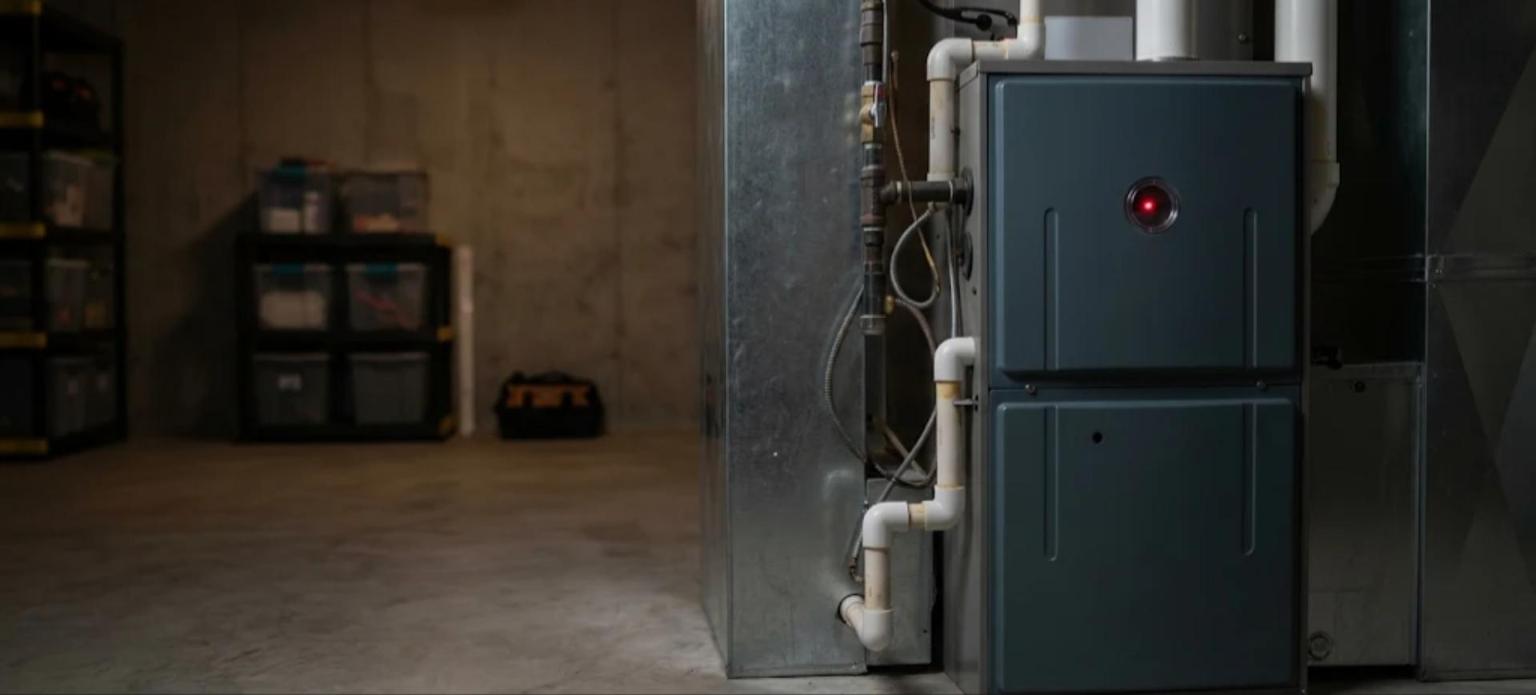
If you have spotted a furnace blinking light through the small window on your furnace door, the furnace is not broken just because it blinks. Almost every modern furnace has a circuit board with a small LED that flashes to show what the system is doing. When something goes wrong, that light switches to a pattern that points a technician toward the cause.
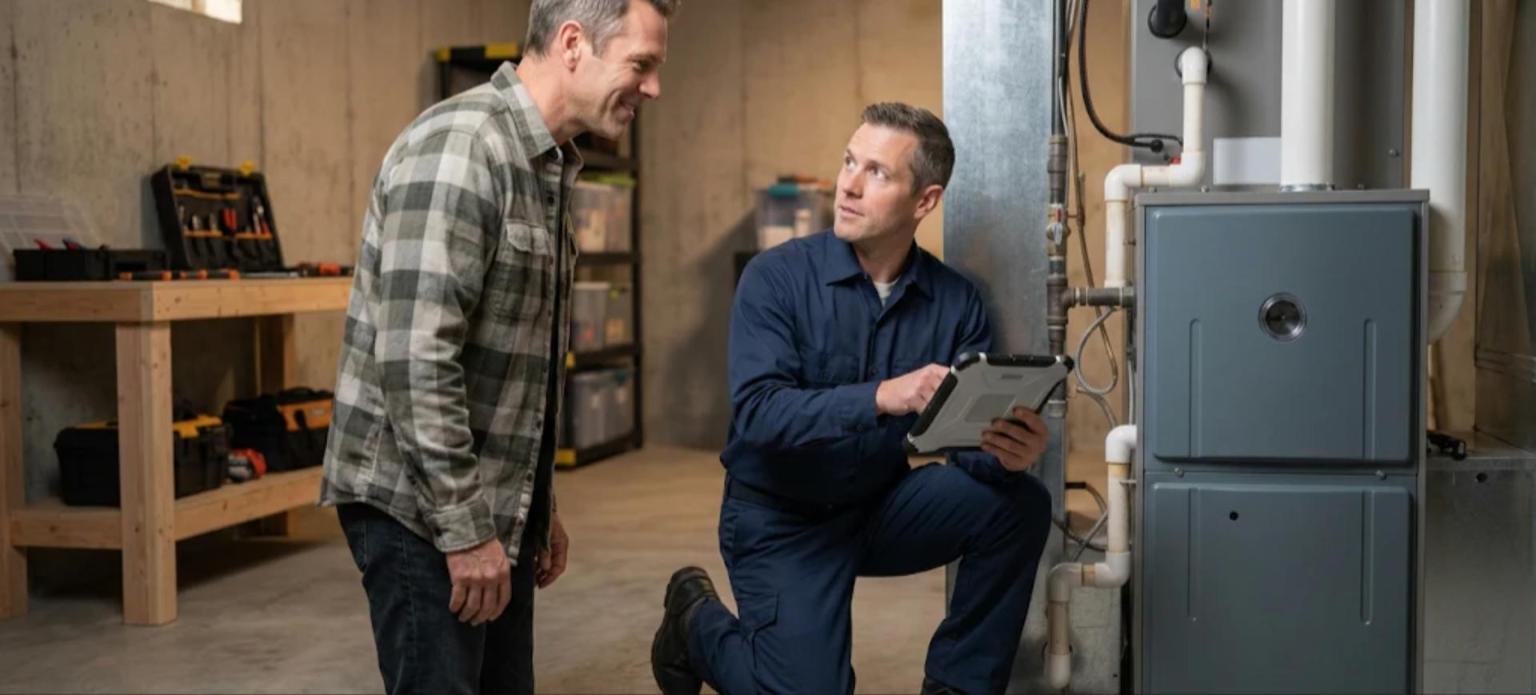
This guide from our Markham HVAC team is for Ontario homeowners across the GTA who want to understand the code before calling. If the house is already cold, you can book a service visit online or call 310-HEAT any time.
Write it down first
On many furnaces, losing power clears the active code.
The label is the key
Codes differ by brand and model, so trust the chart on your own furnace.
Look, do not touch
Reading a furnace blinking light is safe. Touching wiring or burners is not.
What a Furnace Blinking Light Is Telling You
Inside the lower compartment of a modern gas furnace sits the control board. It runs the heating sequence: it starts the inducer fan, checks the safety switches, lights the burners, confirms the flame and turns on the blower. At each step, it watches for problems and reports them with a furnace blinking light. Most manufacturers use one of these approaches:
- A status light. A slow, regular blink, sometimes called a heartbeat, or a steady light means the board has power and no active fault.
- A flash code. A set number of flashes, a pause, then the same number again.
- Two-digit or colour codes. Some boards mix long and short blinks, or switch between red, green and amber.
The meaning of each pattern depends on the brand and model. Three flashes on one furnace and three on another can point to different faults, so always check your own chart.
How to Read a Furnace Blinking Light Code in 4 Steps
Reading the code takes two minutes and no tools:
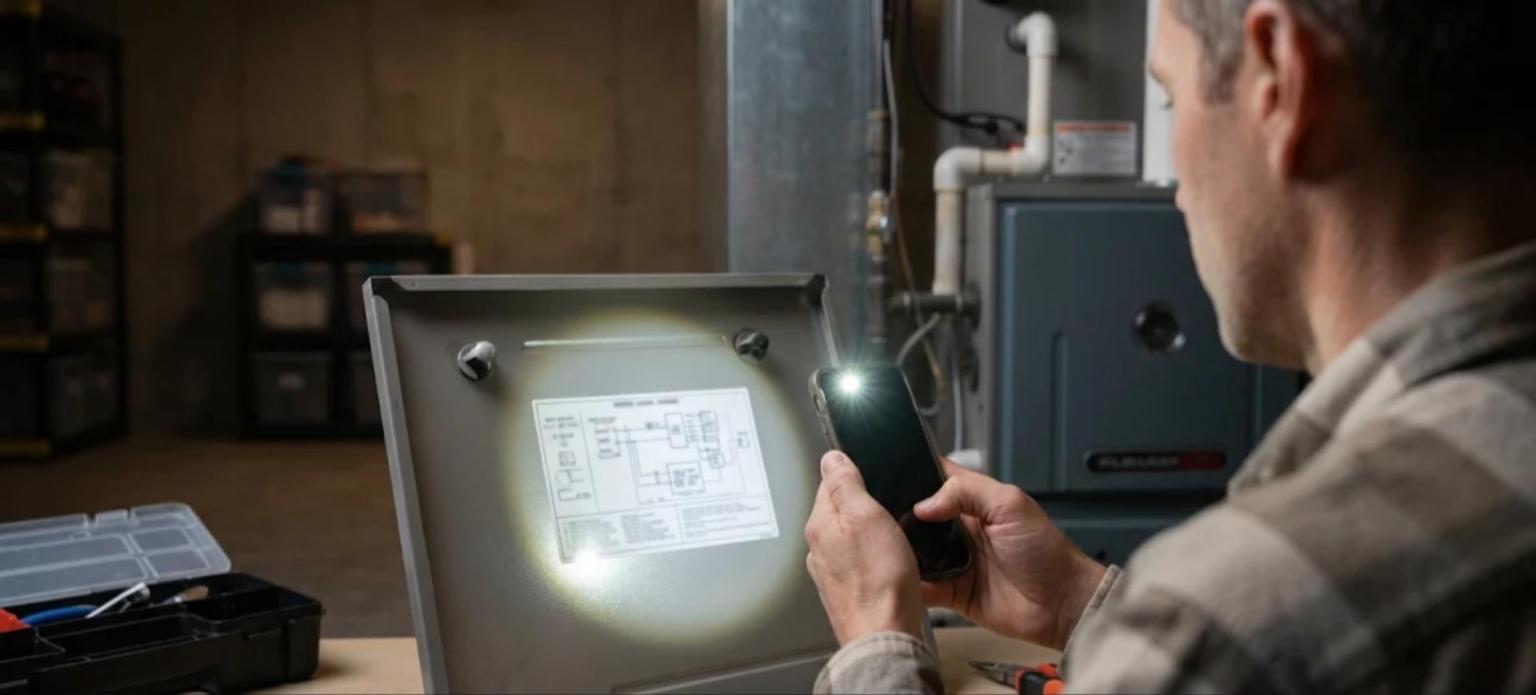
- Find the sight window. Look for a small clear window on the lower furnace door. Leave the door on.
- Watch a full cycle. Wait for the long pause, then count the flashes in the next group. Count two or three groups and note the colour.
- Record it. A short phone video of the furnace blinking light is better than memory and helps the technician bring the right parts.
- Match it to the label. The chart is usually on a label on the furnace door or in the owner's manual. If it is inside the blower door, leave it for the technician, since removing that door cuts power and can clear the code.
Note the model number too if it is visible. With the code and model, a technician can often narrow down the cause before arriving.
Common Patterns and What They Usually Point To
Every chart is different, but this table shows what a furnace blinking light is likely reporting. Confirm the exact code on your label.
| What you see | What it often means |
|---|---|
| Slow, even blink or steady light | Normal standby or heating on many models |
| No light at all | No power to the board, a door switch open, or a board fault |
| Repeating group of flashes with a pause | An active fault code, listed on the door label |
| Fast, constant flashing | Varies by brand; on some boards a wiring or flame signal issue |
| Code after several failed starts | Lockout; the furnace waits before trying again |
Most codes fall into one of these fault families:
- Pressure switch or venting. The furnace cannot confirm a clear path for air and exhaust. Snow on the side-wall pipes is a common winter cause; see our guide to a furnace vent blocked by snow and our article on the furnace pressure switch.
- Ignition failure. The burners did not light after several tries. See what causes a bad furnace ignitor.
- Flame sensing. The burners light, then shut off within seconds. Learn about a dirty flame sensor.
- High limit or overheating. The furnace got too hot, often from poor airflow. Read about the limit switch on a furnace.
- Lockout. After repeated failures, many boards stop trying for about an hour. If the furnace starts and stops all day instead, read about furnace short cycling.
Six Safe Checks Before You Call
Some codes have simple causes you can spot without tools. None of these checks involve the burner area, gas parts or wiring:
- Thermostat. Confirm it is set to Heat, a few degrees above room temperature, and has fresh batteries. See our recommended thermostat settings.
- Air filter. A clogged filter chokes airflow and can trigger an overheating code. Enbridge Gas recommends changing or cleaning it at least every three months. Read furnace filters: what you need to know.
- Vents and registers. Make sure registers and return grilles are open and not blocked by furniture.
- Outdoor pipes. After a storm, gently brush snow away from the white intake and exhaust pipes by hand.
- Furnace door. Check that the lower door is fully seated. Many furnaces have a door switch that cuts power when the panel is loose.
- Power and drain. Look, without touching, at the breaker and the furnace service switch to see that nothing is off or tripped. If the condensate drain line is visible, check that it is not kinked or frozen; see our guide to a frozen condensate line.
If a check turns up the cause, correct it and watch the next cycle. If the furnace blinking light returns to its normal pattern and the heat comes on, you are done. If the same code comes back, call our furnace and HVAC repair team.
What Not to Do When the Code Keeps Flashing
A furnace blinking light is a safety system doing its job. Working around it can turn a minor repair into a dangerous one:
- Do not reset the furnace over and over. Each reset can hide the real problem, and repeated starts on a faulty safety switch are not safe.
- Do not open the burner compartment or remove the blower door to poke around the board.
- Do not bypass or jump any switch, and do not test or touch the igniter or wiring.
- Do not ignore a gas smell. If you notice a rotten egg odour, leave the home right away, then call Enbridge Gas at 1-866-763-5427 or 911 from outside.
- Do not ignore a CO alarm. Ontario requires carbon monoxide alarms next to sleeping areas in homes with a fuel-burning appliance, and on every storey since January 1, 2026. If one sounds, get everyone out and call 911 from outside.
After a power cut, the light may simply show the board restarting. Our guide to a furnace during a power outage explains what to expect.
When a Furnace Blinking Light Needs a Technician
Call a licensed technician when:
- The same code returns after the six safe checks.
- The code points to ignition, flame sensing, the gas valve, the board or a limit switch.
- The furnace has gone into lockout more than once in a day.
- There is no light at all, even though the breaker and service switch look on.
A furnace blinking light is the starting point for a repair, not the whole diagnosis. A technician reads the code, then tests the part it points to, because a fault can start upstream in the airflow or venting. Our HVAC servicing and repairs team works on every major furnace brand, and the service call is $79 with the repair price confirmed before work begins.
The TSSA advises having all fuel-burning appliances inspected every year by a registered fuel contractor. A yearly tune-up catches weak igniters, dirty sensors and drain problems before they trigger a furnace blinking light on the coldest night of the year. Our maintenance and protection plans include that visit plus priority booking.
Aire One has served York Region and the GTA since 1990, with a 4.8-star Google rating from 541 reviews, and covers Markham and Richmond Hill 24 hours a day. Learn more about our HVAC company in Markham and our HVAC company in Richmond Hill. If a furnace blinking light means it is time for a new system, ask about our free Total Home Assessment, financing and 10-year worry-free warranty.
Code still flashing and the house getting cold?
Send us the code and your furnace model, and our TSSA-registered technicians will take it from there, 24/7.
310-HEAT (310-4328) · 24/7 service · $79 service call*
Frequently Asked Questions
Is a furnace blinking light always a problem?
No. On many furnaces, a slow, steady blink or a light that stays on is the normal status signal. Only a repeating pattern of flashes with a pause, or a pattern your door label lists as a fault, points to a problem.
Where do I find the code chart for my furnace?
Most furnaces have a label on the lower door listing each flash pattern, and the owner's manual has the same chart. If the label is inside the blower door, let a technician read it, since removing that door cuts power.
Will turning the furnace off and on clear the code?
On many models it will, which is why you should record the pattern first. Clearing the code does not fix the cause, and resetting a furnace again and again can hide a safety problem. If the code returns, call a technician.
Can a dirty filter cause a flashing code?
Yes. A clogged filter restricts airflow, the furnace overheats, and the high limit switch shuts the burners off, which many boards report as a flash code. Replacing the filter is a safe first check.
Is it safe to keep using the furnace while the light is flashing?
If the furnace is running and heating normally, it is usually safe to use until a technician checks it. If it keeps locking out, stop using it and call a technician. If you smell gas or a CO alarm sounds, leave the home and call Enbridge Gas at 1-866-763-5427 or 911 from outside.
Sources and Helpful Resources
- Enbridge Gas: Natural Gas Appliance Safety
- TSSA: It's Not Just Your Furnace, Be in the Know When It Comes to CO
- Government of Ontario: Carbon Monoxide Safety
- Enbridge Gas: What to Do If You Smell Gas
Matthew leads the Aire One Markham and Metro Toronto team, helping homeowners keep their heating systems safe and running through every Ontario winter. Aire One has been a TSSA-registered, Carrier Factory Authorized Dealer since 1990.