

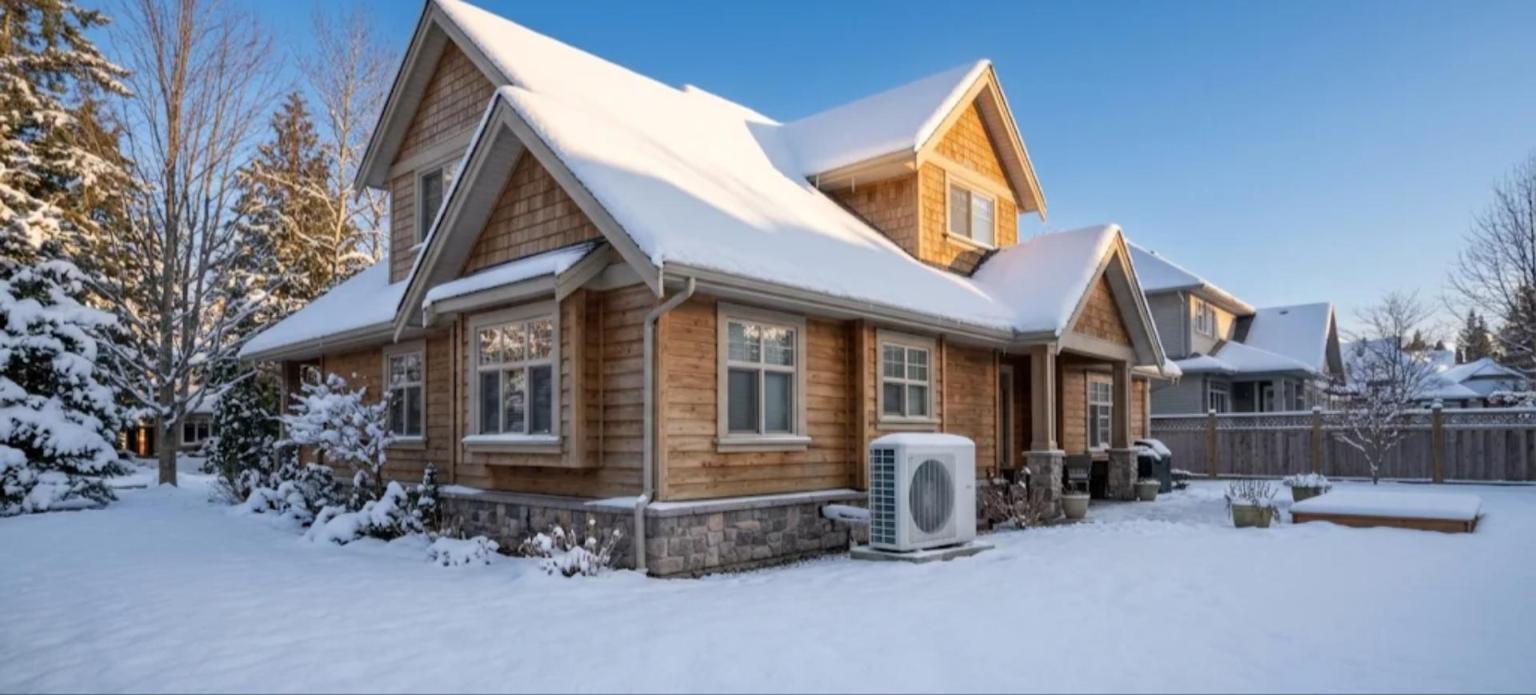
Heat Pump Defrost Mode: Normal or a Problem?
Why your outdoor unit steams, goes quiet and blows cooler air for a few minutes on frosty days, and the signs that mean it needs a technician.
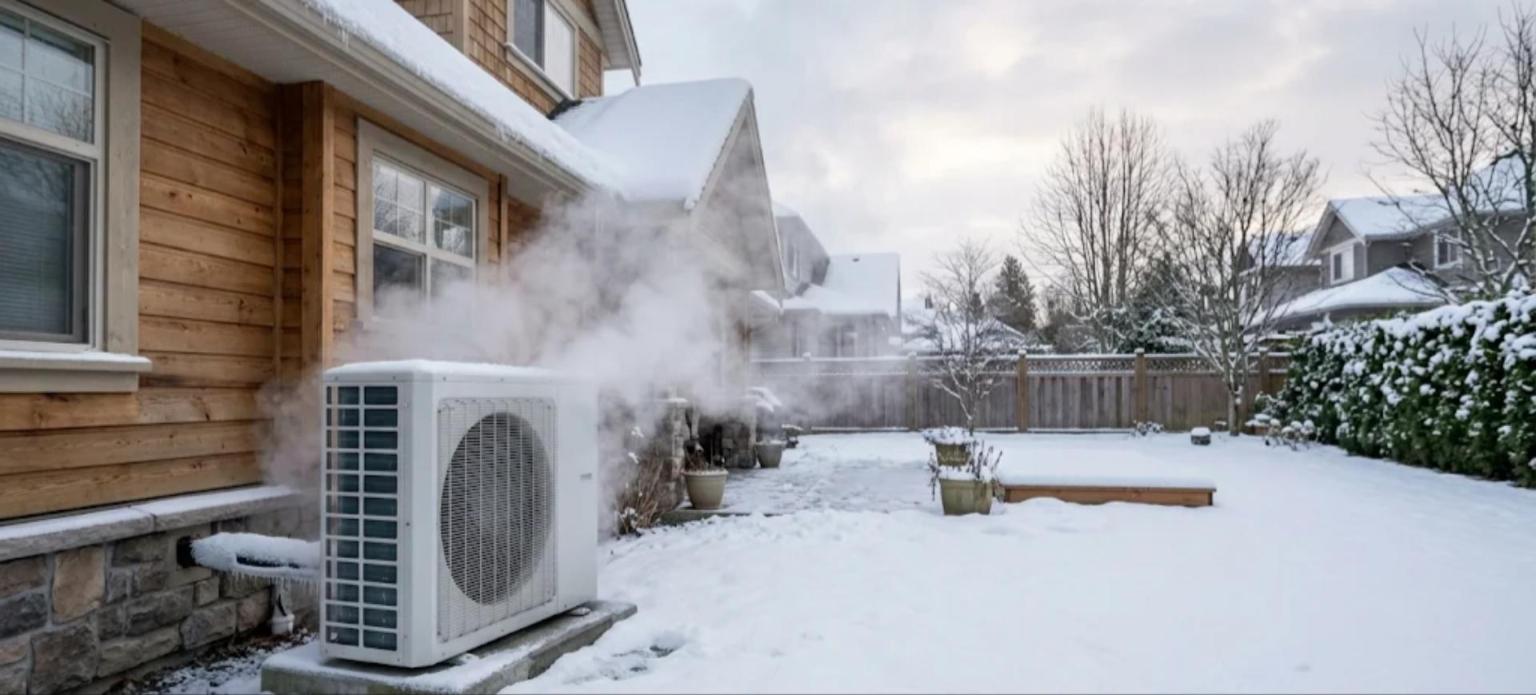

The short answer: Heat pump defrost mode is a normal, automatic cycle. When frost builds on the outdoor coil, the system briefly reverses to melt it and shuts off the outdoor fan. You may see steam, hear a whoosh and feel cooler air for 5 to 15 minutes. Call for service if thick ice stays on the coil, cycles run much longer, or your home stops warming up.
The first damp, frosty morning of the season always brings the same worried calls: a cloud is pouring out of the heat pump, the fan has stopped, and the vents are blowing cool air. In almost every case, that is heat pump defrost mode doing exactly what it was designed to do.
This guide for Ontario and GTA homeowners, including Markham and Richmond Hill, explains how heat pump defrost mode works, what you can safely check, and when to call a technician. If the house is getting cold, you can book a service visit online or call 310-HEAT any time.
What Is Heat Pump Defrost Mode and Why Does It Happen?
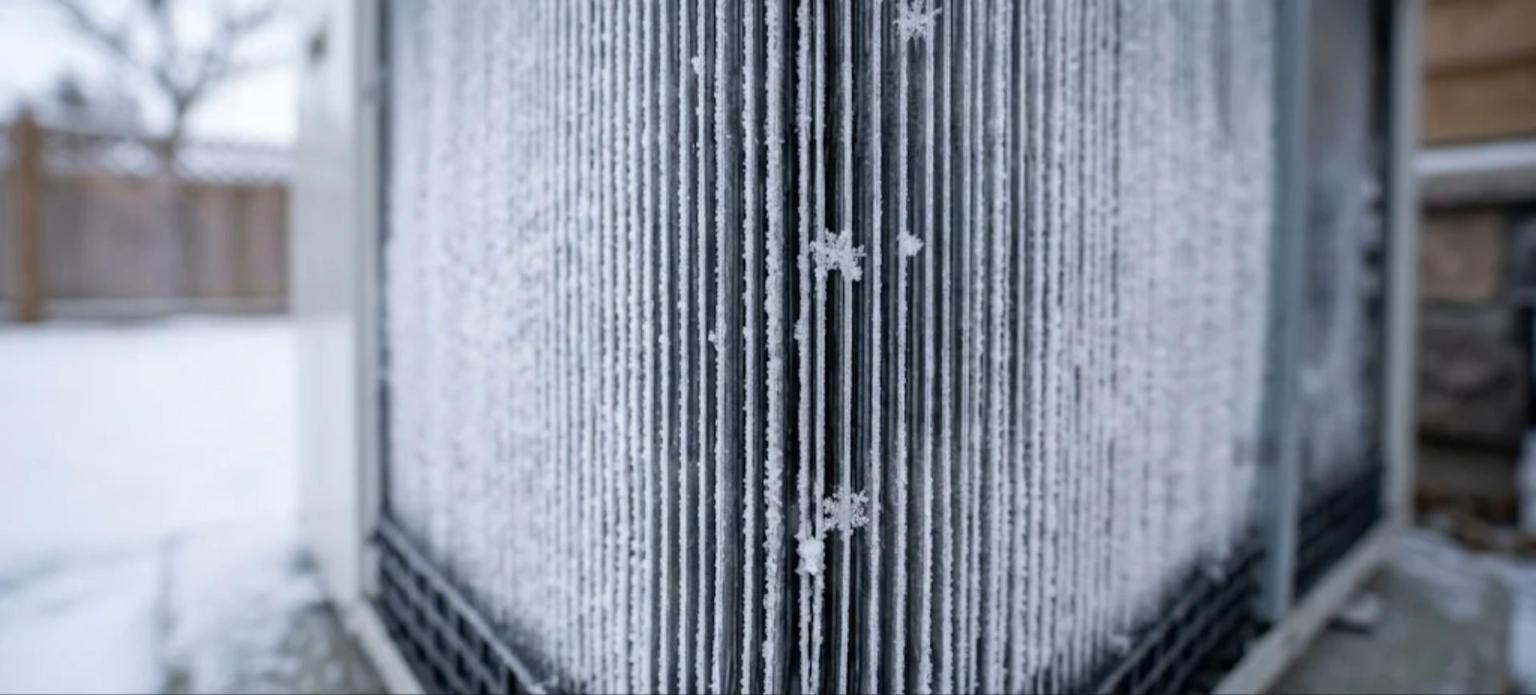
In heating mode, an air source heat pump pulls heat from outdoor air through its outdoor coil, which runs colder than the air around it. Near or below freezing, moisture freezes onto the coil fins. Natural Resources Canada explains that this frost reduces the coil's ability to transfer heat to the refrigerant, so the system has to clear it.
In heat pump defrost mode, the reversing valve briefly switches the system into cooling mode, sending hot refrigerant gas to the outdoor coil to melt the frost. The outdoor fan shuts off so it is not blowing freezing air across the coil. Once the coil is clear, normal heating resumes.
Ground source heat pumps never need a defrost cycle, because their loop never touches outdoor air. For a refresher on the basics, our guide to what a heat pump is and how it works covers the full heating and cooling cycle.
What a Defrost Cycle Looks, Sounds and Feels Like
Here is how to read each sign:
| What you notice | Why it happens | Normal? |
|---|---|---|
| Steam rising from the outdoor unit | The warm coil turns frost into water vapour | Yes |
| The outdoor fan stops but the unit still hums | The fan shuts off so heat stays on the coil | Yes |
| A whoosh or hiss at the start and end | The reversing valve changes the refrigerant flow | Yes |
| Cooler air from the vents for a few minutes | The system is briefly running in cooling mode | Yes, if it warms up again |
| The thermostat shows Defrost or Aux Heat | Backup heat is covering the cycle | Yes |
Steam from heat pump defrost mode is plain water vapour with no smell, and it fades within minutes. Smoke with a burning smell, sparks or flames are different: turn the system off at the thermostat, stay away from the unit and call 911 if there is any sign of fire.
How Long and How Often Heat Pump Defrost Mode Should Run
A typical cycle lasts about 5 to 15 minutes. How often it runs depends on the type of control your system uses:
Time-temperature defrost
A pre-set timer or a coil sensor starts and ends each cycle. According to NRCan, cycles can start every 30, 60 or 90 minutes, depending on the climate and system design.
Demand defrost
Sensors watch airflow, refrigerant pressure and coil temperature, starting a cycle only when frost is there. NRCan calls this generally more efficient, since unnecessary cycles reduce seasonal performance.
Expect heat pump defrost mode more often on grey, damp days near freezing and during wet snow, and less often on dry, sunny days, because dry air carries less moisture. For deep cold snaps, see our article on how extreme cold impacts heat pump performance.
Normal Defrost vs Signs of a Problem
Usually normal
- A cycle every 30 to 90 minutes on damp, frosty days
- Steam and a whoosh that stop within about 15 minutes
- A thin, even layer of frost that melts completely
Time to call a technician
- Thick ice encasing the coil, top or fan that never melts
- Cycles that run well past 15 minutes or repeat every few minutes
- Frost keeps building but the unit never steams or pauses
- Banging, grinding or the unit shutting off completely
When heat pump defrost mode runs too long or too often, the cause is often a dirty coil, a faulty sensor or control, or a low refrigerant charge. These are jobs for a licensed technician. Our heat pump repair guide explains what a visit includes, and our article on the three most common heat pump problems covers units that will not turn on or heat.
Safe Checks You Can Do Before Calling
If heat pump defrost mode seems stuck, start here. None of these steps involve opening panels or touching wiring.
- Check the thermostat. Confirm it is set to Heat or Auto, and replace the batteries if the screen is faint.
- Let the cycle finish. Give it a full 15 minutes. Switching the system off and on only restarts it.
- Clear snow around the unit. Use your hands or a soft brush to keep the top, sides and base free of snow.
- Leave the ice alone. Never chip, scrape or pour hot water on the coil. The thin fins and tubes puncture easily.
- Look for dripping water from above. Water from a leaking gutter can drip onto the unit and freeze into a solid cap.
- Check the indoor filter. A clogged filter chokes airflow. Our guide to furnace filters explains when to change it.
- Look at the breaker, but do not touch wiring. If the unit is silent, see whether its breaker has tripped, then call a technician instead of resetting it repeatedly.
Our fall guide to preparing your heat pump for cold weather covers clearing debris and checking that the unit sits above the snow line.
Backup Heat During Heat Pump Defrost Mode and Your Hydro Bill
During a defrost cycle, the system is actually cooling the air in your ducts, so NRCan notes that supplementary heat may be needed. Most Ontario homes use one of two setups:
- Electric backup. Heating elements in the air handler cover defrost and the coldest days but cost more to run than the heat pump itself. On the Ultra-Low Overnight plan, timing matters: under Ontario Energy Board prices set for November 1, 2026, overnight power (11 p.m. to 7 a.m.) is 3.7 cents per kWh, while weekday on-peak power (4 p.m. to 9 p.m.) is 37.7 cents per kWh. Check current prices at oeb.ca. Our guide to the ultra-low overnight rate explains whether it suits a heat pump home.
- Dual fuel (hybrid). A gas furnace covers defrost cycles and the coldest hours. With a fuel-burning appliance, Ontario requires carbon monoxide alarms next to each sleeping area and, since January 1, 2026, on every storey. If an alarm sounds, get everyone out and call 911 from outside. If you smell rotten eggs, leave the home and call Enbridge Gas at 1-866-763-5427 or 911 from outside.
An Emergency Heat setting on the thermostat runs backup heat only. Save it for when the heat pump has failed and a technician is on the way.
When Frequent Defrosting Points to an Upgrade
An older unit with timed controls may enter heat pump defrost mode on a schedule whether or not frost is present. NRCan notes that newer models can have minimum operating temperatures between -15°C and -25°C, and cold-climate heat pumps with demand defrost handle Ontario winters far better.
An undersized unit also runs longer and collects more frost. Our article on why HVAC system sizing matters explains proper load calculations.
The Home Renovation Savings Program from Save on Energy and Enbridge Gas offers rebates on cold-climate air source heat pumps listed on the NRCan qualified products list. Amounts change, so check saveonenergy.ca. See our heat pump installation and rebate support, our current promotions and financing, and our free Total Home Assessment.
Heat Pump Help From a Local Team Since 1990
Aire One is a TSSA-registered Carrier Factory Authorized Dealer with a 4.8-star Google rating from 541 reviews, 24/7 technicians, a $79 service call and a 10-year worry-free warranty. Whether you need a diagnosis or a new heat pump, our heat pump repair technicians can tell you whether heat pump defrost mode is healthy or hiding a fault. Learn about our HVAC company in Markham and our HVAC company in Richmond Hill. Members of our maintenance and protection plans get a yearly tune-up of the coil, sensors and defrost controls.
Ice that will not melt or a house that will not warm up?
Our technicians answer 24/7 across Markham, Richmond Hill and the GTA.
310-HEAT (310-4328) · 24/7 service · $79 service call*
Frequently Asked Questions
Is it normal for my heat pump to steam in winter?
Yes. The steam is water vapour from frost melting off the outdoor coil during heat pump defrost mode. It has no smell and clears within minutes. Smoke with a burning smell is not normal, so turn the system off at the thermostat and call for help.
Why does my heat pump blow cool air for a few minutes?
During a defrost cycle, the system briefly switches to cooling mode to send heat to the outdoor coil. Backup heat normally covers that gap. If the air stays cool after the cycle ends, have a technician check the backup heat.
How long should a heat pump defrost cycle last?
Most cycles last about 5 to 15 minutes, depending on the weather and how much frost has formed. Timed systems often check every 30, 60 or 90 minutes. Cycles that run much longer or repeat every few minutes should be checked.
What should I do if my outdoor unit is covered in ice?
Brush away loose snow, and never chip ice or pour hot water on the coil. Let one full cycle finish. If thick ice remains, call a technician, who may suggest running backup heat until the visit.
Does heat pump defrost mode waste energy?
It uses some energy, but it keeps the coil working efficiently. Demand defrost controls are generally more efficient than timed controls because they only run when needed. A yearly tune-up keeps the sensors accurate.
Sources and Helpful Resources
- Natural Resources Canada: Heating and Cooling With a Heat Pump
- Ontario Energy Board: Electricity Rates
- Save on Energy: Home Renovation Savings Program
- Government of Ontario: Carbon Monoxide Safety
Matthew leads the Aire One Markham and Metro Toronto team, helping homeowners keep heat pumps and furnaces running safely through every Ontario winter.