
Best MERV Rating for Home Furnaces
What the MERV number really measures, how filter thickness changes airflow, and how to pick and change the right furnace filter this winter.
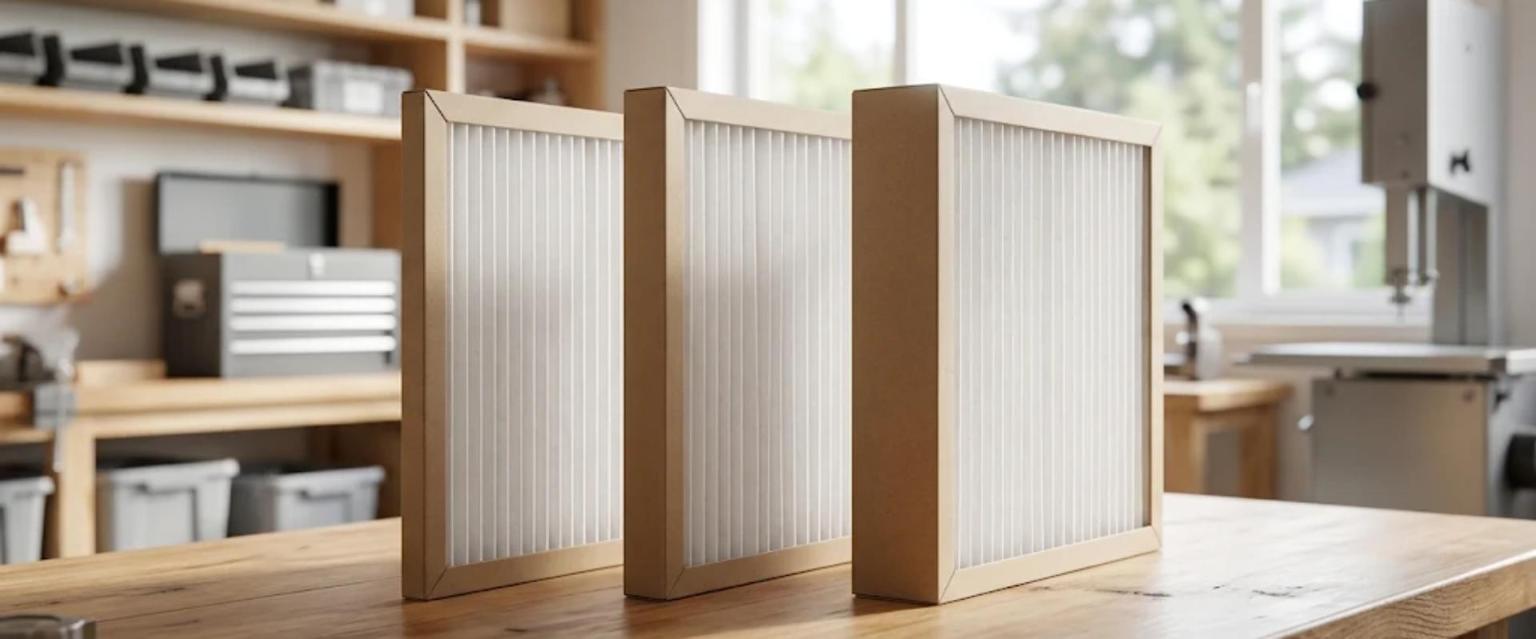

The short answer: For most Ontario houses, the best MERV rating for home furnaces falls between MERV 8 and MERV 13. The US EPA suggests at least MERV 13 where your system can handle it. A thin 1-inch MERV 13 filter can choke airflow, so a 4 to 5 inch media filter is often the better way to get high filtration without straining the furnace.
Picking the best MERV rating for home heating is not about buying the highest number on the shelf. It is about finding a filter that cleans your air well while still letting your furnace breathe.
With windows shut all winter, your furnace filter does most of the air cleaning in an Ontario home. Here is what the rating means, how the range compares and why thickness matters as much as the number.
The MERV scale at a glance
What a MERV Rating Measures
MERV stands for Minimum Efficiency Reporting Value, and knowing what it measures is the first step to finding the best MERV rating for home air. The rating comes from ANSI/ASHRAE Standard 52.2, a laboratory test from the American Society of Heating, Refrigerating and Air-Conditioning Engineers. The test counts airborne particles from 0.3 to 10 microns in front of and behind a filter, then reports how well the filter caught them.
Results are grouped into three particle bands:
- 3 to 10 microns: pollen, dust and lint.
- 1 to 3 microns: mould spores, finer dust and some pet dander.
- 0.3 to 1 micron: smoke and fine combustion particles.
The scale runs from 1 to 16. A higher number means the filter traps a larger share of smaller particles, and the rating is based on the lowest efficiency the filter showed during the test, not its best. HEPA filters are rated by a different method and usually belong in a portable unit or dedicated system; our guide to a whole-home air purifier covers those options.
MERV 1 to 16 Compared: The Best MERV Rating for Home Systems
The table uses the minimum capture levels the US EPA publishes for each group. The last column is our field view for a typical GTA house.
| MERV | Fine particles (0.3 to 1 micron) | Larger particles (3 to 10 microns) | Home fit |
|---|---|---|---|
| 1 to 4 | No minimum set | Under 20% | Protects the blower, little else |
| 5 to 7 | No minimum set | 20% to 50%+ | Basic pleated filters |
| 8 | No minimum set | 70%+ | A sensible minimum for most homes |
| 9 to 10 | No minimum set | 75% to 80%+ | Better dust and pollen control |
| 11 to 12 | 20% to 35%+ | 85% to 90%+ | Good for pets and mild allergies |
| 13 | 50%+ | 90%+ | EPA's suggested target if the system can handle it |
| 14 to 16 | 75% to 95%+ | 95%+ | Needs a deep media cabinet and a system check |
For most households, the best MERV rating for home use is the highest number in the MERV 8 to 13 range that your furnace can move air through comfortably. The EPA notes that most furnaces can accommodate a MERV 13 filter without equipment problems, as long as it is replaced often. The catch is in that condition, and in how thick the filter is.
Thickness Matters as Much as the Number
Every filter adds resistance to airflow, which technicians measure as static pressure, and your furnace blower can push against only so much of it. When you look for the best MERV rating for home systems, depth matters as much as the number. A dense 1-inch filter forces air through little media, so resistance climbs quickly as dust builds up. A thicker filter spreads the same job across far more pleated surface.
That is why a MERV 13 filter that works well in a 5-inch cabinet can cause trouble in a 1-inch slot. If your system only has a thin slot, our Markham HVAC team can measure static pressure and, if the numbers support it, install a media cabinet in the return duct. Our article on what a good static pressure in HVAC looks like explains the readings, and our guide to furnace filter basics covers sizing your slot correctly.
Choosing the Best MERV Rating for Home Allergies, Pets and Smoke
The best MERV rating for home air depends on who lives there and what the furnace can handle. Use these profiles as a starting point:
A filter only cleans air that passes through it, so the fan has to run. Health Canada notes that some furnace filters can help remove fine particulate matter, and that a heat recovery ventilator can also help lower indoor particle levels. See what a heat recovery ventilator does.
Whatever the household, the best MERV rating for home comfort is one your system can push air through. A number that starves the blower trades cleaner air for weaker heat.
What to Do on Wildfire Smoke Days
Recent summers have brought wildfire smoke into the GTA, and smoke particles slip through basic filters. The US EPA recommends a high-efficiency HVAC filter, such as MERV 13, during smoke events, plus a few simple steps:
- Set the fan to On instead of Auto so air keeps moving through the filter.
- Make sure the filter fits snugly so air cannot slip around it.
- Check the filter often and expect to replace it sooner than the label says.
- Keep windows closed and use a recirculate setting if your system has one.
Smoke is when the best MERV rating for home filtration pays off most, but it is also when filters clog fastest, so keep a spare on hand.
How Often to Change Your Furnace Filter
Even the best MERV rating for home use fails once the filter is clogged. The EPA notes that manufacturers typically recommend replacement every 60 to 90 days, and that a heavily soiled filter is a sign to change more often. Ontario furnaces run for hours a day in winter, so start with the label and adjust using this guide:
| Situation | Check it | Replace it |
|---|---|---|
| 1-inch pleated filter | Monthly in winter | When dirty or per the label |
| 4 to 5 inch media filter | Every two to three months | Per the label, usually longer |
| Pets, renovation dust or smokers | Every few weeks | Sooner than the label |
| Wildfire smoke event | Every few days | As soon as it looks loaded |
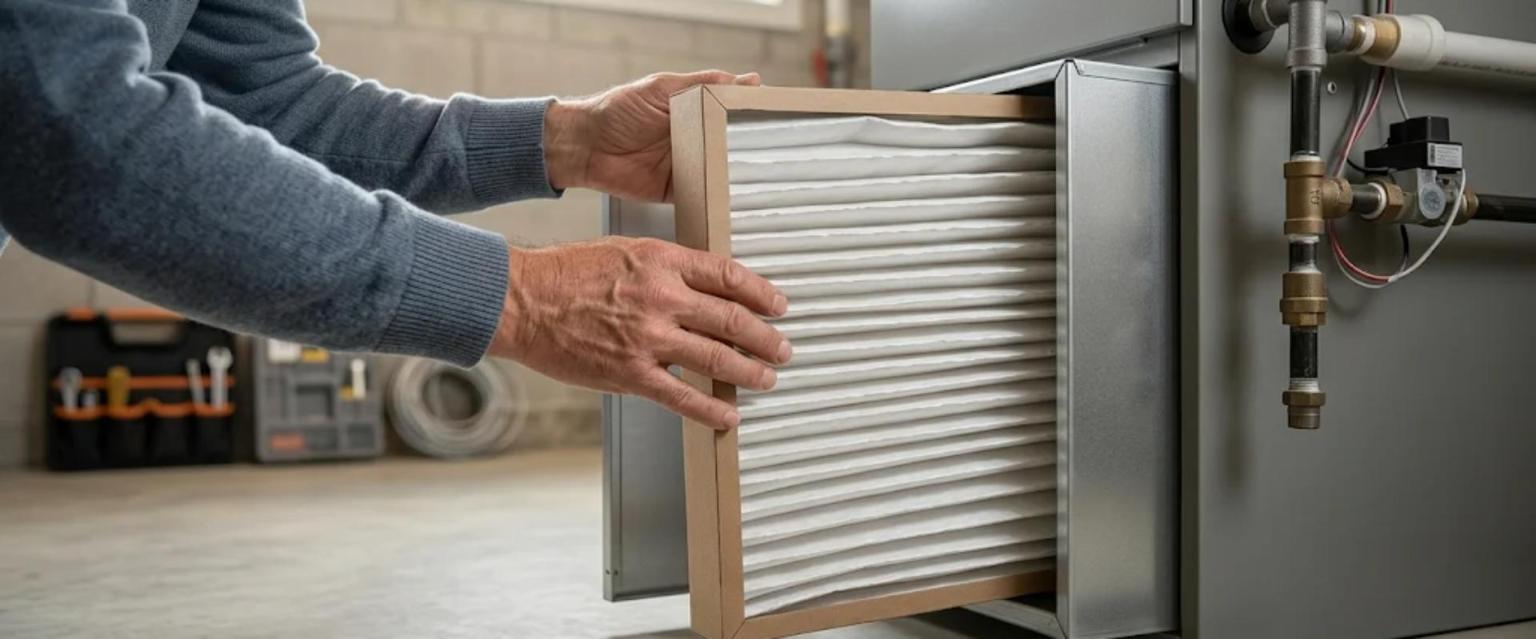
Changing a standard filter is a safe homeowner task. Turn the system off at the thermostat, slide the old filter out, and insert the new one with the airflow arrow pointing toward the furnace. Close any slot cover and turn the system back on. Never run the furnace without a filter or open the burner or blower compartments.
Signs Your Filter Is Too Restrictive
A filter that is too dense for your system, or simply overdue, shows up in ways you can notice:
- Weak airflow from supply registers.
- Whistling at the return grille or around the filter slot.
- Distant rooms that never warm up.
- A filter that bows into the slot.
- A furnace that shuts off early and restarts often. See our guide to furnace short cycling.
Restricted airflow makes the heat exchanger run hotter, which can trip the high-limit safety switch. If a fresh filter does not help, book a technician. Our HVAC servicing and repairs team can test static pressure and check the blower, ducts and safeties.
Get a Filter Recommendation Built for Your System
Aire One has served Ontario homeowners since 1990 and holds a 4.8-star Google rating from 541 reviews. During a tune-up, our technicians check your filter slot, measure static pressure and tell you the best MERV rating for home use with your furnace and ducts. A yearly visit also catches problems a filter cannot solve; see our annual HVAC maintenance guide for the GTA.
Members of our maintenance and protection plans get scheduled tune-ups and priority booking all winter. Learn more about our HVAC company in Markham or our HVAC company in Richmond Hill, and ask about a free Total Home Assessment if you are planning bigger air quality upgrades.
Not sure of the best MERV rating for home use with your furnace?
We test airflow and recommend the right filter on every tune-up in Markham, Richmond Hill and York Region.
310-HEAT (310-4328) · 24/7 service · $79 service call*
Frequently Asked Questions
What is the best MERV rating for home furnaces in Ontario?
For most homes, MERV 8 to 13. The US EPA suggests at least MERV 13, or as high as your system fan and filter slot can accommodate. A thicker 4 to 5 inch filter makes MERV 13 easier on the furnace, and a technician can confirm what your system handles.
Is a MERV 13 filter too much for my furnace?
Usually not. The EPA notes that most furnaces can accommodate MERV 13 if the filter is replaced often. A thin 1-inch MERV 13 filter can restrict airflow with small return ducts, so a static pressure test is the surest check.
How often should I change my furnace filter in winter?
Check a 1-inch filter monthly during the heating season and replace it when it looks dirty or the label says to. Thicker media filters last longer. Pets, renovations and smoke mean more frequent changes.
Does a higher MERV filter help with allergies?
It can. MERV 11 to 13 filters capture more pollen, mould spores and pet dander than basic filters, especially when the fan runs often and the filter fits snugly.
Should I run my furnace fan on during wildfire smoke?
The US EPA suggests setting the fan to On instead of Auto during smoke events so more air passes through a high-efficiency filter. Check the filter often, since smoke loads it quickly, and replace it sooner than usual.
Sources and Helpful Resources
- US EPA: What Is a MERV Rating?
- US EPA: Guide to Air Cleaners in the Home
- US EPA: Wildfires and Indoor Air Quality
- Health Canada: Fine Particulate Matter in Indoor Air
Matthew leads the Aire One Markham and Metro Toronto team, helping homeowners keep their heating systems efficient and their indoor air clean through every Ontario winter. Aire One has been a TSSA-registered, Carrier Factory Authorized Dealer since 1990.