
Landlord Heating Requirements in Ontario
Minimum temperatures, the heating season, and what tenants and landlords can do when a rental is too cold.
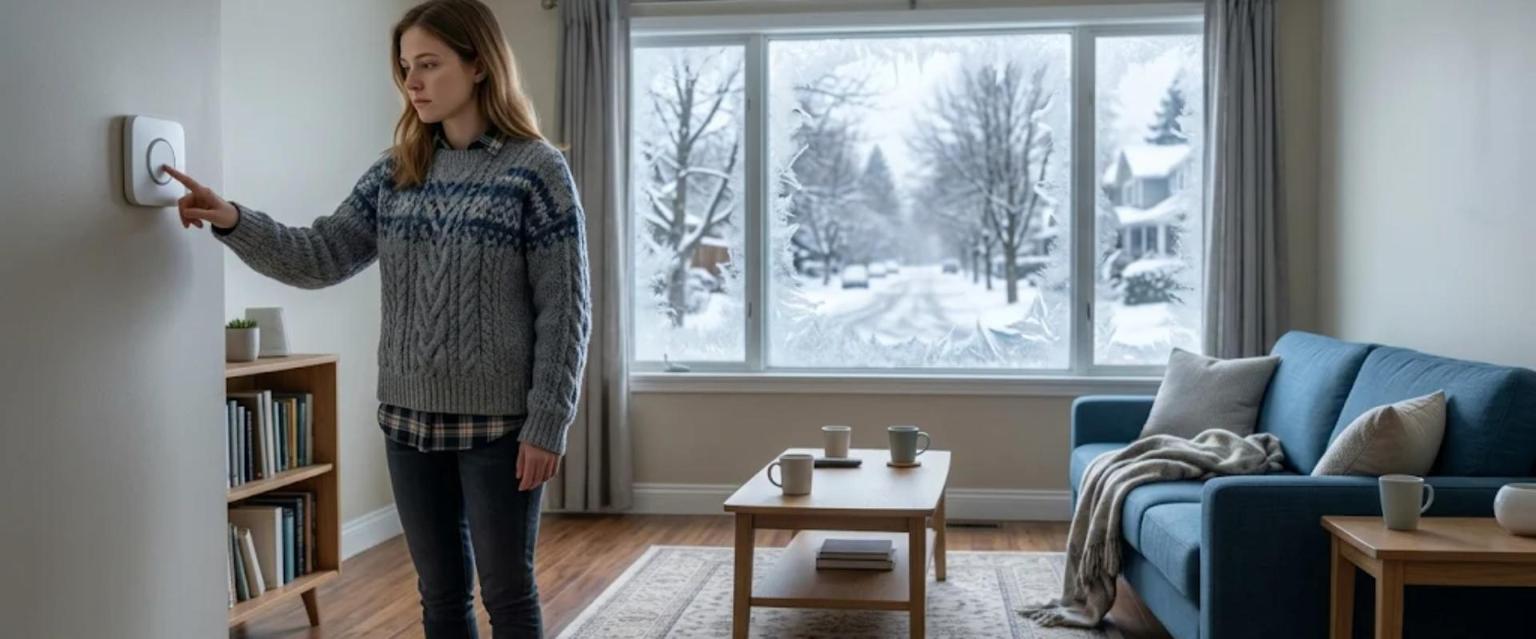

The short answer: The basic landlord heating requirements Ontario tenants rely on are summarized by the Landlord and Tenant Board: when a landlord supplies the heat, the unit must be kept at a minimum of 20°C from September 1 to June 15. Many cities add their own standard, such as Markham's 20°C by day and 16°C overnight. Heat is a vital service in that period, so a landlord cannot cut it off, even when rent is overdue. Tenants should report the problem in writing first, then contact their city's by-law office or apply to the Board.
This article is general information, not legal advice.
The first cold snap of the year tests both the furnace and the relationship between landlord and tenant. A bedroom sits at 17°C, the owner says the system is fine, and nobody is sure which rule applies. This guide sets out the landlord heating requirements Ontario law and local by-laws contain, as written on official government pages, plus the steps each side can take before a cold unit becomes a formal dispute.
We are a heating company, not a law firm, so we stick to the official sources and link to them. If the heat is out right now, book a service visit online or call 310-HEAT any time.
7 Landlord Heating Requirements Ontario Renters Should Know
Here are the landlord heating requirements Ontario renters and owners ask us about most, each tied to an official source listed at the end.
1. A 20°C provincial minimum
If the landlord provides heat, the Board says it must keep a minimum of 20°C from September 1 to June 15. Some municipal standards are higher.
2. Heat is a vital service
From September 1 to June 15, a landlord cannot withhold the heat it supplies, even if rent is overdue. Doing so is an offence.
3. Your city's by-law matters
Where a city has a property standards by-law, the city enforces its own standard. Where it does not, the provincial Maintenance Standards (O. Reg. 517/06) apply.
4. Equipment must work
A rental must be kept in a good state of repair, and anything the landlord provides, including the furnace, has to work.
5. CO alarms are the landlord's job
Landlords install, maintain and test CO alarms. Our carbon monoxide alarm guide for Ontario covers the full rules.
6. Tenants should not hold back rent
The Board advises against withholding rent. A tenant who files a maintenance application can ask to pay rent to the Board instead.
7. Tell the landlord first
Tenants should report a heating problem to the landlord, ideally in writing, and keep a copy.
Landlord Heating Requirements Ontario: Which Rule Applies Where You Rent
The landlord heating requirements Ontario cities set are worded differently, so the address of the rental decides which numbers a by-law officer checks. Here is how our service area and Toronto compare:
| Where | Heating standard | Dates |
|---|---|---|
| Province (Landlord and Tenant Board) | Minimum 20°C where the landlord provides heat | September 1 to June 15 |
| Markham (By-law 2017-26) | Minimum 20°C from 6 a.m. to 11 p.m. and 16°C from 11 p.m. to 6 a.m., for owned and rented homes | No date range on the City page |
| Richmond Hill (By-law 62-24) | Heating system able to keep rooms at 20°C, measured 1.2 m above the floor | No date range in the by-law |
| Toronto (Indoor Temperature Standards By-law) | Minimum 21°C where heat is provided at the owner's expense | October 1 to May 15, with shoulder seasons |
| A municipality with no property standards by-law | Provincial Maintenance Standards, O. Reg. 517/06 | As set in the regulation |
Toronto lets owners lower or turn off the heat in its shoulder seasons (September 15 to October 15 and May 1 to June 1) only when units stay at 21°C without it. Whatever your city's number, the vital service rule from September 1 to June 15 applies across the province.
Too Cold? A Tenant's Escalation Path
When the landlord heating requirements Ontario sets out are not being met, move up one step at a time.
1Rule out the simple causes
If you control a thermostat, check its setting and batteries, and keep furniture off the registers. Our guides to recommended thermostat settings and why one room is colder than the rest can help. Never open the furnace or touch wiring.
2Measure and keep a log
Place a thermometer mid-room, about 1.2 m above the floor (the height Richmond Hill uses), away from windows. Record the date, time and reading.
3Ask the landlord in writing
Send a dated email or letter with your readings and keep a copy. The Board considers whether the tenant told the landlord before applying.
4Call your city's by-law office
If nothing happens within a reasonable time, call Markham By-law Enforcement and Licensing at 905-479-7782 or Richmond Hill property maintenance at 905-771-0198. In Toronto, call 311 if an urgent heat request is not fixed within 24 hours.
5Report heat that is cut off
The province's Rental Housing Enforcement Unit takes these complaints at 416-585-7214 or 1-888-772-9277.
6Apply to the Landlord and Tenant Board
File Form T6, the Tenant Application about Maintenance, within one year of the problem. The Board can order repairs, a rent abatement or other remedies. Its line is 1-888-332-3234.
Safety comes first. If a CO alarm sounds, get everyone out and call 911 from outside. If you smell rotten eggs, leave and call Enbridge Gas at 1-866-763-5427 or 911 from outside.

A Heating-Season Checklist for Landlords
Ontario's rules focus on results, not a maintenance schedule, so this routine is our practical advice for meeting the landlord heating requirements Ontario tenants can enforce, not a legal checklist.
| When | What to do |
|---|---|
| August | Book an annual furnace or boiler inspection so it is ready before September 1. See our annual HVAC maintenance guide. |
| Before the first cold night | Confirm every room, including basement units, reaches your city's minimum. |
| Each new tenancy | Test the CO alarms, as Ontario rules require, and give the tenant the maintenance instructions. |
| All winter | Change filters on schedule (see our furnace filter guide) and keep vents clear of snow. |
| When a tenant calls | Respond the same day, log the request and the fix, and send a licensed technician for anything beyond a filter. |
| After June 15 | Plan major repairs or a replacement for the off-season. |
A maintenance and protection plan handles the yearly visit and gives you priority booking in cold snaps. If a furnace keeps failing, see our page on furnace replacement in Richmond Hill.
Myth or Fact: Common Heating Disputes
Here are the claims about landlord heating requirements Ontario renters hear most often, checked against official sources.
Myth: "The landlord can turn off the heat if I am behind on rent."
Fact: From September 1 to June 15, a landlord cannot withhold heat it provides, even when rent is overdue.
Myth: "A space heater counts as the heating system."
Fact: Richmond Hill's by-law bans a portable heater as a unit's primary heat source. Everywhere, it is a poor substitute, as our space heater vs furnace comparison shows.
Myth: "Air conditioning is a vital service too."
Fact: Ontario says air conditioning is not a vital service. Toronto does require air conditioning, where provided, to keep units at no more than 26°C from June 1 to September 30.
Basement Units, Shared Furnaces and Thermostat Control
Many rentals in Markham and Richmond Hill are second units, where one furnace heats both floors and the owner upstairs controls the thermostat. Basements lose heat to cold foundation walls, and a thermostat upstairs cannot tell when the lower unit is cold.
The landlord heating requirements Ontario cities enforce still apply to every unit in the house, so the lower suite needs to reach the minimum too. Options include balancing the ductwork, adding a zoning system with a thermostat in each unit, or giving the suite its own heat source. Code rules for shared systems are strict, so read our basement apartment heating guide and confirm details with your municipality's building department.
Help for Landlords and Tenants Across Markham, Richmond Hill and the GTA
Aire One has kept York Region homes warm since 1990, with technicians on call 24 hours a day and a 4.8-star Google rating from 541 reviews. We help owners meet the landlord heating requirements Ontario cities enforce, diagnose why a furnace is not heating, and document each repair. Learn more about our HVAC company in Richmond Hill or our HVAC company in Markham. Owners with several units can use a maintenance plan for every property, plus a free Total Home Assessment, financing and a 10-year worry-free warranty when replacement makes sense.
Rental unit not reaching temperature?
Our technicians answer 24/7 in Markham, Richmond Hill and York Region. Visit our Richmond Hill HVAC team page or book online.
310-HEAT (310-4328) · 24/7 service · $79 service call*
Frequently Asked Questions
What is the minimum temperature a landlord must provide in Ontario?
The provincial landlord heating requirements Ontario follows call for a minimum of 20°C from September 1 to June 15 when the landlord provides heat. Cities can set their own standard, such as Markham's 20°C by day and 16°C overnight, or Toronto's 21°C.
When does a landlord have to turn the heat on in Ontario?
Heat is a vital service under the Residential Tenancies Act from September 1 to June 15. Some cities use different dates. In Toronto, for example, the 21°C minimum applies from October 1 to May 15, with shoulder seasons on either side.
Can my landlord turn off the heat if I am behind on rent?
No. A landlord cannot withhold or interfere with a vital service it supplies, including heat, even when rent is overdue. Tenants can report a shut-off to the Rental Housing Enforcement Unit at 1-888-772-9277.
Can I withhold rent if my apartment is too cold?
No. The Landlord and Tenant Board advises tenants not to withhold rent. Report the problem in writing, contact your city's by-law office, and if needed file a T6 application, where you can ask to pay rent to the Board instead.
Do landlord heating requirements in Ontario apply to basement apartments?
Yes. The landlord heating requirements Ontario cities enforce apply to every rented unit, including a basement apartment that shares a furnace with the main house. If the lower unit cannot reach the minimum, the owner needs to fix the heating, not just the thermostat setting.
Sources and Helpful Resources
Rules change, so check these official pages for the latest landlord heating requirements Ontario and our local cities publish.
- Landlord and Tenant Board: Maintenance and Repairs Brochure
- Government of Ontario: Solve a Disagreement With Your Landlord or Tenant
- City of Markham: Property Standards
- City of Richmond Hill: Property Standards By-law 62-24 (PDF)
Matthew leads the Aire One Markham and Metro Toronto team, helping homeowners and rental owners keep their heating safe through every Ontario winter. Aire One has been a TSSA-registered, Carrier Factory Authorized Dealer since 1990.