
Heat Pump vs Furnace: An Honest Ontario Comparison
Cold-weather performance, running costs, rebates and a checklist to match the right system to your home.
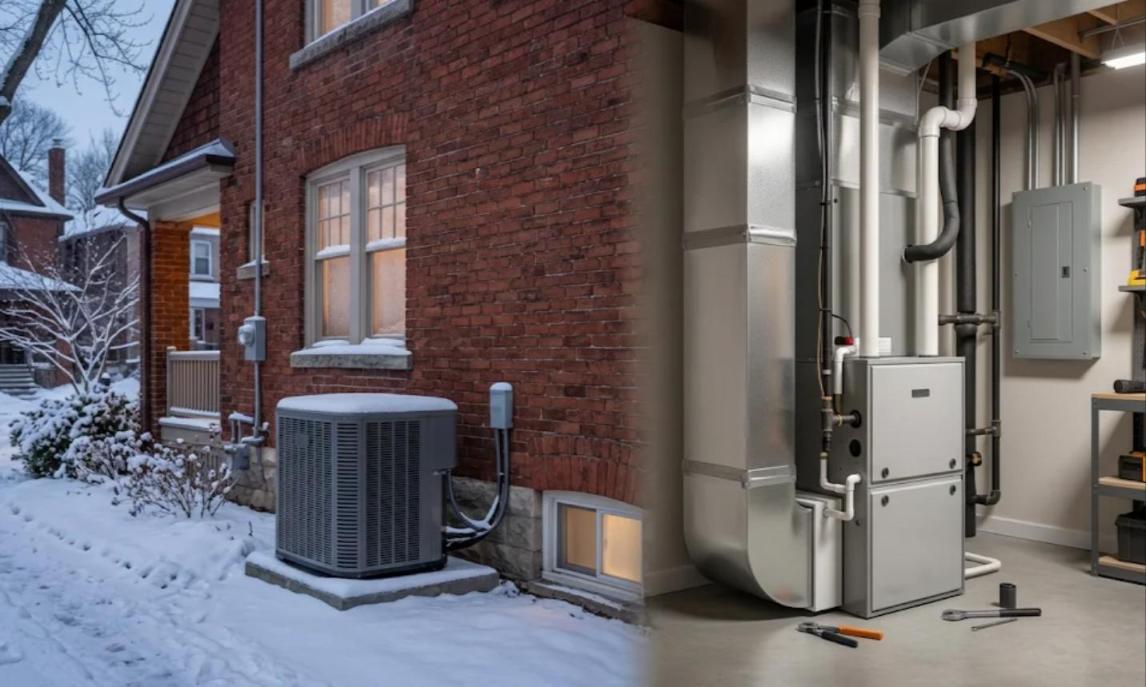

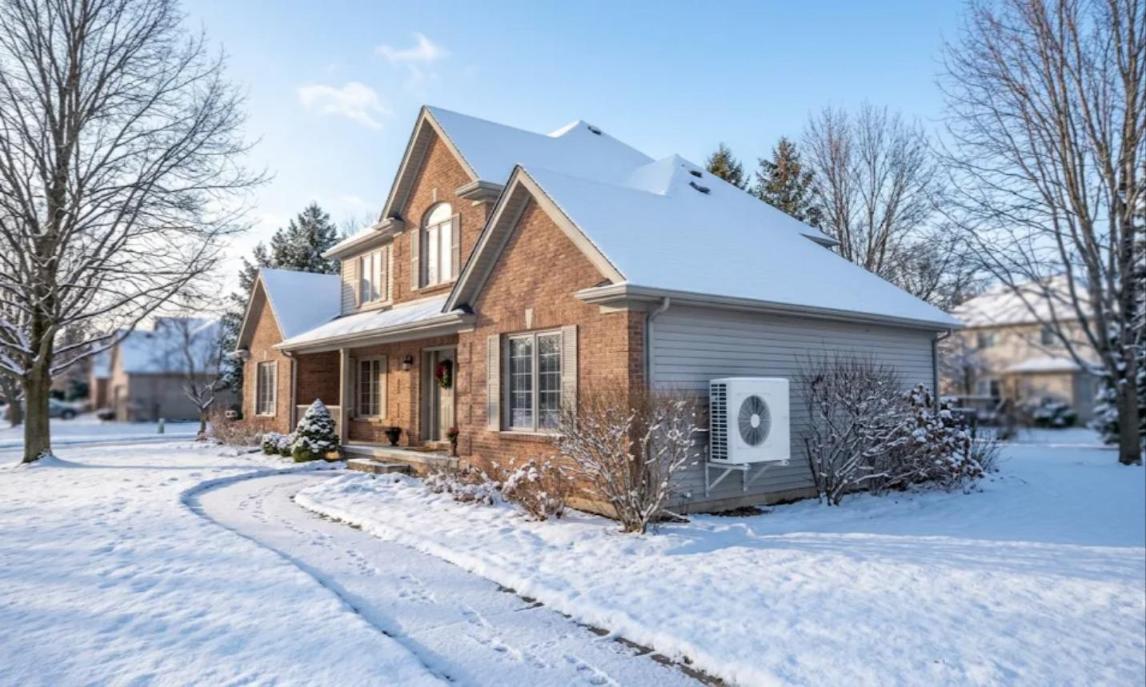
The short answer: No system wins the heat pump vs furnace question for every Ontario home. A gas furnace keeps full output in the deepest cold but needs a separate air conditioner. A heat pump heats and cools with one system and can qualify for provincial rebates, but its output drops in extreme cold, so it needs backup heat. Many GTA homes combine the two. The best fit depends on your ducts, panel, insulation, energy rates and the age of your current equipment.
When a furnace gets old or the air conditioner is on its last summer, the heat pump vs furnace question arrives quickly. This guide compares performance, running costs, rebates and fit for Ontario homes. It will not tell you what to buy; it gives you the questions to ask before anyone quotes you.
Aire One installs and services both systems for homeowners across Ontario and the GTA, including Markham and Richmond Hill. For an opinion on your own home, book a free Total Home Assessment.
How Each System Heats Your Home
Heat pump: moves heat
Refrigerant absorbs heat from outdoor air, even cold air. A compressor concentrates it and the indoor coil releases it into your ducts or ductless wall units. In summer the cycle reverses to cool the house. See how a heat pump works.
Gas furnace: makes heat
Burners heat a heat exchanger and a blower moves house air across it. A furnace needs a gas line and venting, and Ontario requires carbon monoxide alarms next to each sleeping area and on every storey of homes with a fuel-burning appliance.
If you ever smell rotten eggs, leave right away and call Enbridge Gas at 1-866-763-5427 or 911 from outside.
Heat Pump vs Furnace in an Ontario Winter
Cold weather is where the heat pump vs furnace debate gets real. A furnace's output does not depend on the outdoor temperature. A heat pump pulls heat from outdoor air, so its capacity and efficiency fall as the temperature drops. Natural Resources Canada (NRCan) gives these typical coefficient of performance (COP) ranges:
| Condition (NRCan) | Typical COP |
|---|---|
| Air source heat pump at 8°C | 2.0 to 5.4 |
| Air source heat pump at -8°C | 1.1 to 3.7 |
| Ground source, coldest months | Around 3 |
NRCan adds that newer air source models have a cut-off between -15°C and -25°C. Below it, a supplemental system must heat the home. Cold-climate models keep more capacity at low temperatures, and ground source systems run in any weather. Backup heat may also run during defrost. Read how extreme cold impacts heat pump performance, and for thermostat settings, see heat pump emergency heat.
Efficiency Explained: COP vs AFUE
Different labels make the heat pump vs furnace comparison confusing on a spec sheet.
- COP is heat delivered divided by electricity used. A COP of 3 means three units of heat per unit of electricity. HSPF measures the same idea over a heating season.
- AFUE (annual fuel utilization efficiency) is the share of the gas a furnace turns into heat over a season. It can never pass 100%.
Efficiency is not cost. Electricity and gas are priced very differently, so the cheaper system depends on your rates and climate. NRCan calls the temperature where one fuel becomes cheaper than the other the economic balance point. Sizing matters too; see why HVAC sizing matters.
Heat Pump vs Furnace Running Costs: What Moves the Bill
The Ontario Energy Board (OEB) sets electricity rates once a year on November 1. Prices set for November 1, 2026:
| Rate plan | Lowest price | Highest price |
|---|---|---|
| Ultra-Low Overnight | 3.7¢/kWh, daily 11 p.m. to 7 a.m. | 37.7¢/kWh, weekdays 4 p.m. to 9 p.m. |
| Time-of-Use | 9.1¢/kWh off-peak | 18.9¢/kWh on-peak |
| Tiered | 11.2¢/kWh for the first 1,000 kWh a month in winter | 13.2¢/kWh above that |
The OEB sets natural gas supply rates 4 times a year. For the Enbridge Gas Inc. rate zone, the supply rate from October 1, 2026 is 9.1080¢ per cubic metre, but supply is only one part of the bill; delivery and other charges are added.
In the heat pump vs furnace math, these factors decide which costs less to run:
- How efficient the heat pump is at your January temperatures.
- Whether backup heat is electric or gas. Our gas vs electric furnace guide compares the two fuels.
- Your rate plan and habits, such as shifting heat to the ultra-low overnight rate.
- Insulation and air sealing, which lower the load for either system.
For installed prices and savings estimates, see our heat pump cost in Ontario guide.
The Middle Ground: Dual-Fuel Systems
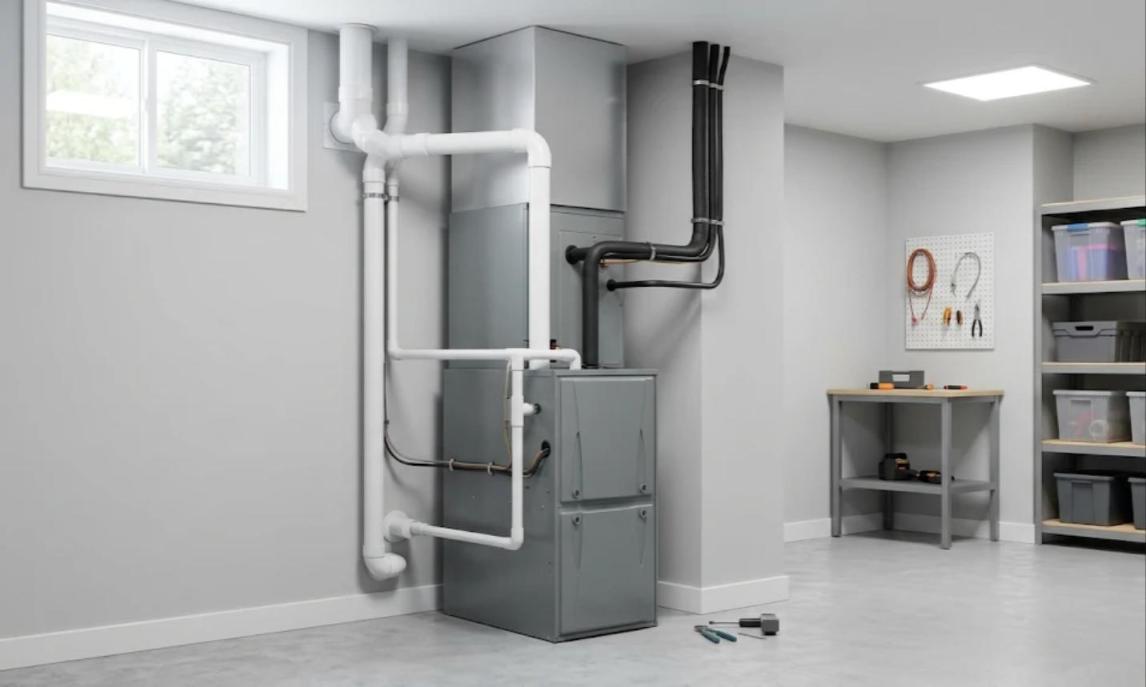
The heat pump vs furnace choice does not have to be either/or. NRCan describes hybrid systems where an air source heat pump uses a furnace or boiler as supplemental heat. The two do not run at the same time. The heat pump covers milder days, and the controls switch to the furnace when it gets too cold or gas becomes the cheaper fuel.
This setup is common when a furnace still has years left but the air conditioner is failing. Your installer should confirm the furnace, ducts and controls are compatible first.
Upfront Factors and Ontario Rebates
Installed prices vary too much to quote here, but these factors drive the number on either side of the heat pump vs furnace decision:
- Ductwork: homes without ducts may suit ductless split systems.
- Electrical capacity: see heat pumps on a 100 amp panel.
- Gas line and venting: in place in most furnace homes, an added cost where they are not.
- Equipment age: replacing a furnace and an air conditioner together changes the math.
The Home Renovation Savings Program from Save on Energy and Enbridge Gas lists up to $7,500 for a cold-climate air source heat pump and up to $12,000 for a ground source heat pump, based on size. The heat pump must be on NRCan's qualified products list. A smart thermostat earns $100, and the bundled path starts with a home energy assessment that pays $600 back. Gas furnaces are not on the program's list. Amounts change, so check saveonenergy.ca and our 2026 Ontario rebates guide. The Canada Greener Homes Grant and Loan are closed to new applications.
As of November 2026, no federal or Ontario rule stops homeowners from installing or replacing a gas furnace in an existing home. Our gas furnace ban explainer covers the headlines.
Cooling, Comfort and Everyday Trade-Offs
- The cooling bonus: the biggest everyday heat pump vs furnace difference is that a heat pump is also your air conditioner, and NRCan notes it dehumidifies while cooling. A furnace home needs separate central air.
- How the heat feels: heat pumps tend to run longer cycles with milder air; furnaces deliver hotter air in shorter bursts.
- Power outages: both stop without electricity. See our guide to a furnace during a power outage.
- Upkeep: each needs yearly maintenance; dual fuel means two systems.
Heat Pump vs Furnace Decision Checklist by Home Type
| Your home | Options worth pricing | Key question |
|---|---|---|
| Gas and ducts, newer furnace, old air conditioner | Dual fuel, or a new air conditioner | Is the furnace compatible? |
| Gas and ducts, furnace near end of life | Furnace with central air, cold-climate heat pump, or dual fuel | How long will you stay? |
| Electric baseboards, no ducts | Ductless or ducted heat pump | Can the panel handle the load? |
| No natural gas service | Cold-climate heat pump with electric backup | What heats the home below the cut-off? |
| Townhouse or semi, small yard | Either, depending on space | Where can an outdoor unit go? |
| Older, drafty home | Air sealing and insulation first | What does a home energy audit show? |
Write down the age of your furnace and air conditioner, your rate plan and your panel size. Those answers narrow the heat pump vs furnace choice faster than any brochure.
Compare Both Options With a Local Team
Aire One has served Ontario homeowners since 1990 and holds a 4.8-star Google rating from 541 reviews. We install furnaces, heat pumps and dual-fuel systems, so we have no reason to push one side of the heat pump vs furnace choice. A free Total Home Assessment checks your ducts, panel and equipment, and we offer financing and a 10-year worry-free warranty. Visit our HVAC company in Richmond Hill or HVAC company in Markham pages.
Still stuck on heat pump vs furnace?
TSSA-registered help across Markham, Richmond Hill and the GTA.
310-HEAT (310-4328) · 24/7 service · Richmond Hill team
Frequently Asked Questions
Can a heat pump heat my home on its own in an Ontario winter?
Often for most of the season, though not always on the coldest days. NRCan notes that newer air source heat pumps have a cut-off between -15°C and -25°C, below which a supplemental system must heat the home. Most installs include electric or gas backup.
Which is cheaper to run, a heat pump or a gas furnace?
It depends on your electricity and gas rates, the heat pump's efficiency at your local temperatures, your backup heat and how well the home is sealed. Ask for a comparison based on your own usage.
Do I have to remove my furnace to add a heat pump?
No. Many homes add a heat pump in place of the central air conditioner and keep the furnace as backup. This is called a dual-fuel or hybrid system. A technician should confirm the furnace, ducts and controls are compatible.
Is Ontario banning gas furnaces?
Not for existing homes. As of November 2026, no federal or Ontario rule stops homeowners from installing or replacing a gas furnace in an existing home. Policies can change, so check official government sources before a major purchase.
What heat pump rebates are available in Ontario?
The Home Renovation Savings Program lists up to $7,500 for a cold-climate air source heat pump and up to $12,000 for a ground source model, based on size. The unit must be on NRCan's qualified products list. Amounts change, so confirm on saveonenergy.ca.
Sources and Helpful Resources
- Natural Resources Canada: Heating and Cooling With a Heat Pump
- Ontario Energy Board: Electricity Rates
- Ontario Energy Board: Natural Gas Rates
- Save on Energy: Home Renovation Savings Program
Matthew leads the Aire One Markham and Metro Toronto team, helping homeowners compare heating options with clear information. Aire One has been a TSSA-registered, Carrier Factory Authorized Dealer since 1990.