
White Smoke From Furnace Vent?
Why a high-efficiency furnace puffs a white cloud on cold days, and the warning signs that need a technician.
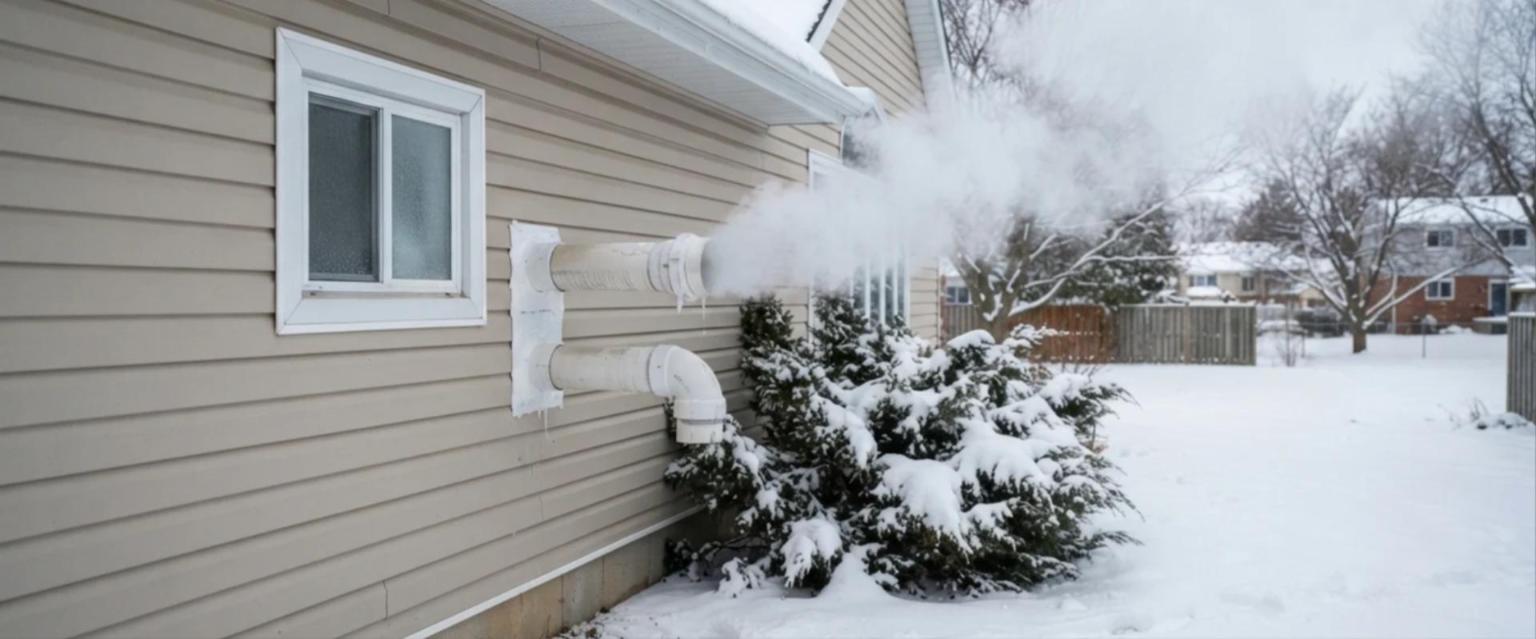

The short answer: White smoke from furnace vent pipes on a cold day is almost always water vapour, not smoke. High-efficiency furnaces make water when they burn natural gas, and that moisture turns into a white cloud in winter air, just like your breath. It is a problem only if the plume smells, looks dark or sooty, comes with a carbon monoxide alarm, or the vent is blocked by snow or ice.
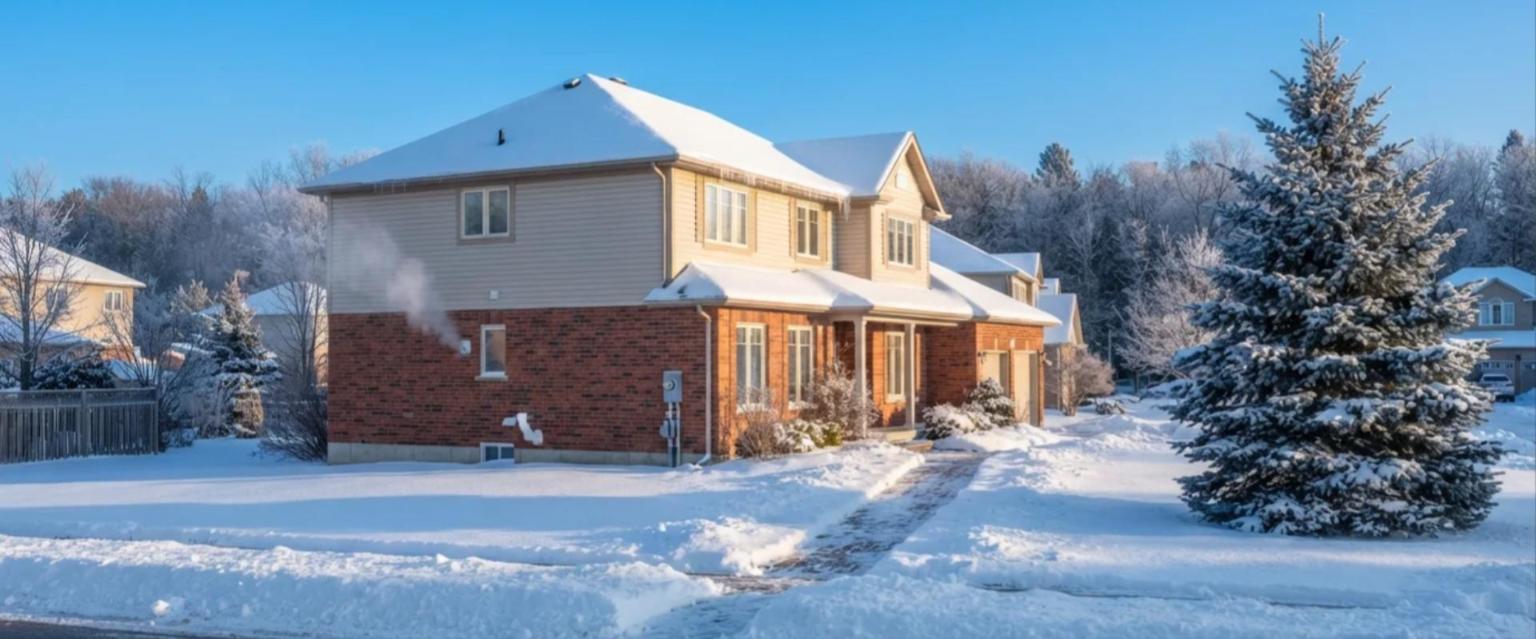
On the first truly cold morning of the season, many Ontario homeowners see a cloud pouring out of the side of the house and worry. The good news is that this kind of white smoke from furnace vent openings is usually a sign that a modern furnace is working exactly as designed.
This guide explains where the plume comes from, how to tell vapour from true smoke, and the six warning signs that mean you should call. If something already looks or smells wrong, book a service visit online or call 310-HEAT any time.
Usually normal
- A white, wispy cloud that fades quickly
- Bigger plumes on very cold, damp or calm days
- No smell outside or inside the home
- The plume stops soon after the furnace cycle ends
Not normal
- Grey or black smoke, or soot on the siding
- A gas, exhaust or burning smell
- A CO alarm, headaches or nausea indoors
- Snow, ice or icicles covering the pipe opening
Where White Smoke From Furnace Vent Pipes Comes From
Burning natural gas produces two main by-products: carbon dioxide and water vapour. Natural Resources Canada's Heating With Gas guide explains that in a condensing furnace, combustion gases are cooled to the point where the water vapour condenses. Most of that water drains to a floor drain or condensate pump, and the cooler exhaust travels through plastic pipe out a side wall instead of up a chimney.
The exhaust is still warm and humid compared with January air, so the leftover moisture condenses into tiny droplets the moment it reaches the cold. That cloud is what most people call white smoke from furnace vent outlets. It is the same physics as your breath on a frosty morning.
Most high-efficiency furnaces have two white pipes on the wall, or one round cap with both inside. The plume should come from the exhaust side.
Is White Smoke From Furnace Vent Pipes Normal in Winter?
Yes, in most cases. White smoke from furnace vent pipes can look dramatic one day and barely there the next, and that change is normal. A few everyday conditions affect how much you see:
- Cold. The colder it gets, the thicker the cloud and the farther it travels.
- Humidity and fog. Damp air absorbs moisture slowly, so the plume lingers.
- Wind. On a calm morning the cloud can drift up the wall. A breeze breaks it up within seconds.
- Long cycles. During a cold snap the furnace runs longer, so the plume lasts longer.
In deep cold, that moisture can freeze onto nearby siding or the pipe. Light frost is common; thick ice around or inside the opening is not.
Vapour or Smoke? How to Tell the Difference
You do not need tools to judge white smoke from furnace vent pipes. Stand a safe distance away and use your eyes and nose.
| Clue | Water vapour (normal) | Smoke or a combustion problem |
|---|---|---|
| Colour | Pure white and wispy | Grey, brown or black |
| How it fades | Disappears within a short distance | Lingers as a haze or drifts as a dark cloud |
| Smell | None, or a faint damp smell | Sharp, acrid, burning or rotten egg |
| What it leaves behind | Frost or water droplets | Black soot stains on siding or the pipe |
Six Signs White Smoke From Furnace Vent Pipes Means Trouble
Most plumes are harmless, but white smoke from furnace vent pipes paired with any of these six situations deserves a closer look or a call.
Two situations are emergencies
Rotten egg smell: leave the home right away without touching switches, then call Enbridge Gas at 1-866-763-5427 or 911 from outside.
CO alarm sounding: get everyone out and call 911 from outside. Do not go back in until responders say it is safe.
1. A gas or exhaust smell. Vapour has no real odour. A rotten egg smell points to a gas leak, and a sharp exhaust smell can mean gases are not venting properly. Our guide on what to do when your furnace smells like gas walks through the next steps.
2. Dark smoke or soot. Grey or black smoke, or black streaks on the siding, can point to incomplete combustion. The Government of Canada lists soot stains around combustion appliances as a warning sign of combustion spillage. Turn the thermostat down and call a technician.
3. A CO alarm or symptoms indoors. Headaches, nausea, dizziness or drowsiness are warning signs. Ontario requires CO alarms next to sleeping areas and, since January 1, 2026, on every storey in homes with a fuel-burning appliance, a fireplace or an attached garage. See our carbon monoxide alarm guide for Ontario.
4. No plume at all, plus a cold house. On a bitter day, a quiet vent and no heat can mean snow or ice is blocking the pipe and the furnace has shut itself down. Read our guide to a furnace vent blocked by snow before you head outside.
5. Icicles or steady dripping at the pipe. The same NRCan guide notes that this venting should slope upward from the furnace to the outside, so condensate runs back to the drain. Steady dripping, ice growing into the opening or water around the furnace can mean the pipe has shifted or the drain is struggling. Our guides on a frozen condensate line and why a gas furnace leaks water cover both problems.
6. The furnace keeps shutting off. If the plume starts and stops every few minutes and the house never warms up, the furnace may be locking out on a venting fault. Learn about common combustion problems with high-efficiency furnaces.
A Safe Two-Minute Walk-Around
If you notice white smoke from furnace vent pipes but have no smell and no alarm, a quick look from the ground is all most homeowners need:
- Watch the plume for a minute. Note the colour, how fast it fades and any smell.
- Look at both pipe openings. They should be open, with no nests or leaves inside.
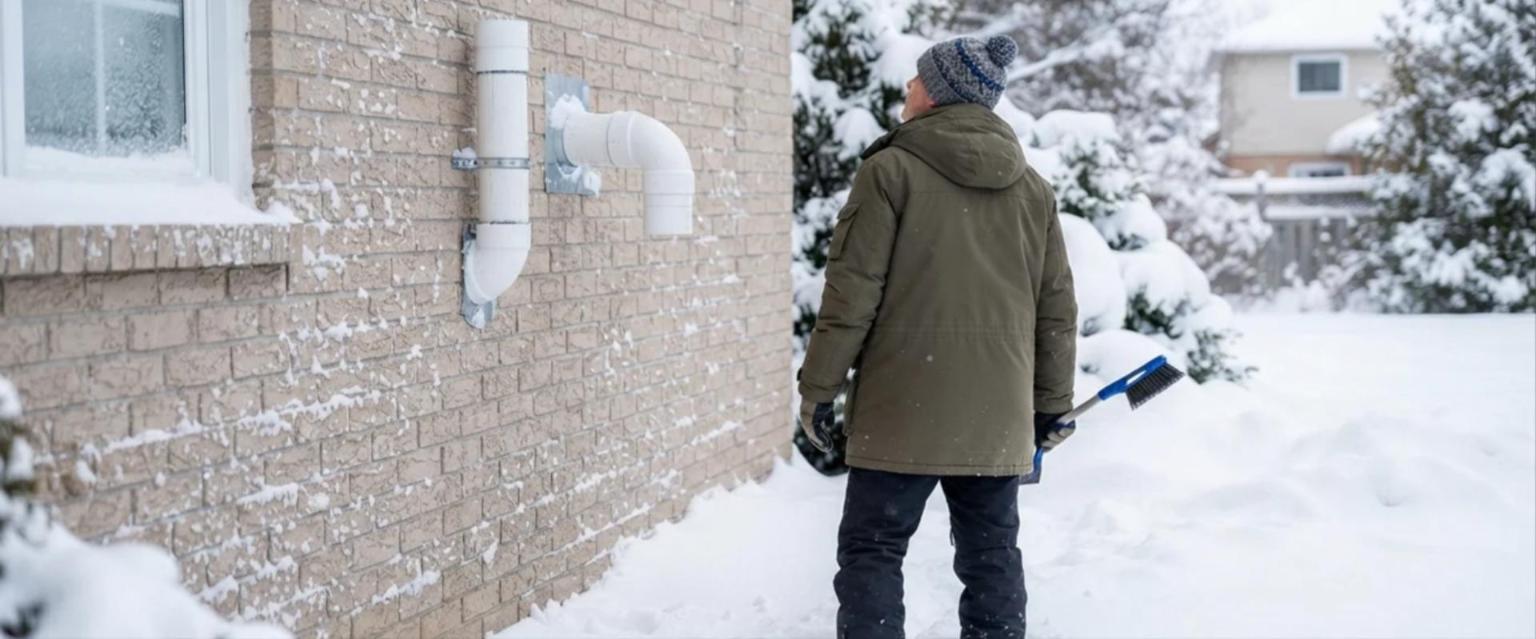
- Brush loose snow away by hand. Use a soft brush or gloved hands and keep the area around the pipes open.
- Check the wall for soot. Dark streaks above the exhaust should never be ignored.
- Glance at the furnace room. Look for water on the floor, a flashing status light or a disconnected drain line. Look only; do not open any panels.
- Test your CO alarms and replace them as the manufacturer recommends.
Hands off: what never to do
- Never chip or scrape ice off the pipes. Cold PVC cracks easily.
- Never pour hot water into a vent. It can refreeze deeper inside the pipe.
- Never cover, cap, screen or block the exhaust to hide the plume.
- Never extend or move venting yourself. That is licensed gas work.
- Never open the burner compartment or reset the furnace over and over.
What a Technician Checks
When white smoke from furnace vent pipes looks or smells wrong, a TSSA-registered technician checks the whole venting and combustion system, not only the pipe outside. A visit from our HVAC servicing and repairs team typically includes:
- Combustion and CO testing to confirm clean burning and safe indoor air.
- Venting inspection for slope, joints, cracks and clearances, based on the manufacturer's instructions and code.
- Condensate drain and trap cleaning so water cannot back up.
- Safety controls, including the pressure switch that stops the furnace when a vent is blocked.
- Heat exchanger condition, since cracks can let exhaust mix with household air. See our furnace heat exchanger guide.
A yearly tune-up catches many of these issues early. Our furnace maintenance in Markham visits include venting and drain checks, and Richmond Hill homeowners can book furnace maintenance in Richmond Hill. When a fix is needed, repair visits start with our $79 service call, and maintenance and protection plan members get priority booking during cold snaps.
Peace of Mind From a Local Team Since 1990
Aire One has kept Ontario families warm since 1990, with TSSA-registered technicians on call 24/7 across Markham, Richmond Hill and York Region and a 4.8-star Google rating from 541 reviews. If white smoke from furnace vent pipes has you worried, we can check it. Learn more about our HVAC company in Markham or our HVAC company in Richmond Hill, or schedule a furnace tune-up before winter peaks.
Worried about white smoke from furnace vent pipes?
Our technicians answer 24/7 across Markham, Richmond Hill and York Region. TSSA-registered and trusted since 1990.
310-HEAT (310-4328) · 24/7 service · $79 service call*
Frequently Asked Questions
Is white smoke from furnace vent pipes dangerous?
Usually not. On a high-efficiency furnace, the white cloud is water vapour from burning natural gas, and it shows up most on cold, damp days. It becomes a concern if it smells, looks grey or black, leaves soot, or comes with a CO alarm or symptoms indoors.
Why is there so much steam coming from my furnace vent today?
Cold, humid and calm weather all make the plume bigger, and the furnace runs longer during a cold snap. A thick but pure white cloud with no smell is normal. If it comes with a smell, soot or a furnace that keeps shutting off, call a technician.
Should vapour come out of both furnace pipes?
No. One pipe brings in fresh air for combustion and the other carries exhaust out, so the plume should come from the exhaust. If you are unsure which pipe is which, a technician can point them out during a tune-up.
Can I remove ice from my furnace exhaust pipe?
You can gently brush loose snow away by hand, but never chip ice, scrape the pipe or pour hot water into it. Cold plastic cracks easily. If ice is blocking the opening or keeps coming back, call a licensed technician to find the cause.
Why didn't my old furnace make a white plume?
Older and mid-efficiency furnaces send hotter exhaust up a chimney, often through the roof, where the vapour is less noticeable. A high-efficiency furnace cools its exhaust to capture more heat, so the moisture shows up as a visible cloud at a side wall vent.
Sources
- Natural Resources Canada: Heating With Gas (PDF guide)
- Government of Canada: Combustion Gases in Your Home
- Government of Ontario: Carbon Monoxide Safety
- Enbridge Gas: What to Do If You Smell Gas
Matthew leads the Aire One Markham and Metro Toronto team, helping homeowners keep their heating safe through every Ontario winter. Aire One has been a TSSA-registered, Carrier Factory Authorized Dealer since 1990.