
Frozen Condensate Line on Your Furnace
Why high-efficiency furnaces shut down when their drain freezes, the signs to watch for, and the fixes that stop it from happening every cold snap.

The short answer: A frozen condensate line stops the water that a high-efficiency furnace makes from draining away. The water backs up, a safety switch trips, and the furnace shuts down. Lines usually freeze where they pass through a cold garage, crawl space or exterior wall. You can gently warm exposed drain tubing with warm cloths, but the lasting fix is rerouting, insulating or heat-tracing the line, which a technician should do.
When the temperature drops well below freezing, a familiar pattern shows up in service calls: a furnace that ran fine all fall suddenly starts and stops, or will not start at all. In many homes, the culprit is a frozen condensate line, the small drain that carries water away from a high-efficiency furnace. It is a simple part, but when it freezes, the whole heating system can stop.
This guide explains why your furnace makes water, where drain lines freeze, the warning signs, what you can safely do, and the permanent fixes that keep it from happening again. If your heat is off right now, you can book a service visit online or call 310-HEAT any time, day or night.
Key takeaways
- High-efficiency furnaces produce water as they burn gas and need a working drain.
- Lines freeze where they run through cold spaces or drain outside.
- When water backs up, a safety switch shuts the furnace down to protect it.
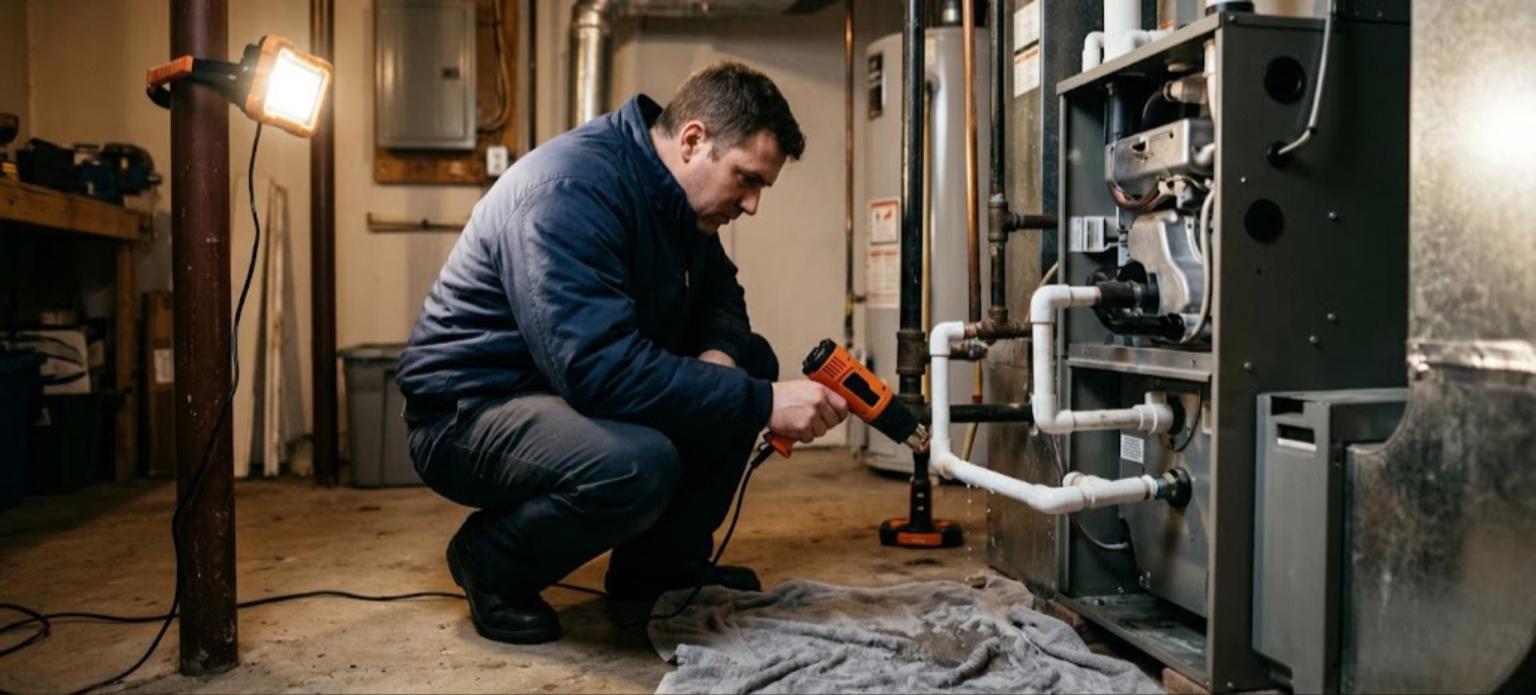
- Never use an open flame or a heat gun on plastic drain lines.
- Rerouting the drain to an indoor floor drain is often the most reliable fix.
What Is a Frozen Condensate Line, and Why Does a Furnace Make Water?
Most furnaces sold in Canada today are condensing models. Federal efficiency rules set a high minimum efficiency for most new gas furnaces, and the way they reach it is by squeezing extra heat out of the exhaust. As the exhaust cools, water vapour turns into liquid, which is called condensate.
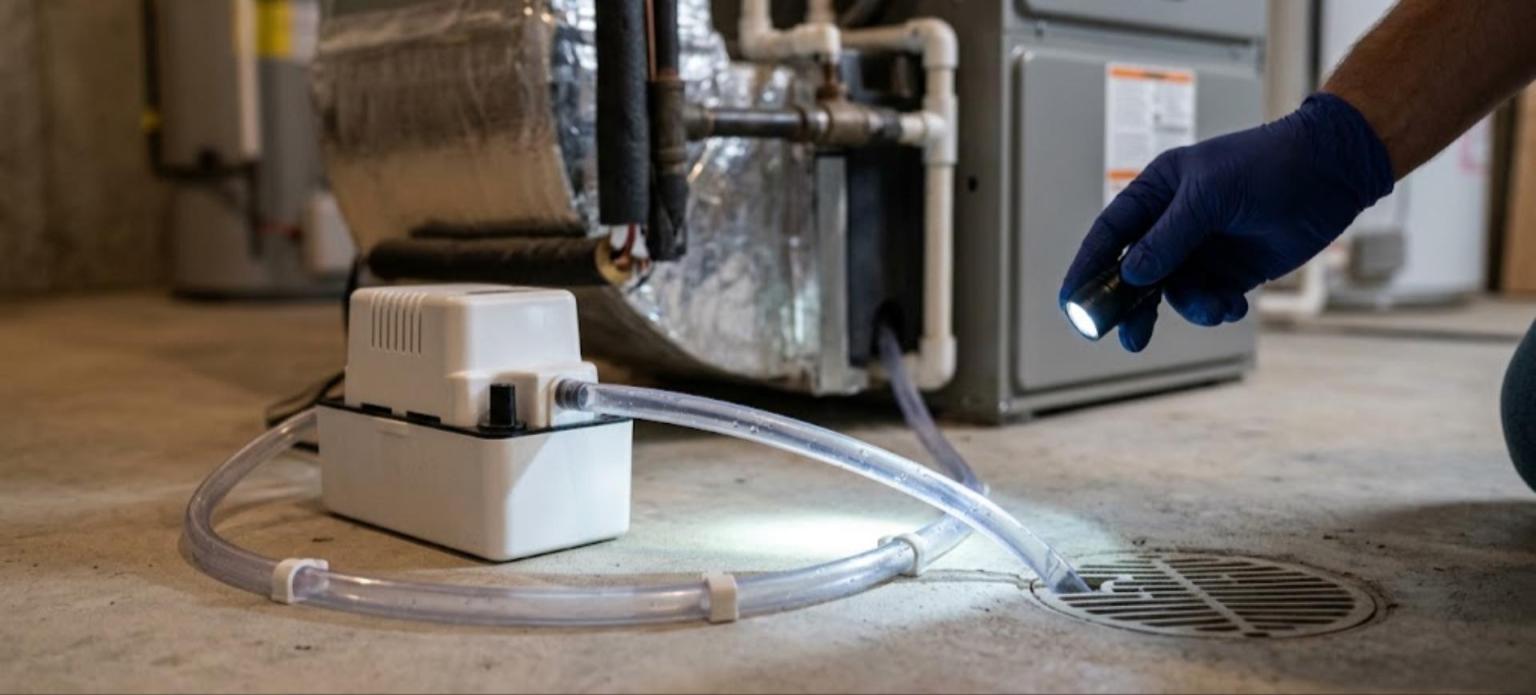
A busy furnace on a cold day can produce several litres of this slightly acidic water. It flows through plastic tubing and a small trap, then either drains by gravity to a floor drain or is pumped out by a small condensate pump. In homes with central air, the indoor cooling coil uses the same drain in summer.
A frozen condensate line happens when any part of that path drops below freezing. Ice blocks the flow, water backs up into the furnace, and a float or pressure switch tells the control board to stop. The furnace shuts down to protect itself and your home from water damage.
Where a Frozen Condensate Line Usually Starts
Drains only freeze where they meet cold air. These are the usual trouble spots in Ontario homes:
| Location | Why it freezes | Typical fix |
|---|---|---|
| Drain exiting through an outside wall | Water drips and refreezes at the outlet | Reroute to an indoor floor drain |
| Furnace in an attic, garage or crawl space | The whole drain path sits in unheated air | Insulation plus approved heat tape |
| Line running along a cold foundation wall | Slow drips freeze in low spots | Reroute with steady slope, insulate |
| Condensate pump in a cold room | Water in the pump reservoir freezes | Relocate the pump or warm the space |
| Exhaust vent drain or trap | Water in the vent pipe freezes near the outside wall | Correct pipe slope and venting |
Homes where a previous owner finished the basement, moved the furnace or added a cold room are especially prone to a frozen condensate line, since drains are often rerouted without much thought for winter.
Signs of a Frozen Condensate Line
Watch for these clues, especially during the first deep freeze of the season:
- The furnace starts, runs briefly, then shuts off and tries again.
- A gurgling or sloshing sound comes from the furnace or vent pipe.
- Water is pooling around the base of the furnace or the condensate pump.
- The condensate pump hums but no water comes out of its discharge line.
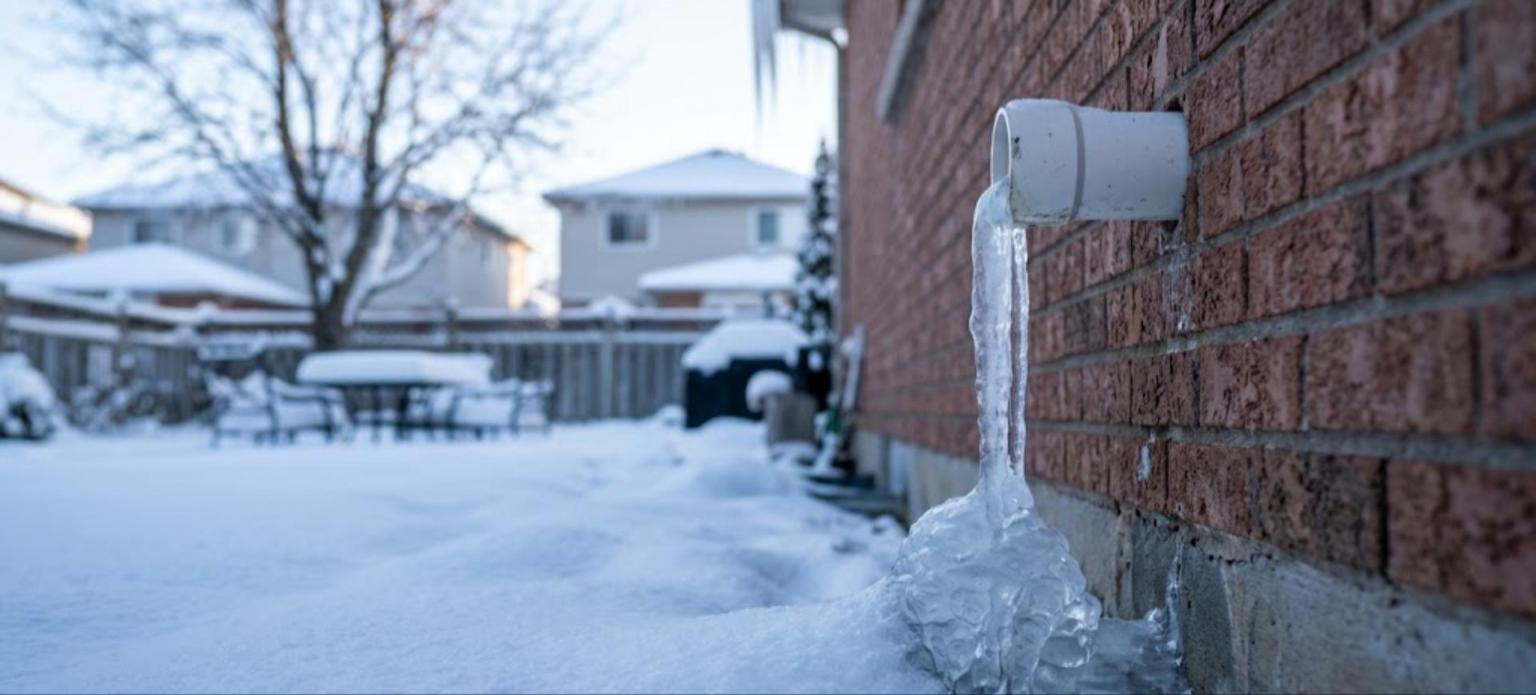
- An icicle or ice mound has formed where the drain exits the house.
- A flashing code on the furnace points to a pressure switch or float switch.
Water on the floor has other causes too. Our guide on why a gas furnace leaks water covers them in detail.
What You Can Safely Do About a Frozen Condensate Line
Some homeowner steps are safe and helpful. Others can crack pipes or create a hazard. Stick to these:
- Turn the thermostat down so the furnace stops trying to start while water is backed up.
- Find the frozen spot. Follow the clear or white tubing from the furnace toward the floor drain, pump or outside wall.
- Warm exposed tubing gently. Wrap it with cloths soaked in warm tap water, or use a hair dryer on low, held well away from the furnace and any gas piping.
- Clear ice at the outside outlet by hand, without chipping into the pipe.
- Mop up water and keep it away from electrical cords and outlets.
- Turn the thermostat back up once water drains freely, and watch a full heating cycle.
Do not use a torch, heat gun or boiling water on plastic drain lines, and do not remove furnace panels or bypass safety switches. If the frozen section is inside a wall or the furnace still will not run, call a technician. A frozen condensate line in a crawl space or attic is not a do-it-yourself job.
Lasting Fixes a Technician Can Make
Thawing the line gets the heat back, but if the cause stays the same, it will freeze again at the next cold snap. Permanent fixes include:
- Rerouting the drain indoors to a floor drain or laundry tub, so no part of it runs outside.
- Correcting the slope so water never sits in low spots where it can freeze.
- Insulating and heat-tracing lines that must pass through cold spaces, using products approved for that use.
- Relocating or replacing the condensate pump, and adding an overflow safety switch.
- Checking the exhaust venting, since a sagging vent pipe can hold water that freezes near the outside wall.
Our HVAC servicing and repairs team makes these corrections on every make and model. If you are planning a new furnace, a proper drain layout is part of a good installation; see our guide to a high-efficiency furnace.
Frozen Condensate Line or Something Else?
Several winter problems cause the same start-and-stop pattern. Here is how they compare:
| Problem | Clue that points to it |
|---|---|
| Frozen drain | Gurgling, water near the furnace, ice at the drain outlet |
| Vent buried in snow | Shutdown right after a storm, snow covering the outside pipes |
| Dirty flame sensor | Burners light, then go out after a few seconds |
| Clogged filter | Weak airflow, furnace overheats and shuts off |
A buried vent is common after storms; our guide to a furnace vent blocked by snow explains how to clear it. For burner and flame problems, see common combustion problems with high-efficiency furnaces.
Preventing a Frozen Condensate Line Every Winter
Ask for the condensate drain, trap and pump to be checked during every fall tune-up. Keep the furnace room and any cold room with a pump above freezing, and do not block heat registers in those spaces. If a frozen condensate line has happened before, have it corrected now rather than waiting for January. Members of our maintenance and protection plans get that check every year, plus priority booking during cold snaps.
Fast Help From a Team That Knows High-Efficiency Furnaces
Aire One has serviced high-efficiency furnaces across York Region since 1990, with 150 service trucks, NATE-certified and Red Seal technicians and a 4.8-star Google rating from 541 reviews. Whether you need a frozen drain cleared tonight or rerouted for good, our HVAC company in Richmond Hill and HVAC company in Markham teams can help. If the heat is out in freezing weather, our guide to emergency HVAC in Richmond Hill covers what to do while you wait.
Furnace shutting down in the cold?
Our technicians answer 24/7 across Markham, Richmond Hill and York Region. TSSA-registered and trusted since 1990.
310-HEAT (310-4328) · 24/7 service · $79 service call*
Frequently Asked Questions
Can a frozen condensate line stop my furnace from working?
Yes. When ice blocks the drain, water backs up into the furnace and a safety switch shuts it down. The furnace may start and stop repeatedly or refuse to start until the line drains freely again.
How do I thaw a frozen furnace drain line?
Turn the thermostat down, then gently warm exposed tubing with cloths soaked in warm tap water or a hair dryer on low, kept away from the furnace and gas piping. Never use a torch, heat gun or boiling water. If the frozen section is hidden or the furnace still will not run, call a technician.
Why does my furnace produce water at all?
High-efficiency furnaces cool their exhaust enough that water vapour turns into liquid. Capturing that extra heat is what makes them efficient, and the water has to drain away through a condensate line or pump.
Is it safe to run the drain line outside?
It is risky in an Ontario winter. Water dripping at an outdoor outlet can refreeze and block the line. Draining to an indoor floor drain or laundry tub is usually more reliable.
Can heat tape stop a condensate line from freezing?
It can help where a line must pass through a cold space, as long as the product is approved for that use and installed correctly with insulation. Rerouting the line into heated space is often the better long-term fix.
Sources and Helpful Resources
- Natural Resources Canada: Gas Furnace Efficiency Regulations
- TSSA: Keep Gas Meters and Appliance Vents Free From Snow and Ice
- Enbridge Gas: Keep Your Gas Meter Clear
- Health Canada: Carbon Monoxide Symptoms of Exposure
Matthew leads the Aire One Markham and Metro Toronto team, helping homeowners keep high-efficiency furnaces running reliably through the coldest Ontario weather. Aire One has been a TSSA-registered, Carrier Factory Authorized Dealer since 1990.