
Heat Pump Not Heating? Lukewarm Air vs a Real Problem
Normal heat pump air vs a real fault in ducted and ductless systems, safe checks and when backup heat takes over.
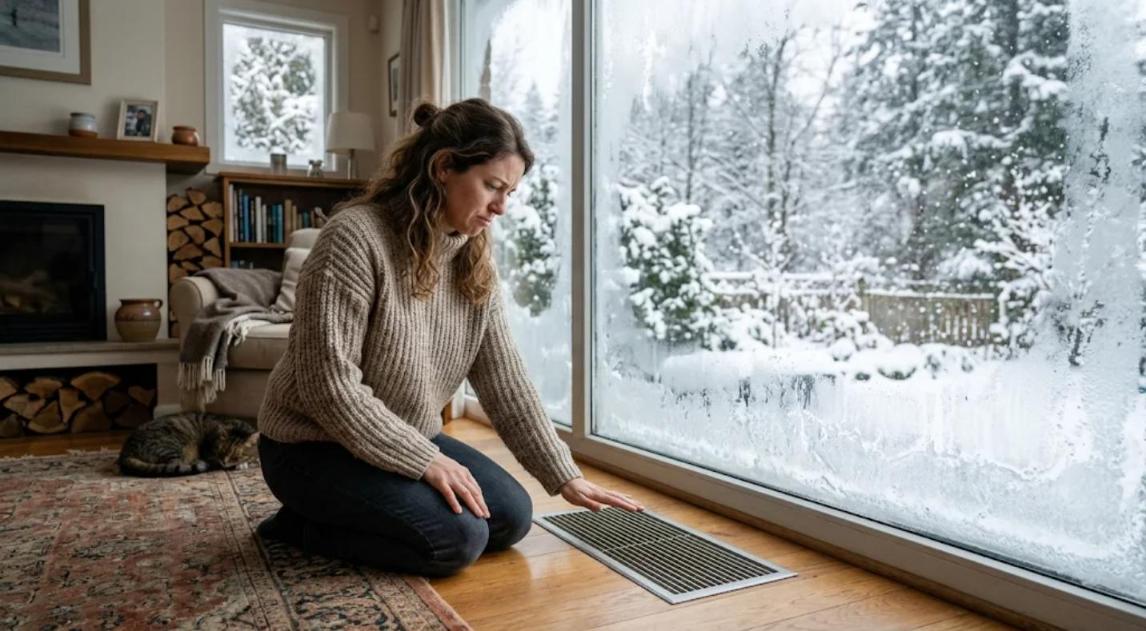

The short answer: Heat pump air is cooler than furnace air, so a mild feel at the vent is not always a fault. A heat pump not heating at all lets the room keep dropping below the set point. Check that the thermostat or remote is on Heat, replace a dirty filter, brush snow off the outdoor unit and allow for defrost. Call a technician if the house keeps cooling, the unit is locked in ice or a breaker has tripped.
The thermostat says 21°C, yet the vent air feels barely warm. For many Ontario homeowners in a first winter with a heat pump, that brings a worried question: is my heat pump not heating, or is this how it works? It can be either. Heat pumps heat differently from furnaces, and several normal behaviours look like trouble.
This guide covers ducted (central) and ductless mini split systems: normal air versus a real fault, safe checks and when backup heat should take over. If your home is already cooling, you can book a heat pump service visit or call 310-HEAT any time.
Lukewarm Air or a Heat Pump Not Heating? The First Test
Natural Resources Canada (NRCan) explains that heat pumps move a larger volume of air heated to a lower temperature, normally between 25 and 45°C. Air at the low end of that range is cooler than your skin, so it can feel cool to your hand while still warming the room.
Normal heat pump behaviour
- Air at the vent feels mild, not hot
- Long run times on cold days
- The room holds its set temperature
- Short pauses during defrost
Signs of a heat pump not heating
- The room keeps falling below the set point
- Vent air always feels as cool as the room
- The outdoor unit is silent or sealed in a block of ice
- Constant backup heat or a tripped breaker
Trust the thermostat, not your hand. If the room holds steady for an hour or two, the system is fine. If it keeps sliding, treat it as a heat pump not heating and work through the checks below.
Ducted or Ductless: Know Which System You Have
Both use an outdoor unit with a compressor, coil and fan. The indoor side changes where you look.
Ducted (central)
An air handler, or a furnace with a coil on top in a dual fuel home, sends warm air through ducts. A ducted heat pump not heating usually leaves every room cold at once.
Ductless (mini split)
Each wall or ceiling head heats its own room and has its own remote. A ductless heat pump not heating one room usually points to that head. See our guide to ductless split systems.
Safe Checks for a Heat Pump Not Heating, Zone by Zone
Work through these zones in order. None involve opening panels, wiring or refrigerant.
Grinding or banging too? Our guide to a heat pump making noise explains which sounds mean you should shut it off.
Defrost Cycles: Why the Heat Pauses for a Few Minutes
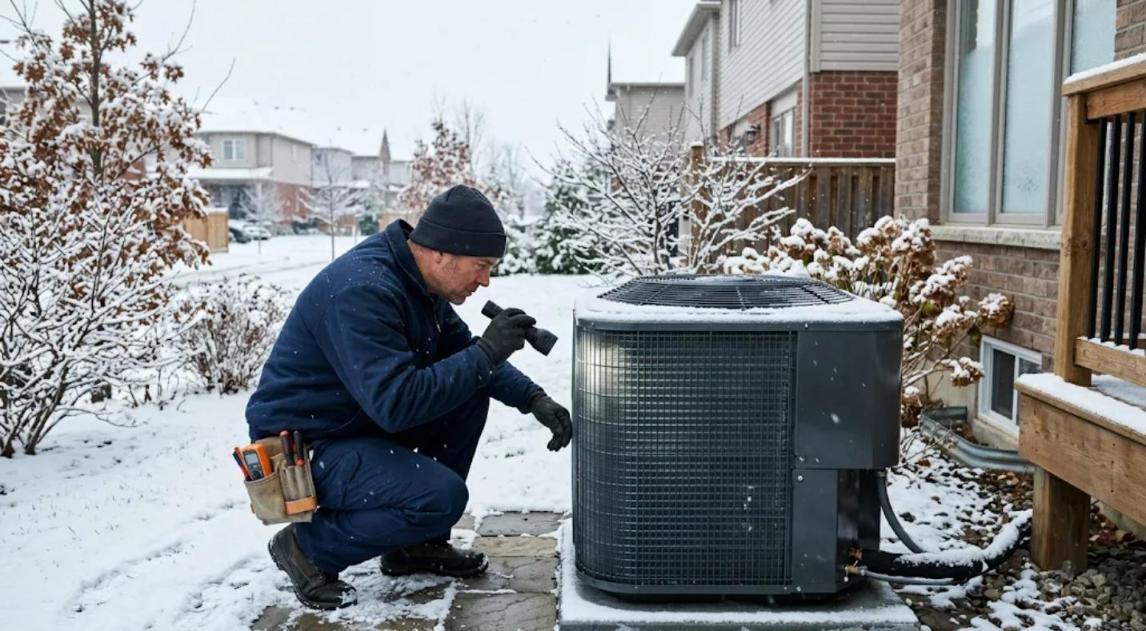
In winter the outdoor coil frosts over, so the system briefly reverses into cooling mode to melt it. NRCan notes that during defrost the heat pump is cooling the air in the ductwork, and supplementary heat may be needed. You may see steam outside and feel cooler air indoors briefly. Many ductless heads pause their fan during defrost, then restart on their own.
A short pause is not a case of a heat pump not heating. A system stuck in defrost, or a unit that never clears its ice, is a problem. Our guide to heat pump defrost mode covers normal cycle length.
When It Is Colder Than Your Unit's Rating
Every air source heat pump has a lowest outdoor temperature it can heat at. NRCan says this cut-off can range from about minus 15°C to minus 25°C for newer models, and below it only the supplementary heating system operates. Cold climate models go lower, but output still falls as it gets colder.
On the coldest nights your heat pump may run nonstop or hand off to backup heat. That is design, not a breakdown. Check the rated minimum in your owner's manual. A heat pump not heating well above that rating should be checked. For more, read how extreme cold impacts heat pump performance.
When Backup Heat Should Take Over
Most ducted heat pumps in Ontario have backup heat: electric elements or a gas furnace in a dual fuel setup. It should come on by itself during defrost, in extreme cold or when the heat pump cannot keep up. Many ductless mini splits have no built-in backup, so homes that rely on them often keep baseboard heaters too.
- With a heat pump not heating at all, Emergency Heat, where available, can keep you warm until a technician arrives.
- Keep setbacks small. NRCan recommends no more than 2°C, and the U.S. Department of Energy advises against setbacks that bring on backup heat.
- Backup heat running all day in mild weather is a warning sign.
- With a gas furnace as backup, a rotten-egg smell means leave the home, then call Enbridge Gas at 1-866-763-5427 or 911 from outside.
Electric backup costs more to run. Our guide to heat pump emergency heat explains the settings and costs.
Heat Pump Not Heating Because of a Fault? Leave These to a Technician
If the zones above check out, the problem is likely in the sealed system or controls.
| Fault | What you might notice | Why it needs a pro |
|---|---|---|
| Refrigerant leak | Heat that weakens over weeks, odd icing on the lines, oily marks at fittings | Ontario requires an Ozone Depletion Prevention (ODP) card to buy or handle refrigerant |
| Reversing valve fault | Cool air from the vents while the outdoor unit runs, as if in cooling mode | Electrical and refrigerant testing |
| Compressor fault | The fan spins with no heat, a hum with no start, or a tripped breaker | High-voltage diagnosis and sealed-system work |
| Defrost control or sensor | The coil stays packed with ice, or defrost never ends | Testing of live controls |
| Wiring or control board | The thermostat calls for heat but nothing starts | Live circuit testing |
Do not open the unit, the indoor head or the panel. For leak signs, read how to detect and prevent refrigerant leaks. Our heat pump repair team diagnoses all of these on ducted and ductless systems.
Heat Pump Help Across Markham, Richmond Hill and the GTA
Aire One has served Ontario homes since 1990 and holds a 4.8-star Google rating from 541 reviews. We service both system types 24/7, with a $79 service call. If a heat pump not heating is near the end of its life, ask about a free Total Home Assessment, financing and our 10-year worry-free warranty. Explore our heat pump services, or visit our HVAC company in Markham and HVAC company in Richmond Hill pages.
Our maintenance and protection plans include scheduled tune-ups and priority booking, and our guide to preparing your heat pump for cold weather lists what to do before the snow.
Heat pump not heating after these checks?
Ducted or ductless, our technicians answer 24/7 across Markham, Richmond Hill and the GTA.
310-HEAT (310-4328) · 24/7 service · $79 service call*
Frequently Asked Questions
Why does my heat pump blow lukewarm air?
Heat pumps deliver more air at a lower temperature than a furnace, normally 25 to 45°C according to NRCan. It can feel cool to your hand while still warming the room. If the room holds its set temperature, the system is working normally.
Is a heat pump not heating during defrost a problem?
No. During defrost the system briefly reverses to melt frost on the outdoor coil, so you may feel cooler air or see a ductless head pause for a few minutes. If it seems stuck in defrost or the unit stays covered in ice, call a technician.
At what temperature does a heat pump stop heating?
It depends on the model. NRCan says the cut-off for newer models can range from about minus 15°C to minus 25°C, and below that only the supplementary heating system runs. Your owner's manual lists your unit's rating.
Should I use emergency heat if my heat pump stops working?
Yes, as a stopgap. Emergency Heat can keep you warm until help arrives, but electric backup costs more to run, so book a repair rather than using it for everyday heating.
Can I add refrigerant to my heat pump myself?
No. In Ontario, you need an Ozone Depletion Prevention (ODP) card to buy or handle refrigerant. Low refrigerant also means a leak, which a trained technician should find and repair.
Sources and Helpful Resources
- Natural Resources Canada: Heating and Cooling With a Heat Pump
- U.S. Department of Energy: Operating and Maintaining Your Heat Pump
- Government of Ontario: Certificate to Handle Refrigerants
- Electrical Safety Authority: Hire a Licensed Electrical Contractor
Matthew leads the Aire One Markham and Metro Toronto team, helping homeowners stay warm and safe every Ontario winter. Aire One has been a TSSA-registered, Carrier Factory Authorized Dealer since 1990.