

Condensation on Windows in Winter
What foggy, dripping windows say about your home's humidity, when it is harmless, and how to fix it before it turns into mould.
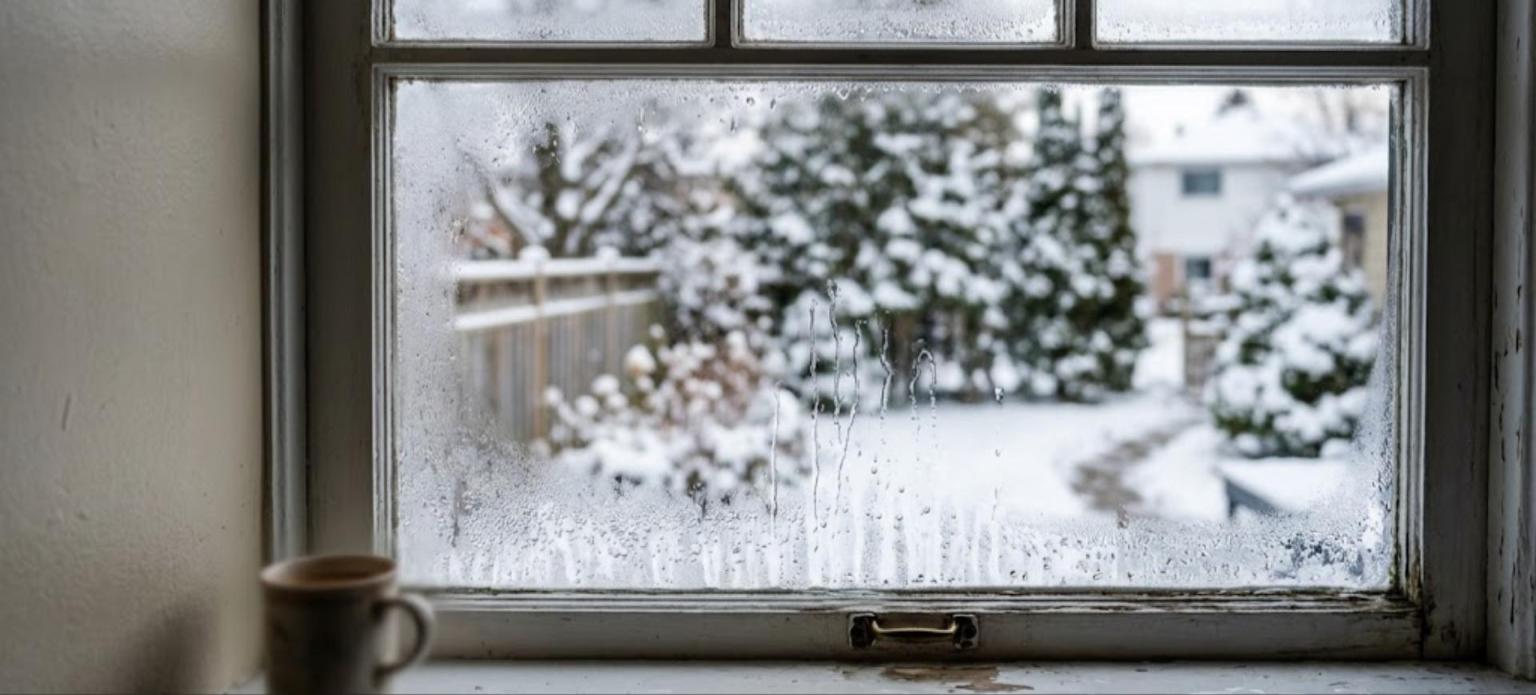

The short answer: Condensation on windows in winter happens when warm, humid indoor air touches cold glass and cools below its dew point. A little fog at the bottom corners on very cold mornings is normal. Water running down the glass, wet sills or black spots mean indoor humidity is too high for the outdoor temperature. Lower the humidifier setting as it gets colder, run bathroom and kitchen fans, keep air moving across the glass, and have your humidifier and ventilation checked.
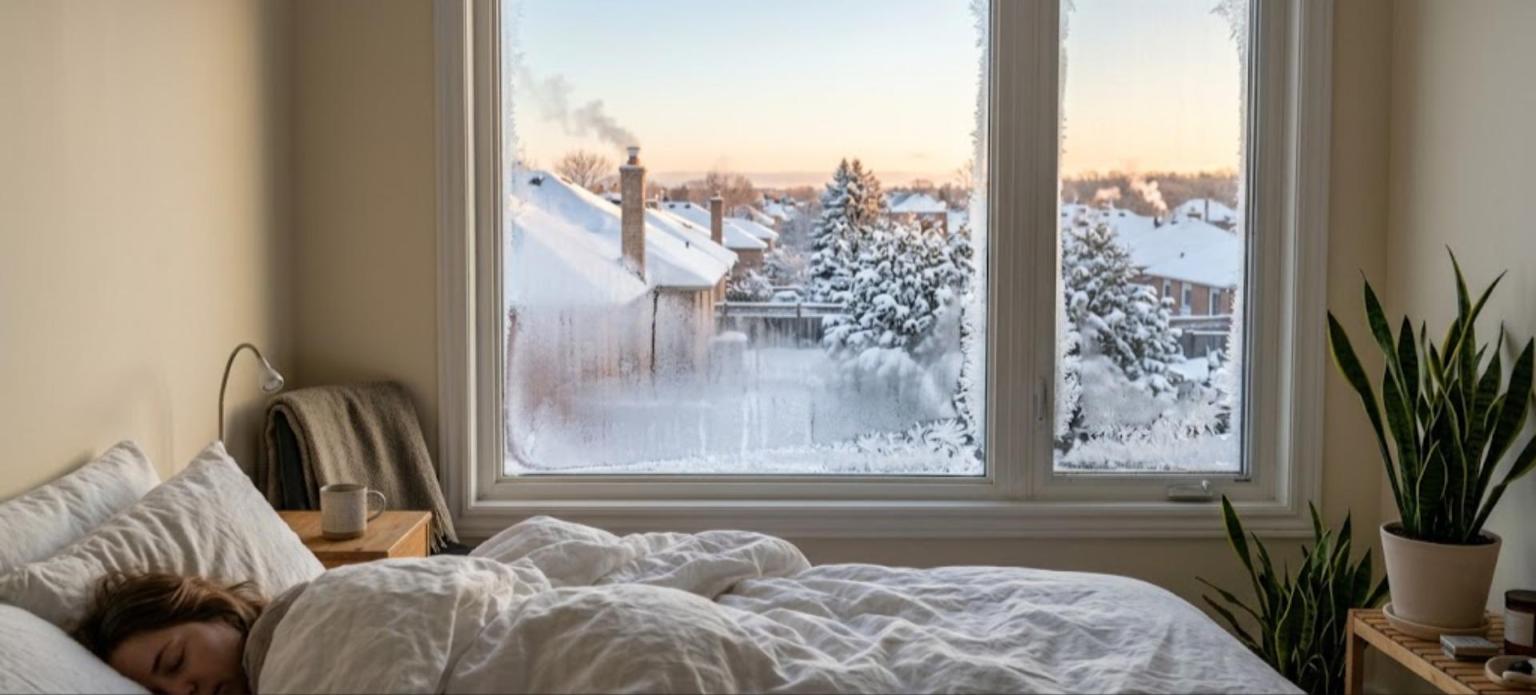
Every Ontario winter, homeowners wake up to foggy glass, puddles on the sill and frost creeping along the frame. Condensation on windows in winter is one of the most common questions we hear once the temperature drops below freezing, and it is usually a sign of something you can control: the balance between indoor humidity, air movement and the temperature of the glass. Left alone, that moisture can peel paint, rot wood frames and feed mould around the window.
This guide explains why it happens, how to read where the moisture forms, the humidity levels that work in a cold climate, and when the cause is actually your heating or ventilation system. If you would rather have a technician measure it for you, book a visit online or call 310-HEAT.
Key takeaways
- Window condensation is a humidity problem first and a window problem second.
- The colder it is outside, the lower your indoor humidity needs to be to keep glass dry.
- Moisture on the inside surface is about your home's air; moisture between the panes means a failed window seal.
- Kitchen and bathroom fans, open blinds and steady air circulation solve many cases.
- A humidifier set too high or an HRV that is not running often turns minor fog into daily puddles.
Why Condensation on Windows in Winter Happens
Warm air holds more water vapour than cold air. When the air inside your home touches a surface that is colder than its dew point, the vapour turns back into liquid water. In winter, your windows are almost always the coldest surfaces inside the house, especially the bottom of the glass and the edges where the frame meets the pane.
That is why condensation on windows in winter tends to start at the lower corners, get worse overnight when the outdoor temperature falls, and fade by the afternoon. It also explains why the same home can have dry windows in November and dripping ones during a January cold snap: the glass gets colder while the moisture inside stays the same.
Three things decide how much water you see:
- Indoor relative humidity: the more moisture in the air, the higher the dew point.
- Glass temperature: older single-pane or double-pane windows run colder than modern triple-pane or low-e units.
- Air movement: heavy drapes, closed blinds and furniture block warm air from reaching the glass, so it stays colder.
Indoor Humidity by Outdoor Temperature
Health Canada recommends keeping indoor relative humidity between 30% and 50% in general. In a cold climate, though, the safe upper limit drops as the temperature outside falls. The figures below are a widely used rule of thumb for homes with double-pane windows; homes with older windows may need to stay a little lower.
| Outdoor temperature | Suggested maximum indoor humidity |
|---|---|
| Around 0°C | About 40% |
| Around -10°C | About 30% to 35% |
| Around -20°C | About 25% |
| Around -30°C | About 15% to 20% |
An inexpensive digital hygrometer tells you where you stand. If your reading sits well above the figure for today's temperature, condensation on windows in winter is almost guaranteed. For more on balancing comfort and moisture, see our guide to humidity and winter HVAC performance.
Inside, Between or Outside the Glass: What It Means
Where condensation on windows in winter forms tells you who to call:
| Where you see it | Likely cause | What to do |
|---|---|---|
| Inside surface of the glass | Indoor humidity too high for the outdoor temperature, poor air movement | Lower humidity, improve ventilation and circulation |
| Between the panes | Failed seal in a sealed glass unit | Have the glass unit repaired or replaced by a window company |
| Outside surface | Efficient glass staying cold on a damp morning | Nothing; it clears as the day warms |
This guide focuses on the first row, the kind of condensation on windows in winter that your heating and ventilation system can fix. Our article on how windows affect your home's temperature covers the glass side of the story.
Where the Moisture Comes From
Most condensation on windows in winter starts with everyday moisture. A typical family adds several litres of water to the indoor air every day without noticing. The biggest sources are:
- Showers and baths, especially with the bathroom door open and no fan running.
- Cooking without the range hood, particularly boiling pasta, soups and kettles.
- Drying laundry on racks indoors.
- Breathing: people and pets release moisture all night, which is why bedroom windows are often the worst.
- Lots of houseplants, aquariums and firewood stored indoors.
- A whole-home or portable humidifier set too high for the weather.
- New construction or recent renovations, as fresh concrete, plaster and paint release moisture for months.
Modern homes are also built much tighter than older ones. That saves energy, but without mechanical ventilation, the moisture you produce has nowhere to go.
7 Ways to Stop Condensation on Windows in Winter
Work through these in order. Most homes with condensation on windows in winter see a big improvement after the first four:
- Turn the humidifier down as the temperature drops. Use the chart above, or set the humidistat to its outdoor-temperature setting if it has one. Many whole-home units are left at a summer-friendly 45% all winter.
- Run bathroom fans during and after showers. Health Canada suggests keeping the exhaust fan on for at least 30 minutes after a shower or bath.
- Use the range hood every time you cook, ideally on a high setting and vented outdoors.
- Open blinds and curtains during the day and pull furniture away from windows and heat registers so warm air can reach the glass.
- Run the furnace fan on low or circulate mode. Steady air movement keeps window surfaces a little warmer and evens out humidity between rooms.
- Use your HRV or ERV. If you have one, make sure it is on, the filters and core are clean, and it is balanced. See our guide to what a heat recovery ventilator does.
- Dry wet sills and frames daily during cold snaps to protect paint, caulking and wood until the root cause is solved.
If you lower the humidity too far, you may trade wet windows for static, dry skin and cracked woodwork. The goal is the highest humidity your windows can handle without dripping, not the lowest possible reading.
When Condensation on Windows in Winter Points to an HVAC Problem
Sometimes heavy condensation on windows in winter is a symptom of equipment that needs attention. Call a technician if you notice:
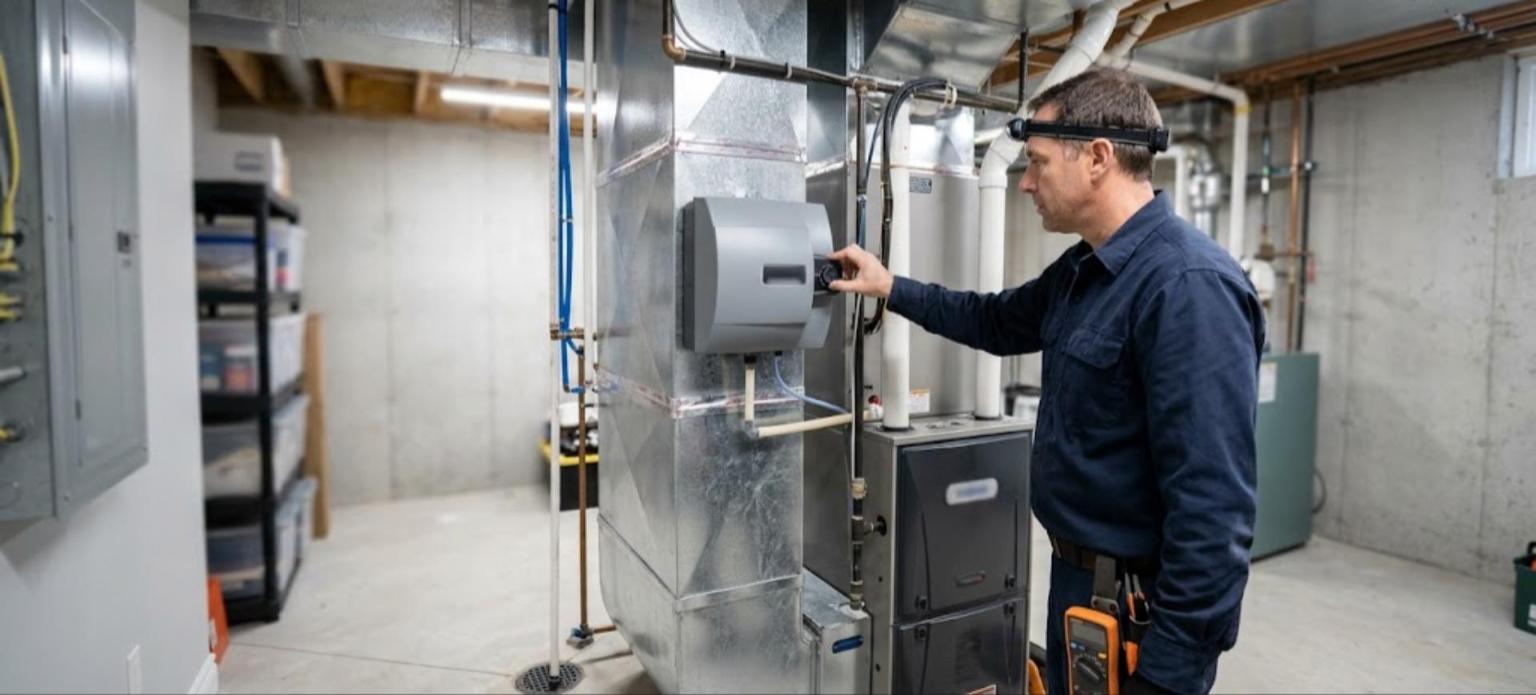
- A humidifier that will not shut off, or a water panel that is constantly soaked, which can mean a stuck solenoid valve or a faulty humidistat.
- An HRV that runs but moves little air, often from clogged filters, a frozen core or unbalanced airflow.
- Moisture plus headaches or stale air in every room, which can point to poor ventilation overall.
- Sudden condensation after a furnace or water heater change, especially with a damp smell near the appliance. Venting problems on fuel-burning equipment need prompt professional attention.
Safety note: Ontario now requires working carbon monoxide alarms on every storey of homes with a fuel-burning appliance, fireplace or attached garage, effective January 1, 2026. If a CO alarm sounds, leave the home and call 911. If you smell gas, leave and call Enbridge Gas at 1-866-763-5427 or 911 from outside.
If your home simply runs dry and you need a humidifier set up properly, our guide to installing a whole-house humidifier explains the options. If it runs damp all year, read the signs your home needs a dehumidifier.
How Aire One Helps Balance Winter Humidity
On a visit for condensation on windows in winter, an Aire One technician measures indoor humidity room by room, checks your humidifier's water supply, solenoid and humidistat, inspects and cleans HRV filters and cores, and confirms the furnace fan and airflow are doing their part. You get clear advice on settings for each stage of the winter, plus written findings.
Aire One has served Markham, Richmond Hill and the rest of York Region since 1990, with a 4.8-star Google rating from 541 reviews. Our Markham HVAC team and Richmond Hill HVAC team handle humidifiers, HRVs, air cleaners and furnaces under one roof. See everything we offer on our services page, or keep yearly checks on schedule with a maintenance and protection plan.
Tired of wet windows every morning?
Get your humidity, humidifier and ventilation checked by a TSSA-registered team trusted since 1990.
310-HEAT (310-4328) · 24/7 service · $79 service call*
Frequently Asked Questions
Is condensation on windows in winter normal?
A little fog at the bottom corners of the glass on very cold mornings is normal in an Ontario winter. Water running down the glass, wet sills, peeling paint or black spots around the frame are not normal. They mean indoor humidity is too high for the outdoor temperature or air is not reaching the window.
What humidity level stops window condensation?
It depends on the outdoor temperature and your windows. As a rule of thumb, aim for about 40% near 0°C, around 30% to 35% near -10°C and about 25% near -20°C. Lower the setting as the weather gets colder, and raise it again as it warms up.
Why are my bedroom windows the wettest?
People release moisture as they breathe all night, bedroom doors are often closed, and curtains are usually drawn. That combination traps humid air against cold glass. Leaving the door open, opening curtains in the morning and running the furnace fan on low usually helps.
Can window condensation cause mould?
Yes. Repeated moisture on sills, frames and nearby drywall can lead to mould growth, peeling paint and rotting wood. Dry the area daily during cold snaps and fix the humidity or ventilation problem that is causing it.
Will a heat recovery ventilator stop condensation?
An HRV replaces moist, stale indoor air with drier outdoor air while recovering most of the heat, so it often reduces winter window condensation in tight homes. It needs clean filters, a clean core and balanced airflow to work properly, so have it checked if condensation persists.
Sources and Helpful Resources
- Health Canada: Guide to Addressing Moisture and Mould Indoors
- Natural Resources Canada: What Is a Heat or Energy Recovery Ventilator?
- Government of Ontario: Carbon Monoxide Alarm Requirements for Homes
- Save on Energy: Home Renovation Savings Program
Matthew leads the Aire One Markham and Metro Toronto team, helping York Region homeowners keep indoor air comfortable, healthy and balanced through long Ontario winters. Aire One has been a TSSA-registered, Carrier Factory Authorized Dealer since 1990.