
How Long Does a Furnace Last?
The lifespan range energy authorities publish, the four stages of a furnace's life, what wears one out early, and how to plan the next step on your own schedule.
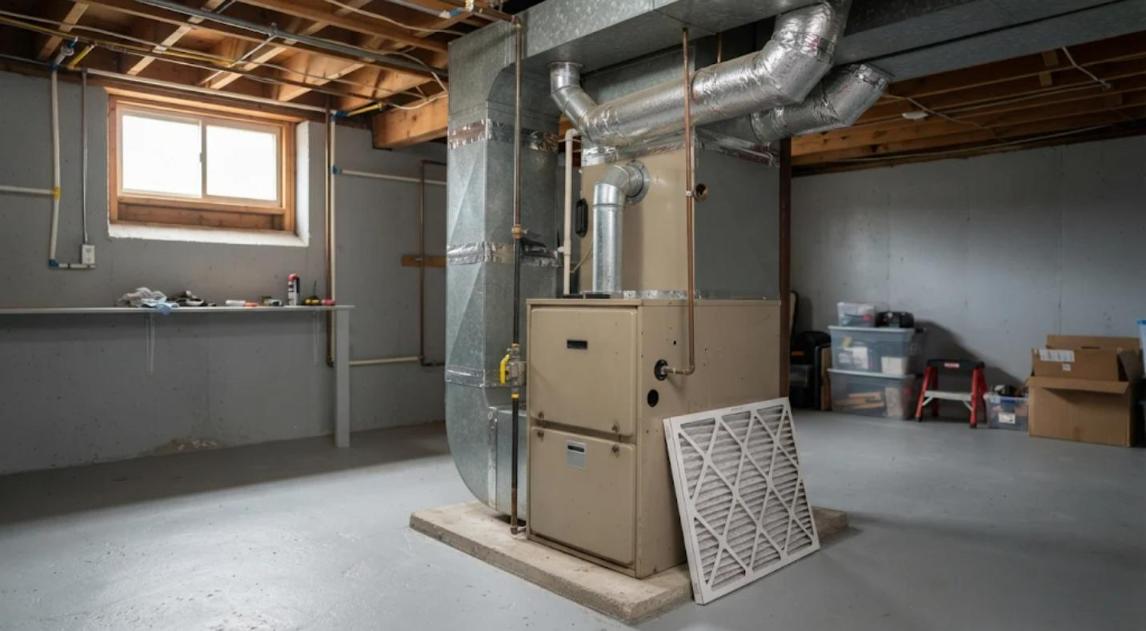

The short answer: How long does a furnace last? The U.S. Department of Energy lists a furnace life expectancy of 15 to 30 years. Hydro One says a furnace can work reliably for 15 to 20 years, and likely more if properly maintained. ENERGY STAR suggests you start considering replacement once a furnace is more than 15 years old. Maintenance and installation quality decide where yours lands.
Most homeowners only ask how long does a furnace last when theirs starts acting up in the middle of a cold snap. It is a better question for a calm week, because the answer tells you whether to keep maintaining, start saving or plan a replacement.
This guide covers the published numbers, a stage-by-stage timeline, the habits that add or subtract years, and the signs of age. If your furnace is already struggling, you can book a visit online or call 310-HEAT any time.
How Long Does a Furnace Last? What the Published Numbers Say
No furnace comes with an expiry date. Here is what three energy authorities publish.
Read together, the numbers tell one story. Fifteen years is roughly where the reliable years end and the watchful years begin, and 30 is the outer edge that only well-installed, well-maintained furnaces reach. The honest answer to "how long does a furnace last" is a range, and your habits decide which end of it you see.
How Long Does a Furnace Last in Practice? Four Stages
These age bands are a planning tool based on the published ranges and on what our technicians see in GTA homes. Your furnace may move through them faster or slower.
Years 1 to 10: the easy years
A properly installed furnace should need little more than filter changes and a yearly tune-up. Keep your paperwork and service records together.
Years 10 to 15: the wear-part years
Parts that work every heating cycle, such as igniters, flame sensors and blower motors, begin to wear out. A repair at this stage is normal and usually worth doing.
Years 15 to 20: the watchful years
Hydro One advises paying attention to signs of wear and to your bills as a furnace nears the 15-year mark. Track repairs, compare winter gas bills year over year and start a replacement budget, even if nothing is wrong yet.
Years 20 and beyond: the bonus years
A furnace that passes its safety checks can keep heating well into its twenties. Have a replacement plan ready so a January failure is an inconvenience, not an emergency.
How to Find Out How Old Your Furnace Is
To place your furnace on that timeline, you need its age. Three places usually hold the answer, and none requires tools:
- Your paperwork. The installation invoice, warranty registration or home inspection report normally lists the install date.
- Service stickers. Many contractors leave a dated sticker on the cabinet. The oldest one gives a minimum age.
- The rating plate. The serial number on the manufacturer's label normally encodes the build date. If the label is not visible from outside, leave the panels on and ask a technician to read it at your next tune-up.
What Shortens and What Extends Furnace Life
The question "how long does a furnace last" gets a different answer in every house. The difference is almost always heat, airflow and attention.
Takes years off
- A clogged filter that starves the furnace of air and makes it run hot
- Skipped annual service, so small faults grow unnoticed
- An oversized furnace that starts and stops all day
- Closed or blocked supply and return vents
- Paint, solvents or laundry chemicals stored beside the furnace
Adds years
- Checking the filter monthly and replacing it on schedule
- A professional tune-up every fall
- Correct sizing and a careful installation
- Keeping vents, returns and outdoor pipes clear
- Fixing new noises or smells early
Filters come first. Hydro One suggests cleaning filters monthly and replacing them regularly, typically every three months, and checking your owner's manual. Our guide to furnace filters explains types and schedules.
Sizing matters just as much, because an oversized furnace heats in short bursts that are hard on parts. See what furnace short cycling looks like, and why proper HVAC sizing protects equipment. A separate post covers the mistakes that lead to early furnace replacement.
Why the yearly tune-up carries so much weight
The U.S. Department of Energy notes that periodic maintenance can extend the life of a heating system and minimize efficiency loss. Ontario's carbon monoxide safety guidance goes further: fuel-burning appliances, chimneys and vents should be cleaned and inspected by professionals every year before cold weather sets in.
A tune-up is where a technician catches a weak igniter, a dirty burner or a venting problem early. Aire One's maintenance and protection plans put that visit on the calendar every year. For a one-time visit, see our furnace maintenance page.
Signs Your Furnace Is Showing Its Age
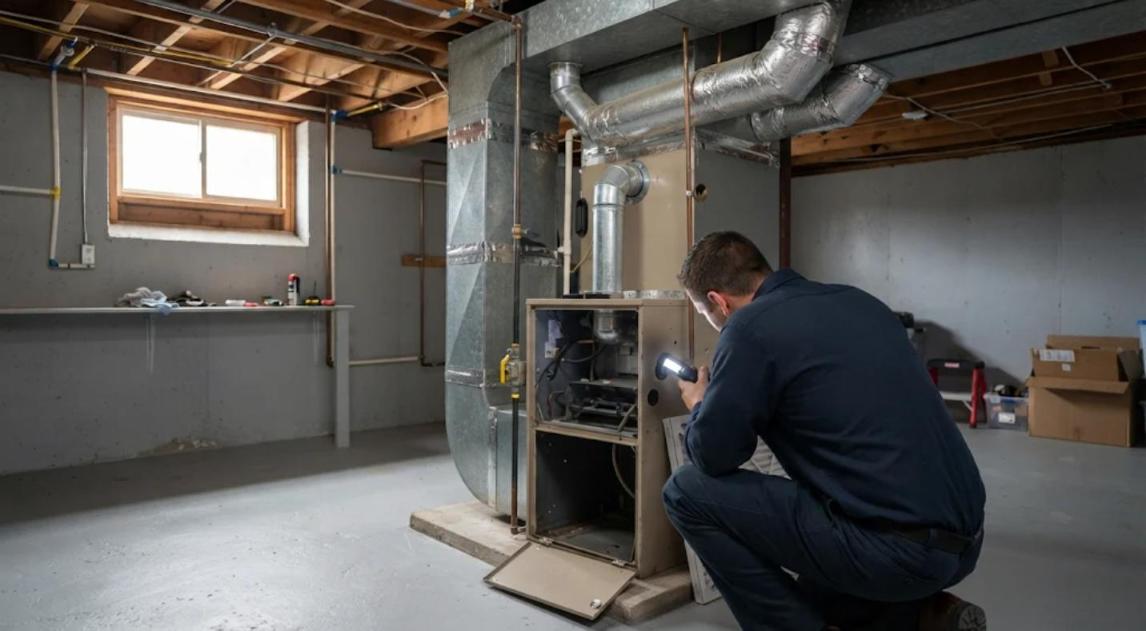
The calendar is only half the story. These signs come from the ENERGY STAR and Hydro One replacement checklists, and they matter most once a furnace is past 15.
| What you notice | What it often means |
|---|---|
| Bills climbing with no change in habits | The furnace is working harder for the same heat. See our list of reasons a heating bill is too high. |
| Repairs every winter | Several parts are reaching the end of their service life together. |
| Rooms that are too hot or too cold | Weaker airflow or a duct issue, not always the furnace itself. |
| New banging, popping or screeching | Worn bearings, loose parts or delayed ignition. Our guide to a furnace making noise sorts the sounds. |
Leave the heat exchanger to a licensed technician. Cracks in an aging furnace heat exchanger cannot be judged by eye. Do not open the cabinet to look. If a carbon monoxide alarm sounds, get everyone out and call 911 from outside. If you smell rotten eggs, leave first, then call Enbridge Gas at 1-866-763-5427 or 911. Our guide to the carbon monoxide alarm rules in Ontario explains where alarms belong.
Old but Running: The Efficiency Gap
A furnace can outlive its usefulness without ever breaking down. The Department of Energy puts old, low-efficiency heating systems at 56 to 70 percent AFUE, the share of fuel that becomes heat. Hydro One notes that Canada's Energy Efficiency Regulations now require furnaces to be at least 90 percent efficient, with the best models reaching 98 percent.
That gap means a 25-year-old furnace may still heat the house while wasting far more fuel than a current model. Our overview of a high-efficiency furnace explains what changes.
How Long Does a Furnace Last Before Replacing Beats Repairing?
Age and repair history together point the way:
Our post Should I Repair or Replace My Furnace? walks through the full decision, so it is not repeated here.
The best replacements are planned ones. Choosing early leaves time for a proper heat loss assessment, a look at current Ontario rebates and a fair heat pump vs furnace comparison. Aire One's furnace replacement service starts with a free Total Home Assessment, and financing and a 10-year worry-free warranty are available.
Furnace Help Across Markham, Richmond Hill and the GTA
Aire One has looked after Ontario furnaces since 1990, with 24/7 technicians, a $79 service call and a 4.8-star Google rating from 541 reviews. If you are wondering how long does a furnace last in your own home, an inspection beats a calendar. Our HVAC company in Markham and HVAC company in Richmond Hill teams service, repair and replace furnaces of every age. See also our Richmond Hill furnace replacement page.
How long does a furnace last in your home? Let us check.
Book a tune-up or a free Total Home Assessment. We serve Markham, Richmond Hill and York Region, TSSA-registered and trusted since 1990.
310-HEAT (310-4328) · 24/7 service · $79 service call*
Planning ahead? Start with our Markham furnace replacement page, or protect the furnace you have with a protection plan.
Frequently Asked Questions
How long does a furnace last in Ontario?
The U.S. Department of Energy lists a furnace life expectancy of 15 to 30 years, and Hydro One says a furnace can work reliably for 15 to 20 years, and likely more if properly maintained. Long Ontario winters mean more running hours, so yearly maintenance matters.
How long does a furnace last without maintenance?
No authority publishes a figure for a neglected furnace, but skipped maintenance pushes it toward the short end of the range. Dirty filters and unnoticed faults make it work harder, which wears parts out sooner.
Should I replace a 20-year-old furnace that still works?
Not automatically. ENERGY STAR suggests considering replacement once a furnace is more than 15 years old, so at 20 it makes sense to have it inspected, compare your heating bills and plan a replacement on your own schedule.
How can I tell how old my furnace is?
Check your installation invoice, warranty papers or home inspection report first. The serial number on the manufacturer's rating plate normally encodes the build date, and a technician can read it for you during a tune-up.
Is an old furnace dangerous?
Age alone does not make a furnace unsafe, but older furnaces are more likely to develop venting or heat exchanger problems. Have fuel-burning appliances inspected by a professional every year, keep working carbon monoxide alarms on every storey, and if an alarm sounds, get everyone out and call 911 from outside.
Sources and Helpful Resources
This article is general information. Published answers to "how long does a furnace last" are ranges, not a guarantee for any one furnace. Always follow your equipment manufacturer's instructions.
- U.S. Department of Energy: Energy Saver 101 Home Heating Guide (PDF)
- ENERGY STAR: When Is It Time to Replace?
- Hydro One: When Should I Replace My Furnace?
- Government of Ontario: Carbon Monoxide Safety
Matthew leads the Aire One Markham and Metro Toronto team, helping homeowners stay warm and safe through every Ontario winter. Aire One has been a TSSA-registered, Carrier Factory Authorized Dealer since 1990.