


The Right Humidifier Setting in Winter
What to set the dial to as the temperature drops, with a Government of Canada chart to guide you.
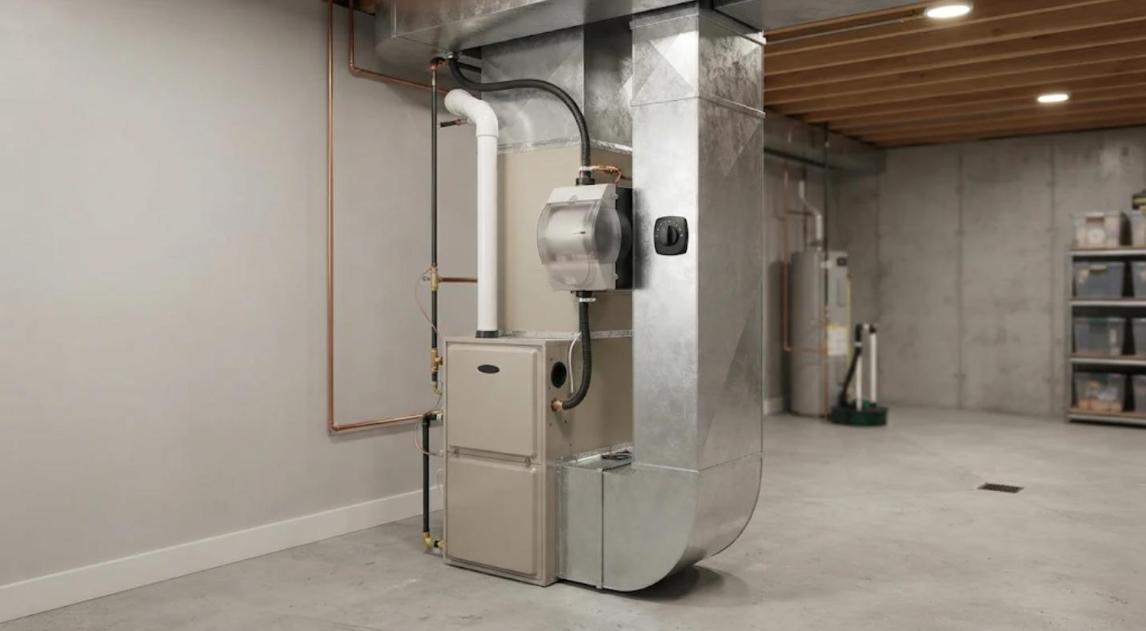

Static shocks, dry skin and a scratchy throat on one side; fogged glass and wet window sills on the other. The right humidifier setting in winter sits between the two, and it is not one fixed number. It moves down as the weather gets colder, because cold glass can only take so much moisture in the air before it starts to drip.
The short answer: A good humidifier setting in winter for most Ontario homes is 30% to 40% relative humidity. Health Canada suggests about 30% in winter and no more than 50% at any time of year. When a cold snap arrives, turn the dial down: Natural Resources Canada's chart shows that at -20°C, older double-glazed windows start to collect condensation above 24% to 34%.
Below you will find the chart, the column that fits your windows, and six steps to set the dial. Still deciding whether to add a humidifier at all? Start with the benefits of a whole-house humidifier.
Humidifier Setting in Winter by Outdoor Temperature
The numbers below come from Table 9-1 of Keeping the Heat In, the Government of Canada home energy guide offered by Natural Resources Canada (NRCan). The table shows the maximum indoor relative humidity, with the house at 21°C, at which there will be no condensation on the windows.
| Outdoor temperature | Older generation double-glazed low-E | Double-glazed | Double-glazed low-E | Triple-glazed low-E |
|---|---|---|---|---|
| 0°C | 50% | 58% | 70% | 81% |
| -10°C | 34% | 44% | 59% | 74% |
| -20°C | 24% | 34% | 50% | 67% |
| -30°C | 15% | 25% | 42% | 60% |
Source: Natural Resources Canada, Keeping the Heat In, Table 9-1. Maximum indoor relative humidity at 21°C indoors.
Two points make the chart useful. First, these are ceilings for the glass, not comfort targets. Where a cell shows more than 50%, your ceiling is still 50%, the upper limit Health Canada gives for a home. Second, the drop is steep. A humidifier setting in winter that works at 0°C can soak the sills two days later when the GTA falls to -20°C.
Which Chart Column Fits Your Windows?
Glass is usually the coldest surface in a room, so it decides your humidifier setting in winter. Use the worst windows in the house as your guide, not the best.
Older double-glazed windows
Read the two left columns. At -20°C these windows cap you at 24% to 34%, so expect to turn the dial down often.
Newer double-glazed low-E
The third column. The inner pane stays warmer, so 30% to 40% is realistic through most of an Ontario winter.
Triple-glazed low-E
The right column. The glass rarely limits you, so comfort and the 50% health ceiling set your number instead.
Not sure what you have? A window supplier can confirm the glazing type. If the glass fogs well below the chart figure, the window itself may be the weak point. Our guide to condensation on windows in winter explains what moisture on the inside, between the panes and on the outside each means.
What Three Public Sources Recommend
Health Canada. Keep relative humidity between 30% and 50%. Its cool-mist humidifier page suggests about 50% in summer and 30% in winter to prevent mould growth.
Natural Resources Canada. Aim for 30% to 50%, lower in winter and higher in summer. Humidity above 20% helps prevent dry, sore throats and should make the air feel warmer.
Save on Energy. Every home is different, but 30% to 40% is typically ideal for a comfortable home in winter without condensation on the windows.
Put together, the advice on a humidifier setting in winter is consistent: start at 30% to 40%, stay under 50%, and let the windows tell you when to go lower. For the comfort side, see our article on the role of humidity in winter HVAC performance and comfort.
How to Adjust Your Humidifier Setting in Winter: 6 Steps
These steps involve a dial and your eyes, nothing more. Leave wiring, the water line and anything inside the furnace cabinet to a licensed technician.
1. Find the humidistat
Save on Energy notes that most humidistats are wired to a humidifier mounted on the furnace, while others sit on a wall elsewhere in the home. Look for a round dial or a small digital control.
2. Measure with a hygrometer
The dial is a target, not a reading, and older wall humidistats are often inaccurate. Health Canada recommends measuring indoor humidity with a hygrometer, an inexpensive device. Place one on the main floor, away from the kitchen and bathrooms.
3. Start at 35%
That is the middle of the range the public sources agree on. Give the house a full day to settle before you judge the result.
4. Check the forecast, then the chart
Before a cold snap, find the forecast overnight low on the chart, read across to your window column, and lower your humidifier setting in winter to that figure or below.
5. Read the glass each morning
NRCan says occasional condensation does not pose a problem. Water that pools on the sill or frost on the glass means the setting is too high, so drop it by 5 points and look again the next morning.
6. Bring it back up slowly
When milder weather returns, raise the dial 5 points at a time until the static shocks fade and the glass stays clear.
Too Dry or Too Damp? Reading the Signs
The house itself tells you whether your humidifier setting in winter is too low or too high.
Too dry: turn it up
- Static shocks from carpets and door handles
- Chapped lips, staticky hair and clothes
- A dry, sore throat in the morning
- New gaps in hardwood floors or wood trim
Too damp: turn it down
- Fog or frost on double-glazed windows
- Water on sills or stains on window frames
- Stuffy, musty air and odours that linger
- Dark spots in corners or behind furniture
Health Canada advises keeping window coverings open so warm air reaches the glass, and drying frames and sills daily so dripping water does not lead to mould. It also recommends that a qualified professional assess and clean up large areas of mould. If the house stays damp with the humidifier off, the cause lies elsewhere; our posts on the signs your home needs a dehumidifier and on what a heat recovery ventilator does are the next places to look.
Manual, Automatic and Portable: How Each Control Behaves
| Control type | How the setting changes | What you do |
|---|---|---|
| Manual humidistat | Stays where you leave it | Follow the six steps and adjust before each cold snap |
| Automatic control | An outdoor sensor lowers the target as the temperature falls | Choose a comfort level once, then fine-tune it if the glass fogs |
| Portable unit | Built-in dial or none at all | Use a hygrometer in the same room and switch the unit off at your target |
An automatic control takes most of the guesswork out of the humidifier setting in winter. Our posts on why to install a whole-house humidifier and choosing the right humidifier for your home cover the equipment side.
Upkeep That Keeps the Reading Accurate
The right number on the dial means little if the equipment cannot deliver it. A few habits help.
- Replace the water panel on schedule. The pad in a furnace-mounted humidifier collects minerals. Follow the interval in your owner's manual; once per heating season is common.
- Keep the furnace filter clean. The humidifier depends on steady airflow. Our guide to furnace filters covers sizes and timing.
- Watch for water near the furnace. See why a gas furnace leaks water for the usual causes, and call a technician instead of opening the cabinet.
- Clean portable units often. Health Canada warns that bacteria can collect and multiply in sitting water, and advises cleaning and disinfecting the reservoir regularly.
- Have the unit checked with the furnace. Humidifiers are an add-on item, not part of the coverage in our maintenance and protection plans, so mention yours when you book and the technician can look at it during the same visit.
Humidity Help for GTA Homeowners
Aire One has kept Ontario homes comfortable since 1990, with a 4.8-star Google rating from 541 reviews. If the dial does nothing, or no humidifier setting in winter keeps both your throat and your windows happy, a technician can test the humidistat, the water supply and the airflow. We serve homeowners across the GTA, including Markham and Richmond Hill. Learn more about our HVAC company in Richmond Hill or our HVAC company in Markham.
Thinking about a new humidifier or an automatic control? Ask about a free Total Home Assessment. Annual tune-ups through a maintenance plan keep the furnace in good order, and our Richmond Hill team answers the phone 24/7.
Dry air or dripping windows? We can help.
TSSA-registered technicians serving Markham, Richmond Hill and the GTA, 24/7, since 1990.
310-HEAT (310-4328) · 24/7 service · $79 service call*
Frequently Asked Questions
What is the best humidifier setting in winter?
For most Ontario homes, 30% to 40% relative humidity is a comfortable starting point, and Health Canada suggests about 30% in winter. Lower your humidifier setting in winter as the outdoor temperature drops, and do not go above 50%.
What should my humidifier be set at when it is minus 20 outside?
Natural Resources Canada's chart puts the maximum at 24% to 34% for older double-glazed windows at minus 20 degrees Celsius, with the home at 21 degrees. Newer low-E windows can hold more before the glass fogs.
Why do my windows fog up even when the humidistat is set low?
The glass may be colder than the setting allows, or the humidistat may read inaccurately. Check the level with a hygrometer, open the window coverings so warm air reaches the glass, lower the dial by 5 points and wait a day.
Should I turn my humidifier off in summer?
Yes. Ontario summers bring plenty of moisture on their own, so turn the humidistat to off when the heating season ends. If your humidifier has a bypass damper, move it to the summer position shown in the owner's manual.
Can a smart thermostat control my humidifier?
Most smart thermostats display the humidity level in your home but cannot control it, according to Save on Energy. Some models can be wired to run a humidifier, which is a job for a licensed technician.
Sources and Helpful Resources
- Government of Canada: Keeping the Heat In (Table 9-1, maximum indoor relative humidity)
- Health Canada: Cool-Mist Humidifiers
- Health Canada: Guide to Addressing Moisture and Mould Indoors
- Save on Energy: What Is My Home's Humidity Level and Why Does It Matter?
Matthew leads the Aire One Markham and Metro Toronto team, helping homeowners keep their heating systems safe and running through every Ontario winter. Aire One has been a TSSA-registered, Carrier Factory Authorized Dealer since 1990.