
Air to Water Heat Pumps
How a hydronic heat pump works with radiators and in-floor heating, what an Ontario winter asks of it, and what to check before you pair or replace a boiler.
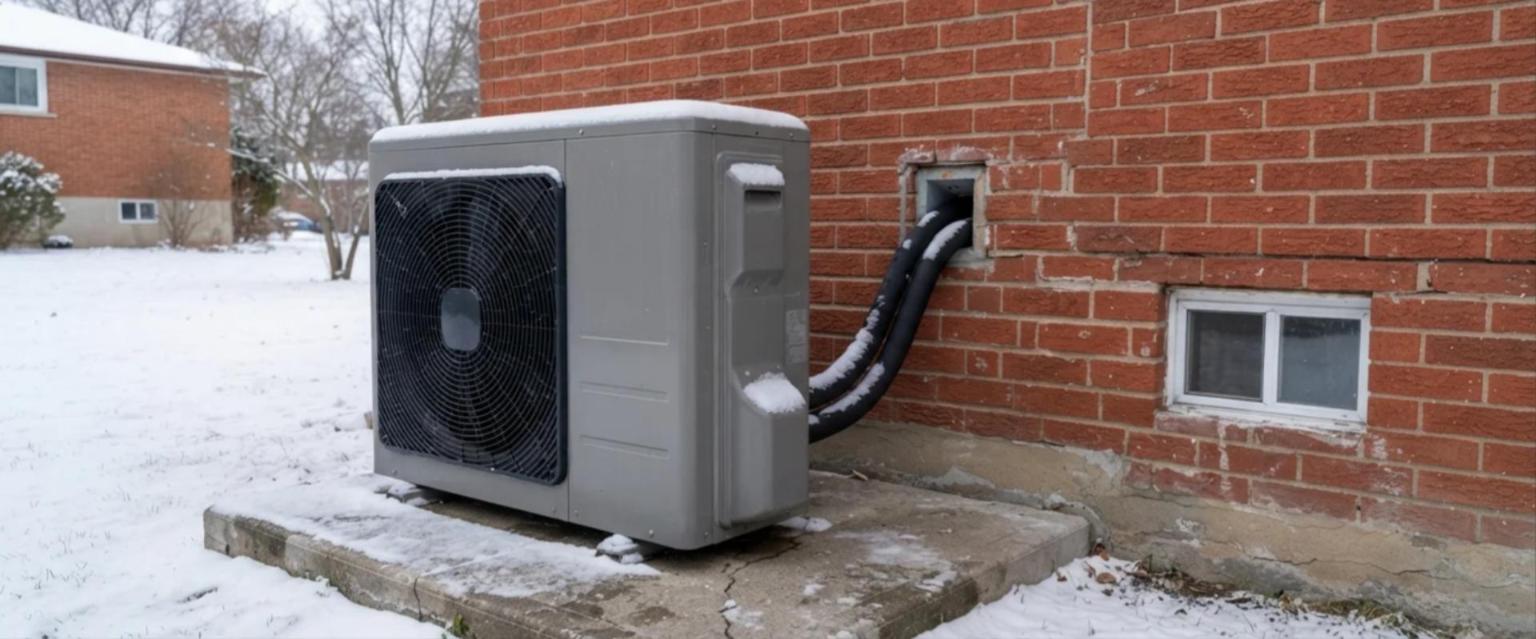

The short answer: An air to water heat pump pulls heat from outdoor air and moves it into water, so it can warm a home through radiators, in-floor loops or fan coils. It works best when the water only needs to reach about 45 to 50°C, which suits radiant floors and larger radiators. Most Ontario homes still need backup heat for the coldest days, often the existing boiler.
If your home is heated by a boiler, most heat pump advice probably feels like it was written for someone else. Ducted and ductless systems blow warm air, while your house has radiators or warm floors. An air to water heat pump is the version of the technology built for hydronic homes. Natural Resources Canada (NRCan) notes that these systems are less common in Canada, so clear information is harder to find.
This guide covers how the system works, which radiators and floors it suits, how it copes with winter and what an assessment should check. To talk it through with an expert, book a free Total Home Assessment.
How an Air to Water Heat Pump Works
A heat pump moves heat instead of making it by burning fuel. The difference here is where that heat ends up:
Outdoor coil. Refrigerant absorbs heat from outdoor air, even when the air feels cold.
Compressor. It raises the temperature of the refrigerant so the heat becomes useful.
Heat exchanger. Heat passes from the refrigerant into water, outdoors in a monobloc unit or in an indoor module on a split unit.
Water loop. Pumps send warm water to radiators, in-floor tubing or fan coils, and cooler water returns to be reheated.
NRCan explains that in cooling mode the process reverses, drawing heat out of the water. Radiators and most in-floor loops are not designed for cooling, so summer comfort usually depends on fan coils or a separate system. For the basics, see what a heat pump is and how it works.
Air to Water Heat Pump vs Air-to-Air Heat Pump and Boiler
| Hydronic heat pump | Air-to-air heat pump | Gas boiler | |
|---|---|---|---|
| Heat delivered by | Radiators, in-floor tubing, fan coils | Ducts or wall-mounted heads | Radiators, baseboards, in-floor tubing |
| Best suited to | Hydronic homes that run on cooler water | Homes with ducts, or rooms a ductless head can serve | Any hydronic home |
| Cooling | Possible with fan coils | Built in | None |
| Fuel | Electricity, using outdoor heat | Electricity | Natural gas |
With ducts and a furnace, an air-to-air system is usually simpler; our heat pump vs furnace comparison covers that choice. With a boiler and no ducts, adding ductwork is disruptive, which is where an air to water heat pump earns a closer look. Our guide to choosing between a boiler and a furnace explains why so many homes were built around hot water heat.
Will an Air to Water Heat Pump Work With Your Radiators?
This question decides most projects. NRCan says these heat pumps run more efficiently when heating water to below 45 to 50°C, and advises care with high-temperature radiators that need water above 60°C.
In-floor radiant heating
A large warm surface runs on cooler water. See our radiant floor heating guide.
Fan coils
A fan blows across a water coil, so modest water temperatures still warm a room.
Large or low-temperature radiators
Generous surface area can do the job with cooler water, especially in a well-insulated home.
Small radiators sized for hot water
They may fall short on cold days without upgrades or backup heat.
One clue you can gather yourself: on a cold day, look at the temperature gauge on your boiler while it runs, and look only. A reading well above 60°C (140°F) does not rule a heat pump out, since many boilers run hotter than the house needs, but it makes a room-by-room heat loss calculation essential. If some radiators already struggle, read about a radiator not heating and let our boiler repair and maintenance team fix it first.
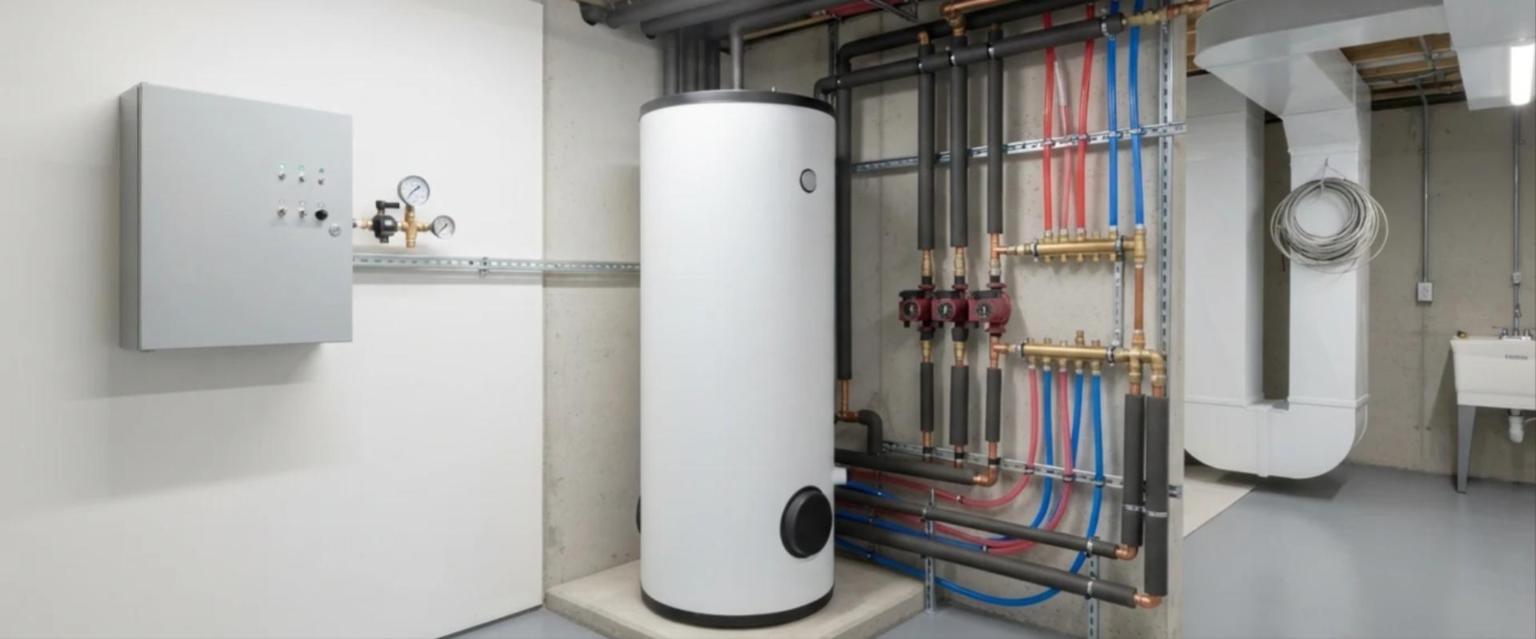
Indoors, a typical air to water heat pump installation may add a buffer tank that stores warm water for steadier cycles, circulator pumps and zone valves, a mixing valve where floors need cooler water than radiators, and outdoor reset controls that raise water temperature only as it gets colder outside. Any water piping that runs outdoors needs freeze protection chosen by the installer. None of this is a do-it-yourself job: it involves refrigerant, electrical connections and, if a gas boiler stays, gas controls that must be handled by a TSSA-registered contractor.
Ontario Winters: Cold Climate Performance and Backup Heat
As it gets colder, an air-source heat pump pulls less heat from the air while your home loses heat faster. NRCan calls the point where those lines cross the thermal balance point; below it, a supplementary system covers the rest. NRCan also notes that most air-source heat pumps have a minimum operating temperature, roughly -15°C to -25°C for newer models. That is why most Ontario installations keep a backup plan:
- Hybrid with the existing boiler. The heat pump carries most of the season and the boiler takes the coldest days. This works best when the boiler has useful life left; see how long a boiler lasts.
- Electric backup. Some indoor modules and buffer tanks include an element for cold snaps.
- Sized for most of the load. An air to water heat pump chosen from a heat loss calculation, with a smaller backup.
Short defrost cycles in cold, damp weather are normal; our article on heat pump defrost mode explains them, and how extreme cold impacts heat pump performance covers output in deep cold.
Keeping a gas boiler as backup? Ontario requires carbon monoxide alarms adjacent to each sleeping area in homes with a fuel-burning appliance, and on every storey since January 1, 2026. If an alarm sounds, get everyone out and call 911 from outside. If you smell rotten eggs, leave and call Enbridge Gas at 1-866-763-5427 from outside. See our carbon monoxide alarm guide.
Electricity, Rate Plans and Rebates
Moving heat from gas to electricity changes what your home needs from the grid. A heat pump with an electric backup element can add a large load, so homes with 100-amp service may need a load calculation; see whether a 100-amp panel can handle a heat pump. Electrical work belongs with a licensed electrical contractor. The Ontario Energy Board sets electricity rates once a year on November 1, and its Ultra-Low Overnight plan has its lowest price every day from 11 p.m. to 7 a.m.; our ultra-low overnight rate guide compares the plans.
Ontario's Home Renovation Savings Program, from Save on Energy and Enbridge Gas, lists rebates for cold climate air source and ground source heat pumps on NRCan's qualified products list. When we checked in November 2026, the page did not name any air to water heat pump, so confirm eligibility for the exact model with Save on Energy before you sign. The federal Canada Greener Homes Affordability Program offers no-cost retrofits for low-to-median income households; check whether it is available in Ontario. Our 2026 Ontario rebates guide tracks current programs.
7 Checks Before Installing an Air to Water Heat Pump
- Room-by-room heat loss, so equipment is sized to the home, not the old boiler's nameplate.
- Emitter survey of every radiator and loop to find the water temperature the home truly needs.
- Boiler condition, to decide whether it stays as backup or retires.
- Outdoor unit location, raised above the snow line, clear of roof drips, with a place for defrost meltwater to drain.
- Freeze protection and the piping route into the house.
- Electrical capacity for the heat pump and any backup element.
- Domestic hot water plan, whether the system heats a tank or a separate heat pump water heater makes more sense.
Our free Total Home Assessment looks at heating, cooling and comfort together. Financing and our 10-year worry-free warranty are also available.
Usually a good fit
- You heat with a boiler and have no ducts
- You have in-floor heating or fan coils
- You want to cut gas use but keep a backup
Worth a second look
- Your radiators need very hot water
- You already have ducts and a furnace
- Your electrical panel is full
If your boiler is struggling now, our boiler service team can keep it running safely while you plan, and our heat pump page covers options and incentives.
Heat Pump and Boiler Advice Across Markham, Richmond Hill and the GTA
Aire One has served Ontario homes since 1990, with technicians on call 24/7 and a 4.8-star Google rating from 541 reviews. Whether you want to keep your boiler in top shape or learn if an air to water heat pump suits your home, start with your heat pump options. Learn more about our HVAC company in Markham or our HVAC company in Richmond Hill.
Is your boiler-heated home ready for a heat pump?
Book a free Total Home Assessment across Markham, Richmond Hill and York Region. TSSA-registered and trusted since 1990.
310-HEAT (310-4328) · 24/7 service · $79 service call*
Frequently Asked Questions
Can an air to water heat pump replace my boiler completely?
Sometimes. In a well-insulated home with in-floor heating or low-temperature radiators, a properly sized system with electric backup can carry the whole load. Many Ontario homes keep the boiler for the coldest days instead.
Does an air to water heat pump work with cast-iron radiators?
It can, depending on the water temperature they need. NRCan advises care with radiators that need water above 60°C. Large radiators in an insulated home often do well, while small ones may need upgrades or backup heat.
Can a hydronic heat pump also heat my domestic hot water?
Many models can heat a separate storage tank designed for it, but not all. If yours cannot, a heat pump water heater or your existing water heater can handle it.
Is an air to water heat pump eligible for Ontario rebates?
Check before you buy. The Home Renovation Savings Program page did not name air to water models when we checked in November 2026, and listed heat pumps must be on NRCan's qualified products list. Confirm the exact model with Save on Energy.
How cold can it get before the heat pump needs backup heat?
It depends on the model and your home. NRCan says newer air-source heat pumps stop working at roughly -15°C to -25°C, and heating output drops as it gets colder. A boiler or electric element covers the coldest days.
Sources and Helpful Resources
- Natural Resources Canada: Heating and Cooling With a Heat Pump
- Save on Energy: Home Renovation Savings Program
- Ontario Energy Board: Electricity Rates
- Government of Ontario: Carbon Monoxide Safety
Matthew leads the Aire One Markham and Metro Toronto team, helping homeowners choose heating systems that suit their homes and keep them comfortable through every Ontario winter. Aire One has been a TSSA-registered, Carrier Factory Authorized Dealer since 1990.